
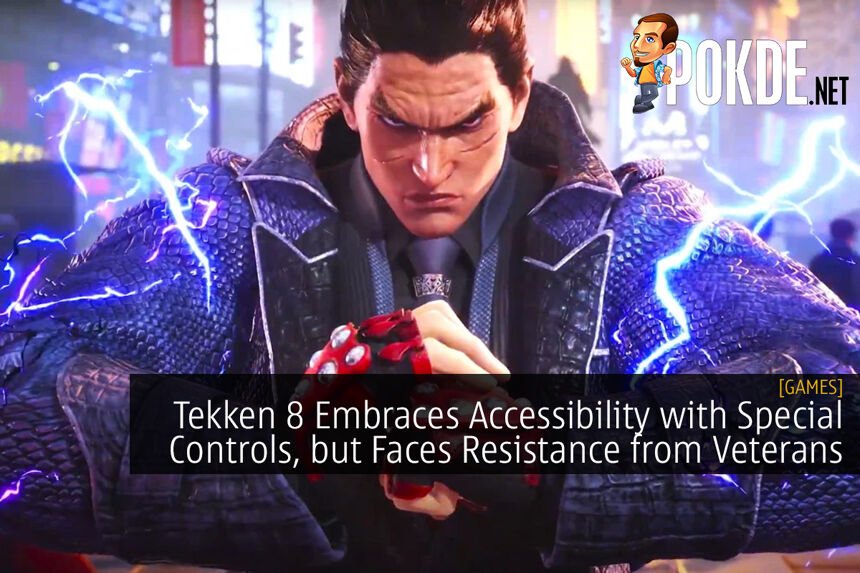
Practicing specific scenarios in training mode and focusing on visual cues will improve your ability to control reactions in Tekken 8.
Ever found yourself panicking in a Tekken 8 match, reacting too slowly or making the wrong moves? It’s a common struggle, especially with such fast-paced combat. You need to learn how to control reactions in Tekken 8, but it feels like a huge hurdle.
Improving your reaction time in Tekken 8 comes down to focused training. You can significantly impact your gameplay by understanding visual cues and practicing specific situations. Don’t get discouraged; improvement is achievable.

Tekken 8 How to Control Reactions
Okay, so you’re playing Tekken 8 and things are getting intense. Opponents are throwing out moves left and right, and you feel like you’re just reacting to everything instead of being in control. It’s a common feeling! But the good news is, learning to control your reactions is a key skill that will make you a much better Tekken player. It’s not about being a robot, it’s about making smart choices under pressure. Let’s break down how to get better at reacting in Tekken 8.
Understanding the Importance of Reactions
Why is controlling your reactions so important anyway? Well, think of it this way: in Tekken, your opponent isn’t just randomly hitting buttons. They are trying to make you do what they want. They might use a fast low attack to make you block low, then come in with a high attack that will hit you if you’re still blocking low. If you just react to the first low attack, you might get hit by the second one. This is the simple example, but there are many more like this in tekken, so by learning how to control your reactions, you become less predictable, and you can start to anticipate your opponent’s next move and counter effectively. It’s about developing the ability to not just react but to respond intelligently.
- Punishing Whiffs: When your opponent misses an attack, it’s your chance to strike back. Good reactions mean you can quickly capitalize on their mistakes.
- Defending Effectively: Knowing when to block, sidestep, or interrupt attacks is crucial for staying alive. Controlled reactions allow you to defend appropriately.
- Creating Openings: By reacting appropriately to your opponent, you can sometimes bait them into doing what you want them to do, creating opportunities for your own offense.
- Improving Offense: Good reactions enable you to time your attacks better, linking combos together effectively.
The Difference Between Reaction and Prediction
It’s important to know the difference between reacting and predicting. Reacting is about what happens right now. Your opponent does something, and you respond to it. Prediction, on the other hand, is about guessing what your opponent will do next. Both are important, but reacting is your foundation. You can’t predict consistently if you can’t react to what’s happening in front of you. You want to blend good reactions with calculated guesses, which gives you an edge.
Here’s an analogy: Imagine you’re driving. Reacting is seeing a car suddenly brake in front of you, and you brake too. Predicting is looking at the traffic pattern and guessing that the car in front of you might brake soon, so you lift off the gas a little early. Both are important for safe driving, and also important for Tekken!
In Tekken 8, good reactions are like your car’s brakes – they save you from disaster. And predictions are like your knowledge of traffic patterns, helping you anticipate what’s coming next.
Recognizing Key Attack Types
Tekken 8 is filled with different attacks, each with its own properties. Learning to recognize these attacks quickly is the first step in reacting effectively.
High Attacks
These attacks hit if you are standing up but will miss if you duck. High attacks are generally the fastest attacks but they are also the most punishable if they are blocked or whiffed. Reacting to high attacks is very important in Tekken 8. You generally want to block these or punish these on whiff. Most high attacks have a startup animation, learn these animations so that you can react accordingly.
- How to React: Block or duck. If you see a clear opening, use a fast jab or attack to interrupt them.
Mid Attacks
These attacks will hit both when you’re standing or ducking. These attacks are the most difficult to react to, as blocking them is difficult if your timing is off. Mid attacks are the most useful and most common attacks that are used in Tekken. Learn to recognize these animations so that you can react accordingly. There are some mid attacks that can be reacted to. Some mid attacks are punishable on block, and others are not. It’s important to know the difference, so that you can punish when it is possible to.
- How to React: You usually want to block these attacks if you don’t know the frame data. If you know the matchup and their frame data, you can learn to sidestep some mid attacks, if their tracking is bad. Otherwise, you have to block, and then you can counter if you blocked a punishable move.
Low Attacks
Low attacks hit when you’re standing and miss if you block low. Low attacks usually have slow start up, but they can’t be easily seen, which makes them difficult to react to. Most low attacks that are used are unseeable, so the best way to deal with them is to make a prediction and use the appropriate counter. There are some reactable lows, but those lows are not commonly used. Some low attacks are used for the purpose of mixups with mid attacks.
- How to React: Block low, or in some cases hopkick or launch punish. Usually, you want to make a read with low attacks, and when you’re right, you can counter.
Special Attacks
These are the attacks that have special properties, and are unique to each character. These attacks can be slow, fast, high, mid, or low. It depends on the type of attack. Some are punishable and some are not. The most common special attacks are power crushes, armor moves, and rage arts. Learning these special attacks and how to react to them are very important in Tekken.
- How to React: Depends on the type of special attack. Power crushes and armor moves are usually punishable when blocked. Rage arts are unblockable, so the best way to deal with rage art is to side step or launch them before the activation.
Frame Data: Your Secret Weapon
Frame data is a bit of a nerdy topic, but it’s very helpful for controlling your reactions in Tekken. Each move in Tekken is made of frames. Each frame takes a certain amount of time to happen. Frame data tells you how long it takes for a move to start, how long the active frames are, and how long it takes for the move to end. With that data, you can know which moves are safe, and which moves can be punished. While learning all of the frame data for every move is not necessary, learning the frame data of your character, and your most common opponents, can greatly improve your reaction in the game. Most attacks have punishable frames on block or on whiff, or sometimes both. Knowing these frames will let you react appropriately, and punish your opponents when they make mistakes. You don’t have to memorize everything, but understanding the basics can drastically improve your game.
Understanding +/- Frame Data
The +/- frame data is how much advantage or disadvantage you have after an attack is blocked or whiffed. If a move is -10 on block, that means you have 10 frames of advantage and you can punish with a move that takes less than 10 frames to come out. If a move is +5 on block, that means the other player has +5 advantage, which means they can use a faster move than yours, and if you try to attack, they will usually counter you.
- Advantage Frames (+): If your move is + on block or on hit, you can typically follow up with an attack before your opponent can respond.
- Disadvantage Frames (-): If your move is – on block or whiff, your opponent has the advantage, and might be able to punish you with a move.
Improving Your Reaction Time
Now that you know the theory, let’s talk about practice. Improving your reaction time isn’t something that happens overnight. It takes consistent effort and the right kind of training.
Practice Mode Drills
The practice mode is your best friend for improving reactions. You can set up training dummies to perform specific actions so you can train how to react to these actions. You can set the dummy to perform a string of moves that contains lows and mids, and train yourself to block and punish.
- Set up specific scenarios: Create situations where the AI uses specific moves, then practice reacting accordingly. Start slow, then increase the speed or add different attacks as you improve.
- Focus on one attack at a time: Pick one attack you’re struggling with and just practice reacting to it. Focus on recognizing the startup animation and then choosing the appropriate reaction.
- Use the Frame Step function: Frame by frame analysis is useful for understanding the timing of moves. This is helpful to see the startup frames of the attack.
Playing Against Real Opponents
While practice mode is helpful, nothing beats fighting real opponents. This is where your skills are put to the test. Here are some tips for improving your reactions in real matches:
- Don’t get flustered: Stay calm and focus on what’s happening on screen. Getting nervous will slow your reaction time.
- Look for patterns: Pay attention to what your opponent does most often. If they keep using the same string, you can start to predict and react.
- Be patient: Don’t try to force things. Sometimes the best reaction is to wait for an opening.
Mental Preparation
Your mental state has a huge impact on your reactions. If you’re tired, stressed, or distracted, your reactions will be slower. Here are some tips for being mentally ready for Tekken:
- Take Breaks: If you find yourself getting frustrated, take a break. Come back when you’re relaxed.
- Get Enough Sleep: Being well-rested will help your reaction times.
- Stay Focused: Minimize distractions when you’re playing. Turn off notifications and focus on the game.
Advanced Techniques
Once you’ve got the basics down, you can explore some more advanced techniques for controlling your reactions.
Sidestepping
Sidestepping is a very useful and sometimes very necessary move to know in Tekken. Many attacks are linear and can be sidestepped. Sidestepping can also be used to create opportunities for your offense. When sidestepping, it’s very important that you know which attacks can be sidestepped. Many characters have attacks that will track, and those attacks are not recommended to be sidestepped. Also, knowing whether to sidestep right or left is also important, since some moves track only in one direction, and sidestepping on the opposite side can put you in a more dangerous situation.
- When to Use: Useful against linear moves, or to create whiff opportunities.
- How to Practice: Spend time in practice mode seeing which moves your character sidesteps, and practice doing it in the match.
Punishing Effectively
Punishing is when you use your fast attacks after blocking or sidestepping a move. You need to learn to punish the most common moves your opponent is using. This will make them more hesitant to use these moves if you punish them often. Some moves are punishable with your fastest jab, while others are punishable with more powerful moves, which you need to learn in practice.
- Learn Punishers: Each character has several moves that are useful as punishes. Learn to identify and use them correctly.
- Practice the Timing: Some punishes need specific timing to work correctly. Practice the timing in training mode so that you can be comfortable doing them in the match.
Using Movement to Evade
Movement is a very important part of Tekken 8. Simply walking, dashing or backdashing can be very helpful to evade and create opportunities for your offense. Many attacks can be backdashed and you can follow up with a whiff punish if you time it correctly. Some attacks can be evaded by walking forward or backward. Learning movement is one of the most important parts of Tekken, and it’s a very effective way to react to opponent’s moves.
- How to Use it: Use backdashes and wavedashes to create space and evade attacks.
- Practice Movement: Practice mode is good for learning how to move, and you can master it in the match.
Adaptation
The ability to change your strategy mid-match is essential in tekken. What works against one player may not work against another. You must adapt your reactions and playstyle to your opponent.
- Analyze Opponent: Pay attention to their moves, their habits, their mixups.
- Change Strategy: If a strategy is not working for you, change it.
Controlling your reactions in Tekken 8 is a skill that develops with practice and patience. The more you understand the game and practice, the better you’ll become at reacting, predicting, and adapting to any opponent that steps up to challenge you. Remember, it’s a journey, so enjoy the process and keep learning!
BEST Controller settings for Tekken 8🔥🔥#tekken8 #rtfiscool #settings
Final Thoughts
In summary, consistent practice improves your timing and reduces panic. Focusing on your opponent’s patterns, instead of reacting instinctively, is vital. Understanding frame data allows calculated responses, making you less predictable.
Ultimately, ‘Tekken 8 how to control reactions’ comes down to anticipation rather than pure reflexes. This skill is a must for climbing the ranks.

