
Tekken 8 understanding game jargon means learning terms like “oki,” “whiff,” “frame data,” and “mix-up” which are fundamental for effective gameplay and strategy.
Jumping into Tekken 8 can feel like entering a whole new world, especially with all the unique terminology players use. It can be confusing hearing words like “oki” or “frame data” thrown around if you are unfamiliar. That is why Tekken 8 understanding game jargon is important.
Don’t feel overwhelmed though; this article will get you up to speed with the most commonly used terms. We’ll explain what they mean in plain English to improve your game. You will learn how crucial these terms are to your strategy.

Tekken 8 Understanding Game Jargon
Welcome, future King of Iron Fist Tournament contenders! Tekken 8, like any fighting game, has its own special language. It might sound confusing at first, with words like “mix-up,” “frame data,” or “whiff punish” flying around. But don’t worry, this guide will help you understand these terms and talk like a pro in no time. Let’s break down the Tekken 8 dictionary and make sure you’re not left scratching your head.
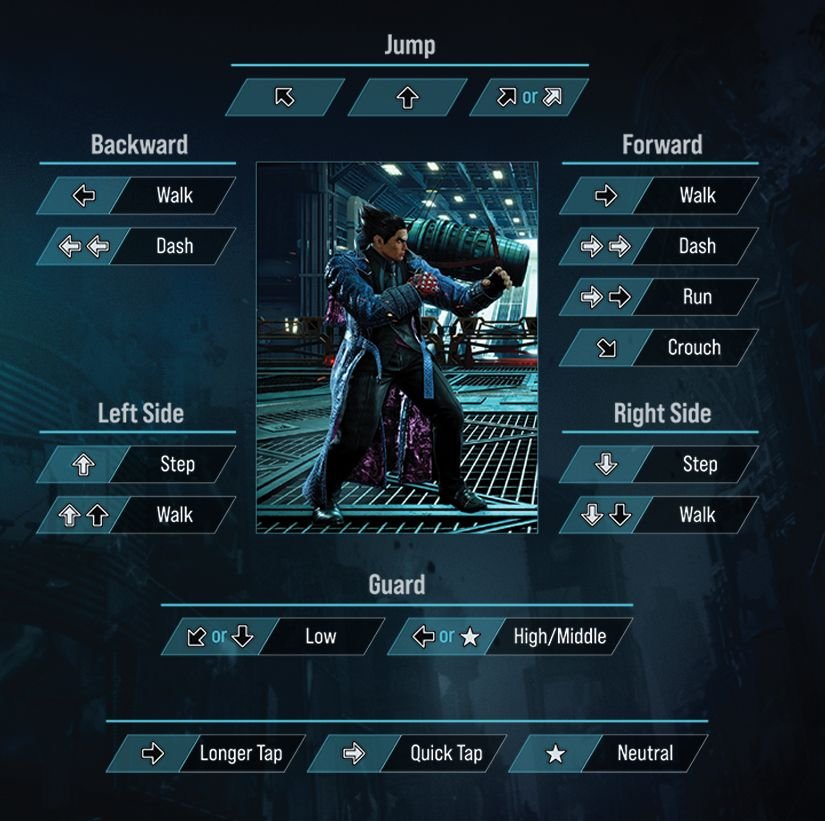
Basic Movement Terms
Before we dive into complex strategies, let’s cover how characters move. Understanding these basic movement terms is crucial for effective play.
Forward Movement
This one’s simple. Pressing forward on your controller moves your character towards your opponent. It’s the bread and butter of getting into range to attack.
Back Movement
Pushing back on your controller moves your character away from your opponent. It’s your primary way of creating distance and avoiding attacks.
Sidestep
Sidestepping involves quickly moving either left or right. It allows you to dodge linear attacks, which only move in a straight line. Imagine a train going straight; sidestepping would get you off the tracks.
Dash
A dash is a quick, forward movement. Many characters in Tekken 8 can perform dashes, allowing them to close the gap rapidly. Some also have backwards dashes, to create even more distance.
Backdash
A backdash is a quick move backward. It’s often used to create space and avoid attacks. Some characters have special backdashes with added properties that make them better at avoiding certain attacks. Using a backdash to escape pressure is very important in higher-level play.
Running
Running happens when you tap forward twice, and then hold forward. It allows a character to travel a longer distance quickly. Running allows for some unique types of attacks.
Attack Terminology
Now, let’s get into how you’ll be hitting your opponents. Understanding attack-related jargon is key to effective offense and defense.
High Attacks
High attacks hit opponents standing up, but can be avoided by crouching. Think of them as attacks that go over a crouched opponent’s head. For instance, a straight punch that goes towards head is usually a high attack.
Mid Attacks
Mid attacks hit both standing and crouching opponents. They are typically the bread and butter attacks of most characters, hitting a standing opponent, and also when a opponent is crouching. A punch to the stomach would be considered a mid-attack.
Low Attacks
Low attacks hit opponents who are standing but can be blocked by crouching. These attacks often hit your opponent’s legs and feet. They force your opponent to make a quick decision in blocking or not.
Jab
A jab is a quick, light punch. It’s usually one of the fastest attacks a character has and can be used to interrupt opponents or start pressure. Typically, a jab is the fastest attack that can break pressure.
String
A string is a series of attacks that come out quickly and are often designed to be difficult to interrupt. Many combos are based off strings of moves.
Launcher
A launcher is an attack that sends your opponent high into the air, allowing you to follow up with a combo. Launchers are a critical part of Tekken gameplay and is often what most combos begin with.
Power Crush
A power crush is an attack that can absorb incoming attacks with its armor properties and still hit the opponent. The armor won’t protect the user from throws or lows. They are often slower, but powerful. Many players use power crushes when the other player is constantly applying pressure to them.
Heat Engager
Heat Engagers are special moves unique to each character in Tekken 8 which activates their Heat state. Heat state is temporary power up for character that gives them new move options or power.
Rage Art
A rage art is an incredibly powerful special move that can only be used when your character is low on health and in rage state. It’s essentially a last-ditch attack for a comeback. But be careful, if you use a rage art and opponent block it, you are in serious disadvantage.
Guard Break
A guard break is an attack that, if blocked, forces your opponent into a vulnerable state, opening them up to follow-up attacks. Sometimes, even though the opponent is blocking, guard breaks will put them in disadvantage. Many command throws in Tekken 8 are consider guard breaks.
Command Grab/Throw
A command grab, or throw, is a move that cannot be blocked. They are very important in Tekken gameplay and often used to mix-up opponents that are playing defensive. Some throws are unique to specific characters.
Defensive Tactics
Knowing how to defend is just as important as knowing how to attack. Here’s a breakdown of key defensive concepts.
Block
Holding back on the controller makes your character block. It’s the most basic way to avoid damage. Blocking is very important, especially when your opponent is on the attack. However, blocking too much will make you predictable.
Crouch
Holding down on the controller makes your character crouch. Crouching allows you to avoid high attacks and block low attacks. A critical part of defense is to alternate between standing up or crouching down.
Parry
A parry is a move that allows you to deflect an incoming attack. Not every character has a parry move, but if they do, they can be used to stop attacks, which often leads to opening for a combo.
Reversal
A reversal is like a parry, but it’s usually used against specific types of attacks, like throws. If done correctly, reversals will put the opponent in a disadvantage.
Wake Up
Wake up refers to what happens when your character gets up off the ground after being knocked down. Knowing what moves are good when waking up can be the difference between life and death.
Advanced Concepts
Now, let’s get into some of the more complex ideas that separate the casual players from the hardcore veterans.
Frame Data
Frame data refers to how long it takes for an attack to start, how long it’s active, and how long it takes to recover. Each action in Tekken 8 is made of frames, and understanding the speed of your attacks is very important.
- Startup Frames: How long it takes for the move to hit. Lower number means that the move is faster.
- Active Frames: How long the attack can hit your opponent.
- Recovery Frames: How long the character takes to recover from the move.
Understanding frame data allows you to figure out which moves are safe or punishable.
Punish
Punishing means hitting an opponent who made a mistake. This often involves hitting them during their recovery frames. For example, if your opponent uses a move that takes a long time to recover, and you block the attack. You can use a faster move that hits before the opponent can do another move.
Whiff Punish
A whiff punish is when you hit your opponent because they missed their attack. If an opponent misses a move, it gives an opening for you to hit them while they are recovering from that move.
Spacing
Spacing refers to keeping yourself at the optimal distance from your opponent. It involves positioning yourself to where your attacks can hit but your opponent’s attacks are less likely to hit you. Good spacing is very important for success in Tekken 8.
Mix-Up
A mix-up is an offensive strategy designed to keep your opponent guessing. It involves changing between high, mid, and low attacks, as well as throws. The idea is to make it difficult for the other player to defend against all possibilities. Good players are masters at mix-ups and applying pressure.
Oki
Oki, short for “okizeme,” refers to the advantage you have after knocking down your opponent. It’s about keeping the pressure on while they are trying to get back up. Knowing how to control oki is very important in Tekken 8.
Neutral
The neutral game refers to when neither player has an advantage. It’s the phase where both fighters are trying to find an opening to attack or gain advantage. The neutral game is very important in high level play and where most games are won or lost. It revolves around good spacing and good timing.
Pressure
Pressure is when you apply continuous attacks to your opponent, making it difficult for them to react. Pressure is important in the offense game and in the neutral game. Pressure makes the opponent more prone to making mistakes, which in turn, leads to an opening for you to attack.
Tech
A tech refers to the act of breaking a throw. Most throws can be teched by pressing one of the buttons before the throw connects. This can make the difference between getting combo’d or not.
Wall Carry
A wall carry is when you hit the opponent and they move close to a wall. Wall carry is very important in Tekken because when the opponent hits a wall, you can often follow up with more attacks and combos.
Wall Splat
A wall splat happens when you hit your opponent into a wall, putting them into an extra vulnerable state which you can follow with a combo.
Counter Hit
A counter hit occurs when your attack hits your opponent as they are starting their own move. Counter hits often result in more damage. Moves often have different properties on a counter hit.
Armor
Armor means that the move will absorb incoming attacks, and you will not get interrupted by incoming attacks. Characters that have armored attacks are often powerful. Armor attacks do have specific limitations.
Plus Frames and Minus Frames
Plus frames means that your character is in an advantageous state after a move, allowing you to attack again before the opponent can. Minus frames mean that your opponent can attack again first after a move. Knowing the frame data for your characters and which moves are plus or minus, is very important.
Common Abbreviations
Let’s take a quick look at some common abbreviations used in the Tekken community.
- FC: Full Crouch.
- WS: While Standing.
- SS: Sidestep.
- CH: Counter Hit.
- LP: Left Punch (usually the square button on PlayStation, or X on Xbox).
- RP: Right Punch (usually the triangle button on PlayStation, or Y on Xbox).
- LK: Left Kick (usually the cross button on PlayStation, or A on Xbox).
- RK: Right Kick (usually the circle button on PlayStation, or B on Xbox).
- f: Forward.
- b: Back.
- d: Down.
- u: Up.
- N: Neutral (no direction).
Putting It All Together
Understanding these terms might seem like a lot at first, but it’s important to note that not all terms will be used at the same time. It’s much more important to learn things as you go and slowly expand your knowledge. Don’t try to get overwhelmed. As you play more and watch more, it will slowly start to make sense. This knowledge will help you understand the strategy behind the game, and also allow you to communicate effectively with other players. Remember, every professional player, every Tekken champion, started where you are now. The journey of learning is what is so exciting about Tekken 8. Keep practicing, keep asking questions, and keep fighting!
So, dive in, start playing, and don’t be afraid to use these terms in your discussions. The more you play and the more you engage with the community, the better you’ll understand the language of Tekken 8. You’ll be talking like a pro before you know it. And most importantly, keep enjoying the game.
Learning the Language | Tekken 8 Beginners Guide to Notation & Terminology
Final Thoughts
Navigating Tekken 8 requires grasping its unique terminology. Terms like “oki,” “whiff,” and “punish” are must-know concepts for players. Learning this jargon is crucial to improve game understanding and communication.
Using proper Tekken 8 understanding game jargon allows better learning resources and discussions. The quicker a player understands this language, the better they become. Consistent practice with game specific terms will lead to improvement.

