
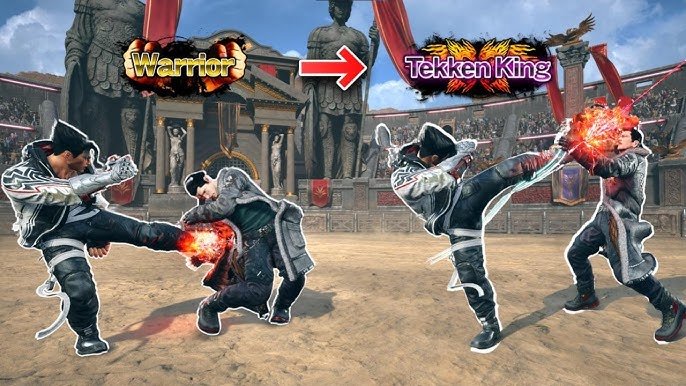
A frame trap in Tekken 8 is a situation where your opponent is forced to act after blocking, and that action is then punishable by you.
Have you ever felt like you’re being baited in Tekken 8? That’s likely the feeling of falling into a frame trap. It’s a core concept of the game’s combat. Understanding Tekken 8 what is a frame trap and how to set them up is important if you want to improve.
These situations exploit the opponent’s natural reaction after blocking, often leading to powerful counter hits. You gain an advantage from their defensive position. This is a tool to add to your offensive style.

Tekken 8 What is a Frame Trap?
Alright, let’s get into the nitty-gritty of frame traps in Tekken 8. If you’re new to fighting games, this might sound a bit technical, but trust me, it’s a really important part of the game. Think of frame traps like sneaky tricks you can use to make your opponent walk right into your attack. It’s all about manipulating the timing of your moves to create an opportunity for a good hit.
Understanding Frames in Tekken 8
Before we can understand frame traps, we need to understand the concept of “frames” in Tekken 8. Imagine your game is like a flipbook animation. Each page in the book is like a single frame, and when you flip through them quickly, it looks like your character is moving. Tekken 8 is a fast-paced game, and all actions, from attacks to movements, happen within these frames. Each action has a specific number of frames associated with it; for example, a jab might have a startup of 10 frames (the time before it hits), and be -2 on block, meaning your character is at a slight disadvantage after that move. You have to understand frame data to understand frame traps. Frame data shows the details about the recovery time and how much advantage or disadvantage each move has after the attack is blocked or hits.
What is Frame Advantage and Disadvantage?
Frame advantage and disadvantage are crucial. When a move is “+ frames on hit/block,” it means that after that move, you can act sooner than your opponent. For example, if your move is +3 on block, it means after your opponent blocks your attack, you have a 3-frame advantage, letting you act 3 frames earlier than your opponent. This is what we call “plus frames,” where you have the initiative. On the flip side, if a move is “- frames on block/hit,” your opponent can act sooner. Being “-2” on block, means you are at a disadvantage. Understanding which moves have plus frames and which have minus is vital to playing well.
The Essence of a Frame Trap
A frame trap, is a situation where you use moves with plus frames on block to bait your opponent into taking an action when they are at disadvantage, which leads to them getting hit. Basically, you make your opponent think they have a chance to interrupt you after you did a move. However, they are still in a disadvantageous position, so if they press a button after your move, you can attack them first before their attack hits you. Because you are attacking them when they are trying to attack, you’re “trapping” them with your frame advantage.
How does Frame Traps Work?
Here’s a detailed breakdown of how a frame trap actually works:
- The Setup Move: You begin with an attack that leaves you at frame advantage on block. This gives you “plus frames,” putting you in a better position to act first. For example, let’s say you do a move that is +2 on block. This move lets you act 2 frames faster than your opponent.
- The Bait: Your opponent has blocked your move, but they’re also at a disadvantage. The minus frames might make them feel like they have the right time to respond. Because human instincts say press a button immediately after blocking, they are tempted to press a button to attack or interrupt you.
- The Trap: Here’s the trick! Before your opponent can react, you launch a new attack during the frame advantage. Because you are plus frames from your first move, you can attack before your opponent can attack, which lets your attack hit before theirs, so they are hit instead.
- The Payoff: Your opponent’s attempted attack gets stuffed, and your attack lands cleanly. You’ve successfully trapped them.
A perfect frame trap isn’t based on luck, it’s based on understanding your frames and having the right moves to put your opponent into a very bad situation. It’s about creating a predictable pattern in your attacks and breaking that pattern so that your opponent will fall into your trap.
Frame Trap Examples in Tekken 8
Let’s look at some more specific examples of frame traps, using common moves you might see in Tekken 8:
Example 1: Simple Jab Setup
A common setup for a frame trap is with the use of a jab. Suppose you’re playing as Paul Phoenix, and you use his jab, which is “+1 on block”. If your opponent blocks the jab, they might try to use a quick attack. But because your jab is +1 on block, you are +1 in frame advantage. Which means, you are 1 frame ahead. With your +1 advantage, you can throw a faster move, like another jab or a mid, that will catch your opponent attempting to press a button because they are -1 on block from blocking your initial jab.
Example 2: Using a string
Certain character strings can be used to set up a frame trap as well. If one move of a string is + frames on block, and you decide not to do the other moves in the string, then it can be used to create a frame trap. For example, let’s say a character has a string that starts with a low, followed by a high. If the low is +2 on block, it can be used to frame trap. If the opponent blocks the first move in the string (the low) and decides to try to interrupt the rest of the string with a jab, then they will get hit by a fast mid because they were -2 after blocking the initial low. This will work as a frame trap. It tricks the opponent to press a button when they are at a disadvantage.
Example 3: Using Movement for Frame Traps
Frame traps are not just about hitting buttons. Sometimes, you can use movement to create a frame trap, this is called a movement trap. For example, after doing a move that’s +1 on block, you might expect your opponent to try to jab. So you might take a single step backward and immediately go for a move that is quick with great range. This movement will make the opponent’s attack miss, while your move connects, thus making it a movement trap or movement frame trap.
Why Frame Traps are Important in Tekken 8
Frame traps are super important in Tekken 8 because they:
- Open up your opponent: They force your opponent to hesitate and be more afraid to respond.
- Increase offense: They allow you to continue your offensive pressure more safely, as you’re at a better frame advantage.
- Punish mistakes: They capitalize on your opponent’s eagerness or lack of understanding, turning small hesitations into big damage opportunities.
- Boost your game: Frame traps provide an extra layer of strategy in Tekken 8. They separate good players from great players, because they require some level of understanding about frame data.
How to Identify and Counter Frame Traps
Okay, so now that you know how to use frame traps, it’s also important to know how to recognize and deal with them. Here’s what to do:
Recognizing Frame Traps
- Pay attention to frames: Start by learning the frame data of your moves and your opponent’s most common moves. Knowing who is on plus and minus, will help you realize when you’re trapped.
- Watch for patterns: If you notice your opponent constantly doing a move and then another move right after, this could very likely be a frame trap.
- Don’t be predictable: If you find yourself pressing a button after blocking every time, you will be very predictable and prone to getting trapped. Try to be unpredictable.
Countering Frame Traps
- Don’t mash after blocking: This is the most important thing to do. If you mash buttons right after blocking an attack, you’ll easily get frame trapped. Instead of mashing, wait to see if they continue to attack.
- Use movement: Instead of attacking, use movement, like back dashing or side stepping to create space.
- Use defensive moves: If you think they will continue to attack, use defensive moves like guard all, guard all low, guard parries, or reversals to avoid getting hit.
- Use safe moves: Use your fastest and safest moves. If you are at a big disadvantage, you can try to use your fastest moves to try to interrupt your opponent. However, this might be risky. So try to choose safe moves.
Advanced Frame Trap Tactics
Once you get the hang of basic frame traps, you can start incorporating more advanced techniques:
Varying Your Timing
Don’t always follow up a plus-on-block move with another immediate attack. Sometimes, delay your next attack a little bit, because some players will expect a fast attack after the blocked attack. If you delay it a bit, your opponent might attack first, thinking you will not attack immediately, and then they will get hit.
Conditioning
Use different follow-up attacks to condition your opponent to expect a certain follow up. Once they’re conditioned to expect a move, you can switch it up to catch them off guard.
Using Mix-Ups
Combine frame traps with mix-ups (highs, lows, mids) to make it harder for your opponent to defend. If you make your opponent expect one thing and you do something different, that will be very hard for them to read and they will be prone to make mistakes.
Understanding frame traps in Tekken 8 is really vital to improving your game. It’s a mind game that involves knowing the frames, and baiting your opponent to attack at the wrong time. It’s not just about raw execution, it’s also about strategy and how well you can get inside your opponent’s head.
Frame traps are a key part of the advanced techniques you should use in Tekken 8. If you’re looking to go beyond just button mashing, understanding the concept of frame traps is the first step. If you want to get better at Tekken 8, you need to understand this concept. With practice, you’ll not only become better at using frame traps, but also at countering them, which will make you a much better player.
Frame Traps For Dummies – Tekken 8
Final Thoughts
Essentially, a frame trap in Tekken 8 manipulates your opponent’s recovery frames. It makes them think they can act, but they are actually vulnerable to another attack. Understanding and utilizing frame traps is key for higher level play.
‘Tekken 8 what is a frame trap’ involves baiting reactions with advantageous moves. Players can create situations where their opponent’s defensive actions are punishable. This concept is vital for controlling matches.
Therefore, learning frame data and practicing setups are crucial. These skills provide significant offensive advantages in Tekken 8.

