
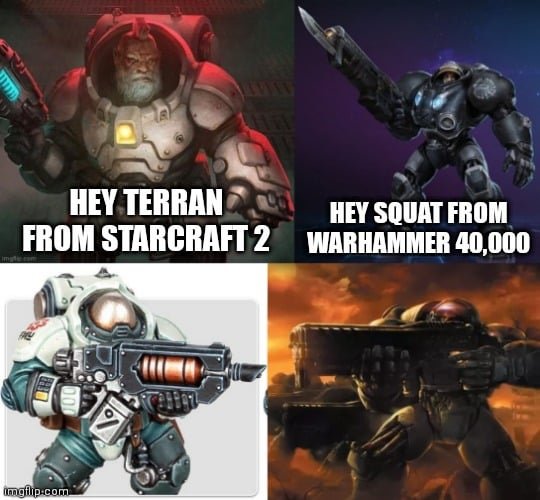
No, Starcraft was not supposed to be a Warhammer game. It was a completely original intellectual property created by Blizzard Entertainment.
The rumors swirl, persistent as a zerg rush, about the origins of Starcraft. Many players wonder, “was starcraft supposed to be a warhammer game?” The similarities are certainly there: futuristic soldiers, alien races, and epic battles.
These connections have fueled fan theories for years. However, Blizzard has always maintained that it was an independent creation. The game drew inspiration from various sources, but it’s a unique entity.

Was Starcraft Supposed to be a Warhammer Game?
The rumor mill has been churning for ages, whispering that the beloved real-time strategy game, StarCraft, was initially envisioned as a Warhammer 40,000 game. This idea certainly sparks curiosity and makes you wonder: could the gritty, futuristic battles we’ve come to love have actually been set in the grim darkness of the far future? The short answer is a bit complicated, it’s not a simple yes or no. Let’s dive into the evidence and explore the story behind the game’s development and the reasons why this rumor is so persistent.
The Seeds of a Rumor: Similarities Between Starcraft and Warhammer 40,000
The “StarCraft was almost Warhammer 40k” idea didn’t appear out of thin air. When you look closely, it’s easy to see why many fans thought they saw Warhammer in StarCraft’s design. The thematic similarities are hard to ignore. Both franchises feature three distinct, warring factions, each with its own unique style, strengths, and weaknesses. Let’s break down these resemblances:
- Space Marines vs. Terrans: The heavily armored, technologically advanced Space Marines of Warhammer 40,000 bear a strong resemblance to StarCraft’s Terrans. Both are human-based factions that rely on a mix of ranged firepower and durable, slow-moving units. Think about the power armor, the use of guns and tanks – the parallels are striking.
- The Tyranids vs. The Zerg: The swarming, bio-engineered Tyranids are very like the Zerg. Both are insectoid alien races that overwhelm their enemies with sheer numbers. The focus on melee combat, fast-moving units, and a hive-mind mentality makes this parallel very easy to spot.
- The Eldar vs. The Protoss: The psychic, technologically advanced Eldar, with their graceful, powerful units, share similarities with the Protoss. Both are ancient races with high technology and powerful psionic abilities. While the design differs in some key areas, the shared emphasis on psionics and superior technology is evident.
The core mechanics also feel similar at times. Both Warhammer 40,000 and StarCraft emphasize tactical positioning, resource management, and building a balanced army. The feeling of controlling units on the battlefield is quite similar if you compare certain units on each side to their counterparts. These connections, both visually and mechanically, make the idea of StarCraft as a Warhammer offshoot seem plausible.
The Early Days of Blizzard and Licensed Games
Before StarCraft took the world by storm, Blizzard Entertainment wasn’t yet the giant it is today. In its early years, Blizzard worked on several licensed games, adapting existing properties into video games. This is important because it adds a layer of credibility to the Warhammer 40,000 connection. Developing a game based on an existing property was a common practice then. Some of Blizzard’s early work included titles like The Lost Vikings and Blackthorne, but they also worked on other licensed titles. This experience working with external IP does make the idea of them considering Warhammer 40k at one point seem plausible. This practice makes it understandable that people believe Blizzard might have initially planned to build a Warhammer 40k game, as they were already familiar with working with licenses.
Why Starcraft Isn’t Actually a Warhammer Game: Blizzard’s Account
Despite all these similarities, Blizzard has repeatedly stated that StarCraft was never intended to be a Warhammer 40,000 game. The company emphasizes that they created their own universe and lore. Let’s look at their explanations:
- Creative Control and Ownership: One of the main reasons Blizzard didn’t pursue a Warhammer 40,000 game was the desire to have complete creative control. Working with a licensed IP can be restrictive. They wanted to create something entirely their own, without being bound by someone else’s established universe and rules. Blizzard wanted to own the characters, lore, and universe of their game. This is a major reason why they pursued creating a new sci-fi universe instead of working with an existing one.
- Design Evolution: The designers at Blizzard have explained that StarCraft’s development started with the idea of creating a fun and balanced strategy game. The initial design of the three races wasn’t created as a copy of existing Warhammer armies, but rather they were designed to be unique and each have their strengths and weaknesses and playstyle. They gradually refined the look and the gameplay as they developed the game, making changes to the units and their abilities. The final design was the result of their own internal creativity and brainstorming rather than a direct adaptation of Warhammer.
- The Importance of Original Lore: Blizzard took the worldbuilding process very seriously. They wrote detailed backstories for all three races, each with its own history, motivations, and culture. This rich lore is one of the main reasons StarCraft remains so popular to this day. Creating a compelling narrative that is deeply integrated with the gameplay is something that Blizzard takes seriously and is at the heart of all of their games. They wanted full ownership of the narrative and characters.
The Influence of Other Sci-Fi
While Warhammer 40,000 may have influenced some of StarCraft’s themes, other sci-fi sources likely also had an impact. Blizzard developers have mentioned drawing inspiration from:
- Alien: The Xenomorphs from the Alien series undoubtedly influenced the design and behavior of the Zerg. The alien creature concept is a shared concept, along with the use of biomechanical elements.
- Starship Troopers: This classic science fiction novel and film featuring human soldiers fighting insectoid aliens has likely also influenced both the Terran and the Zerg armies. This is quite clear and quite logical.
- Other Sci-Fi Concepts: The general idea of space battles, psychic powers, and advanced technology found in many science fiction stories have contributed to the overall feel of StarCraft.
It’s clear that StarCraft’s influences came from a variety of different places, not just Warhammer 40,000. These influences were mixed together to create something unique. That is the main difference. Yes, there may have been an initial idea inspired by Warhammer, but it wasn’t the only source and was quickly changed into something unique.
The Persistence of the Rumor: Why It Sticks
Despite Blizzard’s official statements, the “StarCraft was supposed to be a Warhammer game” rumor continues. Here’s why this theory is still going strong:
- The Obvious Parallels: The similarities between the three factions in both universes are just too striking to ignore. It’s easy for people to believe that such obvious parallels can’t just be coincidences. These connections are visible and have an impact on those playing the game.
- Early Concept Art Speculation: Some early concept art for StarCraft that surfaced shows designs that have Warhammer 40k influences. Although Blizzard denies them being Warhammer-related, the similarity between these early images and Warhammer 40k is undeniable. These designs may have fueled the rumor by showing some resemblance to elements from Warhammer.
- The Desire for a Warhammer RTS: Many fans of Warhammer 40,000 have always longed for a truly great real-time strategy game set in that universe. The success of StarCraft, combined with the similarities, made some fans wish that StarCraft was actually their dream Warhammer game. These fans looked at Starcraft and saw what they thought Warhammer 40k could have been, creating the theory around it.
The Power of Fan Theories
Fan theories often take a life of their own. The “StarCraft was almost Warhammer 40k” idea has become a popular and long-lasting fan theory, especially as the theory has made its way to online communities. It’s a classic example of how a great idea can become an enduring part of a franchise’s history, even if it’s not entirely true. These theories are often based on speculation, but they add a lot to the culture of a particular game and its fans. Sometimes a theory is so interesting that it sticks even when it’s proven to be wrong. The “StarCraft was supposed to be a Warhammer game” rumor is a perfect example of this.
The Impact of Original Design: The Legacy of StarCraft
Regardless of its origins, StarCraft made its mark in video game history. The game had a huge impact on strategy game design and competitive gaming. Here’s how its original design contributed to its success:
- Asymmetrical Faction Balance: StarCraft’s greatest strength lies in its perfectly balanced yet very unique factions. Each faction has its own play style and strategic options, but each is balanced against the other. This allows for a huge amount of strategic depth. This balance has become one of the most highly praised aspects of StarCraft.
- A Focus on Micro and Macro: The game requires players to manage both their economy and their units on the battlefield. Players must balance creating structures and building a force. This dual focus on managing resource production and unit micro makes for a challenging and interesting game.
- Deep Lore and Storytelling: The narrative of StarCraft is deep and intricate and it is something many fans hold in high regard. The story is as engaging as the game itself, something not always common with strategy games. Many people became invested in the characters, the lore, and the universe. This deep investment is what keeps fans coming back to the series.
Starcraft’s Influence on the Gaming Industry
StarCraft’s impact on the gaming industry is undeniable. Its influence is seen across many other games that have been released since its release. The game’s success established real-time strategy as a popular genre, and the game’s approach to multiplayer made competitive play more popular. StarCraft played a significant role in how games are played, watched and discussed. In South Korea, the game even became a national sport, a sign of its influence on popular culture. The competitive scene is quite large, with many professional players around the world. StarCraft has definitely left a legacy in gaming history.
So, was StarCraft supposed to be a Warhammer game? The evidence suggests it’s not that simple. While there may have been some initial thematic inspirations, Blizzard ultimately crafted its own unique universe with its own story and lore. The game’s own individual design and gameplay stand on its own. It has become a true classic in gaming history. The rumor is a testament to how fan theories can grow and last over time, and it shows how players can be highly invested in the games they love.
Did StarCraft rip off 40K?
Final Thoughts
The similarities are undeniable, yet Blizzard maintains Starcraft was a unique creation. Many speculate about a potential Warhammer 40k influence, especially in early development. Legal issues might have further pushed Starcraft in a different direction.
Ultimately, whether ‘was starcraft supposed to be a warhammer game’ remains a subject of debate. The final product stands as a highly influential real-time strategy title, independent of its origins. The game must be evaluated on its own merits.

