
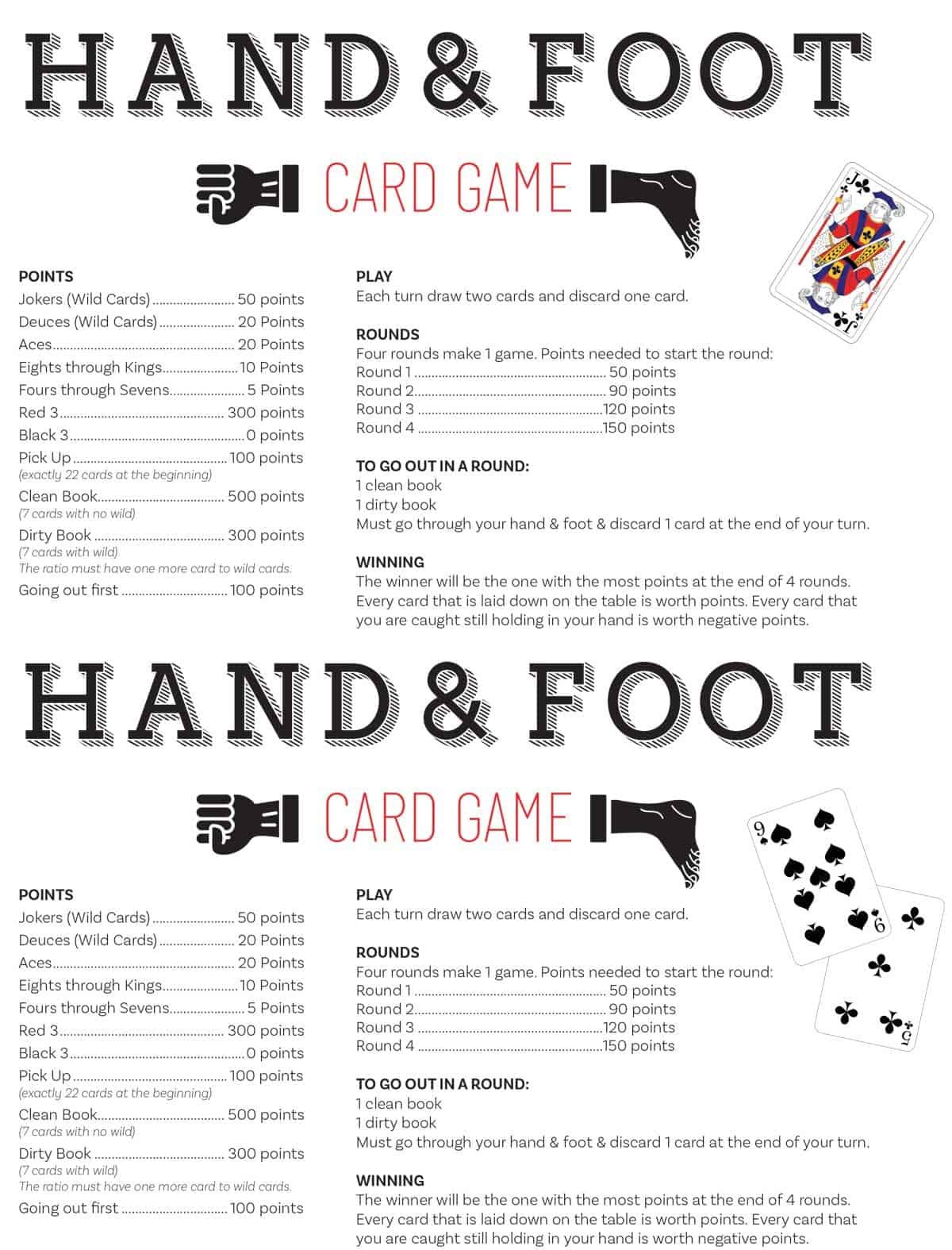
The core rules for hand and foot card game involve using two decks of cards, forming melds of same-rank cards, creating canastas of seven or more cards, and going out by playing all cards. Players also draw and discard cards, accumulating points based on the cards in their melds and canastas.
Have you ever heard friends excitedly talk about hand and foot, but felt a little lost? It’s a game that many enjoy, but the rules can seem a bit intricate at first glance. So, let’s explore what are the rules for hand and foot card game and remove any confusion. This card game involves strategy and teamwork, where you build melds and aim for canastas.

What Are the Rules for Hand and Foot Card Game
Hand and Foot is a really fun card game that uses a few decks of cards, and it’s played by teams. It might seem a little complicated at first, but once you understand the basic rules, you’ll be playing like a pro in no time! This article will explain everything you need to know, so grab your cards and get ready to learn.
The Basics of Hand and Foot
Before we dive into the nitty-gritty, let’s talk about the basic idea of Hand and Foot. In this game, teams work together to score points by making “books” of cards and eventually going “out.” It’s called Hand and Foot because, at the start, you’ll have two hands of cards: one that you play with, and another that you’ll use later on when the first hand runs out. It might sound a bit tricky, but trust me, it will make sense.
What You Need to Play
- Cards: You’ll need several decks of standard playing cards. Usually, the number of decks depends on how many people are playing. A good rule of thumb is to use two decks for two to four players, three decks for five to six players, and four decks for seven to eight players.
- Players: Hand and Foot is a team game, so you’ll need at least four people to play. You can also play with six or eight people. Usually, the players break into teams of two.
- A Table: A big table is ideal for keeping all the books of cards organized.
- Score Sheet: You need something to keep track of your team’s score.
Setting Up the Game
Setting up Hand and Foot the right way is key to having a good game. Let’s go through the steps:
Dealing the Cards
A player shuffles all the decks of cards, and a designated dealer gives each person 11 cards. This is your first hand. Then, the dealer gives each player a second set of 11 cards. The second set of cards is stacked face-down in front of each player; this is your “foot.” The remaining cards become a draw pile in the middle of the table. Everyone has their hand cards and their foot cards. It’s important not to mix them up!
Setting Up the Discard Pile
The dealer turns over the top card from the draw pile and puts it face-up next to the draw pile. This is the start of the discard pile. It’s where you’ll put unwanted cards during your turn.
Creating the Foundation
Before the first round starts, the table needs to have a space to make the ‘books’ or melds of cards. Each team will put their books on the table as they make them during the game. Usually, the books are kept neatly lined up so everyone can see what is going on.
Understanding Card Values and Melds
Understanding what different cards are worth is important in hand and foot. Let’s talk about the value of each card and what a “book” means.
Card Values
- Number Cards: Cards 4 through 10 have the number value of their face. So, a 7 of hearts is worth seven points.
- Face Cards: Jacks, Queens, and Kings are worth 10 points each.
- Aces: Aces are worth 20 points each.
- Jokers: Jokers are worth 50 points each, and they are special cards that act as wilds.
- Red Threes: Red threes (hearts and diamonds) are special cards that you put face up on the table and they are worth 500 points.
- Black Threes: Black threes (spades and clubs) are special cards that block the discard pile.
What are Melds (Books)?
In Hand and Foot, a “book” is a set of cards of the same rank or value. For example, you can make a book with three or more of the same type of card. Think of a book as a mini-stack of cards of same number or picture.
Here’s how you make a book and what you should know:
- Minimum Cards: You need at least three cards of the same rank to make a book. You can add more cards to it later.
- Wild Cards: You can use wild cards (jokers or twos) in your books to help you make them faster, but keep in mind that every book has a limit on the number of wild cards you can put in a book. Usually, there is a rule in your local game that states how many wild cards you can add to each book.
- Multiple Books: You can make multiple books of the same rank if you have enough cards. For example, if you have six 8s, you can make two books of 8s.
When the books of cards are out, then your team has a ‘clean’ or ‘dirty’ book. We’ll talk about that next.
Clean and Dirty Books
There are different types of books that you can make: clean and dirty.
What is a Clean Book?
A clean book is made without using any wild cards (2s and Jokers). It should have at least three of the same face cards.
What is a Dirty Book?
A dirty book is made with at least one wild card. Remember that most of the time, there is a rule about the amount of wild cards you can use in a single book.
The Game Play Step by Step
Now that we know about the card values and melds, it’s time to understand how a turn works in Hand and Foot. Here’s a step-by-step guide to each player’s turn:
Start of Your Turn
At the beginning of your turn, you have to do one of two things: pick a card from the top of the draw pile, or take all of the cards from the discard pile. You can only choose one of these things each turn.
- Drawing from the Draw Pile: Simply pick the top card from the pile and add it to your hand.
- Taking the Discard Pile: If you choose to take the discard pile, you have to pick up all of the cards.
If there is a black three on top of the discard pile, you cannot take the discard pile. The purpose of the black three is to lock the discard pile, so that the player must pick a card from the draw pile.
Making Melds (Books)
After you pick up a card, you can make as many books as you can or would like to. Remember that every book must have at least three cards of same face. You can add to any of the books that your team has already started. If you haven’t started a book yet, you must start a brand new book before you can add cards to existing books.
Laying Down Cards
When making a book or adding cards to an existing book, you need to place the cards face up on the table, so that everyone can see it. This will help every player know what your team is doing.
Ending Your Turn
When you are done adding to books, you end your turn by discarding one card from your hand into the discard pile. That card faces up, and you cannot keep it to play on the next turn.
Going Out
The goal of Hand and Foot is to be the first team to “go out” with all of their cards. But you have to do a few important things before going out. You cannot go out until your team has made a certain number of books.
Required Books
Before going out, each team usually must have at least one clean book and one dirty book. However, these requirements are usually agreed to by the players before the game begins. This may change based on the specific variation that you are playing.
When Can You Go Out?
Once you have fulfilled the book requirements, you must then play all the cards in your hand, and then all the cards in your foot to go out. This means that you must add any card you can to a book. At the end, you discard the very last card in your hand. It’s important to remember that you have to have to play all the cards in your foot to go out.
How Does a Round End?
When a team goes out, that round ends immediately. The other team will not get another turn. Everyone will then need to add up their points for the round to keep track of how well their team did.
Scoring in Hand and Foot
Scoring in Hand and Foot can seem complicated at first, but it’s pretty straightforward once you understand it. Every team adds up the value of the cards they have melded and then subtracts the value of the cards that are still in their hand or foot. Let’s break it down.
Points for Melds
Each card in a book is worth a certain number of points based on its rank. All your face up books are worth points.
- Number Cards (4-10): Face value
- Face Cards (J, Q, K): 10 points each
- Aces: 20 points each
- Jokers: 50 points each
- Red Threes: 500 Points each (these are kept on the table throughout the game, not melded)
Points for Unplayed Cards
Any cards that are still in a player’s hand or foot when a team goes out are counted against them. This means that they must subtract the value of these cards from their total points.
- Number Cards (4-10): Face value
- Face Cards (J, Q, K): 10 points each
- Aces: 20 points each
- Jokers: 50 points each
- Black Threes: 100 points each.
Special Points
- Going out awards a bonus of 100 points.
- If a team has no cards left in their foot when another team goes out, this is 100 bonus points.
- If a team has no cards left in their hand when another team goes out, this is also 100 bonus points.
Keeping Score
Keep track of each team’s score after each round on a score sheet. Write the score for each team in each round. Once a team gets a total score of 5,000 or higher, the game is over and the team with the most points wins. Depending on the game variation, this number can change.
Strategies and Tips
Once you know the basic rules, here are some great strategies that will help you improve your game.
Be Smart with Wild Cards
Jokers and twos are precious, so you shouldn’t use them just to make any old book. Save them for when you really need them. Try to make the most of your wild cards in books with high point value cards like Aces.
Discard Wisely
Think about the card you are discarding. Don’t discard cards that might help your opponents, such as high-value cards. For example, if you have to discard a King, but your opponent already has two Kings, then it would be a bad idea to discard the King that you have.
Watch Your Opponents
Keep an eye on what your opponents are doing. This will help you understand what cards they are trying to get, and you can use this knowledge to play your cards better.
Communicate with your Partner
Hand and Foot is a team game, so talk to your partner about what you need to achieve your goals. Don’t show each other your cards, but you can talk about what number cards you need, or if you are getting close to the ‘go out’ stage.
Practice Makes Perfect
The more you play Hand and Foot, the better you’ll get at it. Don’t worry if you make mistakes at first. Just keep practicing, and you’ll be a pro in no time!
Hand and Foot is a game of teamwork, strategy, and luck. By understanding the rules, values, and strategies, you’ll have a better time playing this classic game. So, gather your friends, shuffle your cards, and get ready for hours of fun!
How to Play Hand and Foot
Final Thoughts
Hand and Foot utilizes multiple decks, players form melds of the same number cards. They must create a “book” of seven before going out. This happens after picking up a discard pile or drawing.
Players deal two hands, a “hand” and a “foot”, playing the hand first. Once the hand is empty, players can pick up their foot, continuing their turn. “What are the rules for hand and foot card game” include specific point values for cards which determine the winner.

