
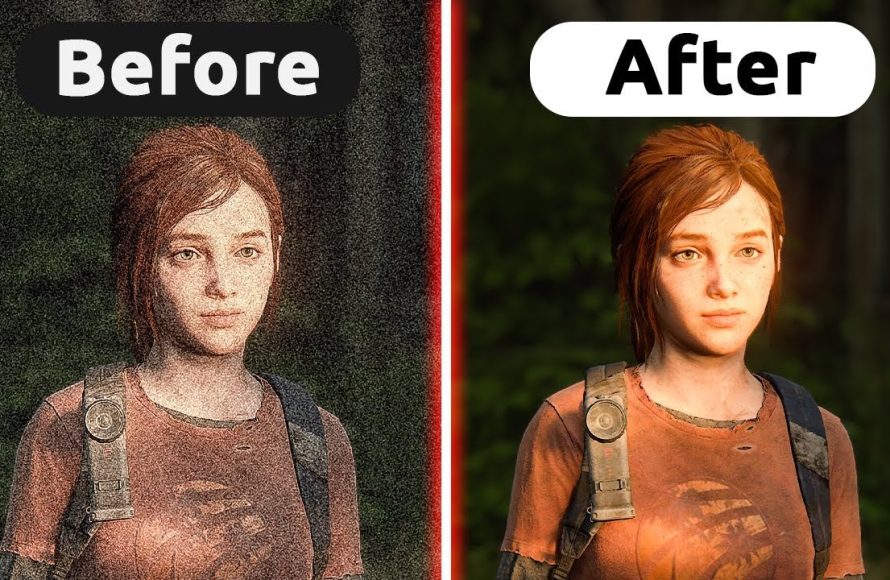
Film grain in games adds a subtle, textured noise that simulates the appearance of film stock, enhancing the visual aesthetic and often contributing to a more cinematic or gritty feel.
Have you ever noticed that slightly grainy texture in some games, especially during darker scenes? It’s called film grain, and it’s a visual effect intentionally added by developers. But, what does film grain do in games exactly? It’s not just random noise; it serves a purpose in shaping how we perceive the virtual world.
This subtle effect imitates traditional film, creating a specific aesthetic that designers use to evoke different moods and enhance immersion. It can make a game feel more gritty, realistic, or even nostalgic, adding a layer of visual richness.

What Does Film Grain Do in Games?
Have you ever played a video game and noticed a sort of fuzzy, speckled texture on the screen? That’s likely film grain, and it’s not just random noise! It’s a deliberate effect that developers use for several interesting reasons. Think of it like the tiny specks you see in old movies – it’s there on purpose, and it can really change how you experience the game.
The History of Film Grain: From Real Life to Virtual Worlds
Before we dive into how film grain works in games, it’s helpful to understand where it comes from. Film grain isn’t something made up for video games; it’s actually a real characteristic of traditional film photography. When movies were shot on film (the kind you had to develop in a darkroom), tiny crystals of silver halide on the film reacted to light. These crystals, when developed, created the image, but they also created a slight, random pattern – the film grain. The size and visibility of the grain depended on the film’s sensitivity to light, called “ISO” or “ASA”. Higher ISO film, used in low-light situations, would have more noticeable grain.
So, when we see film grain in a game, it’s an attempt to replicate this old-school film effect. Game developers are using it to add a certain aesthetic touch, and it’s not always about mimicking real film 100%. It’s often a stylized choice.
Why Game Developers Use Film Grain
There are multiple reasons why game developers might choose to use film grain. It’s not always about realism. Let’s explore the most important ones:
Adding a Cinematic Feel
One of the most common reasons to add film grain is to make the game look more like a movie. We’re used to seeing grain in many films, especially older ones. By adding it to a game, it can give it a more dramatic and cinematic quality. Games with a focus on story telling and immersive experiences often use this technique to create a particular mood.
For example, a horror game might use heavy grain to create a sense of unease and tension, mimicking the style of old horror films. A historical game might use subtle grain to make it feel more authentic and timeless. Imagine playing a game set during a world war, with the grainy visuals mimicking old war footage. The grain adds to the feel of the game.
Think of it like this: when you watch old movies, sometimes the grain is very noticeable, and it gives the movie a particular vibe. Games do that too!
Hiding Imperfections
Sometimes, film grain is used to cover up small visual problems in a game. Imagine that the game’s graphics engine is having a hard time rendering complex scenes smoothly, or maybe there are some slight artifacts or ‘jaggies’ (jagged edges) in the image. Adding film grain can help mask these issues by giving your eyes something else to focus on. The fine texture of the grain blends the imperfections into the overall image making them less noticeable. It’s like putting a textured overlay on top of a slightly flawed picture to help it look better.
However, it’s important to know that if the underlying rendering is very bad, film grain won’t solve everything. It’s better to have good rendering in the first place.
Creating a Specific Artistic Style
Film grain isn’t always about realism or hiding flaws. Sometimes, it’s a deliberate choice to create a unique look. Some games use heavy grain as a stylized choice, giving the game a gritty, raw look. Think of the difference between a modern, clear photo and a vintage one. Film grain adds that vintage-like texture that can be part of the game’s overall aesthetic. A post-apocalyptic game with a lot of film grain could convey a sense of decay and degradation.
Many indie games use unique styles to help their games stand out, and adding a specific amount of grain or noise might be one of them.
Adding Depth and Texture
Film grain can also make an image feel less flat by introducing some subtle texture. In games with highly detailed environments, film grain can enhance the feeling of depth, making surfaces like walls, floors, and skies appear more interesting and less artificial. It provides a small visual variance, making everything not look completely uniform. It can help to make the game world appear richer and more detailed.
It’s subtle, but when you play a game without film grain, and then with it on, you may notice the difference in the level of depth and the richness of the texture of the surfaces.
How Film Grain Works Technically
Technically, film grain in games is usually applied as a post-processing effect. This means it’s added to the image after the game’s graphics engine has rendered the scene. The game creates a base image, and then a film grain filter is applied on top of it.
This filter usually works by adding randomly distributed pixels, with a specific intensity or brightness, to the screen. The amount of grain, the size of the grain ‘particles’, and the way they are distributed can be adjusted. Developers can control how much grain they want to show, and even make it change based on what’s happening in the game. For example, the grain might increase in intensity during stressful moments in the game, or during low light scenarios.
Let’s simplify it. Imagine your game creates a beautiful painting and then on top of it, it adds tiny dots all over the painting. That’s how film grain is created in games. Each dot is like a grain of sand.
Types of Film Grain Implementations
Film grain is not a one-size-fits-all effect. Game developers can tweak it in different ways to achieve different results. Here are some common types of film grain implementations:
- Static Grain: This is the simplest form. The grain pattern stays the same, regardless of what’s happening in the game. It’s like having a transparent sheet of speckled paper on top of the screen.
- Dynamic Grain: This type of grain reacts to what’s happening in the game. It might become more prominent in dark areas or during intense action sequences. This can make the game feel more dynamic and alive.
- Adjustable Grain: Some games let players control the intensity of the film grain effect in the graphics settings. This means players can choose how much grain they want to see. This is great because it means people can customize the game to their taste.
- Color Grain: Some developers use colorized grain, to change the style and look of the game or to simulate old film stocks, which often exhibit colored grain rather than just grayscale.
The Impact of Film Grain on Game Performance
Film grain is a post-processing effect, so it uses up some of your computer’s or console’s processing power. But the good news is, the impact is usually quite small. Compared to other graphics effects like ray tracing or high-resolution textures, film grain is generally very lightweight. It adds a lot to the visual feel of a game with minimal performance cost. Even on older machines, you can usually use film grain without significantly affecting frame rates.
However, very extreme or poorly implemented film grain effects can potentially slow down a game a little bit, especially on lower-end systems. But most developers optimize it in a way to prevent performance issues.
Pros and Cons of Film Grain
Like any visual effect, film grain has its advantages and disadvantages:
Pros:
- Adds a cinematic, dramatic look to games.
- Helps hide minor visual imperfections.
- Creates a specific artistic style or vintage feel.
- Adds texture and depth to the visuals.
- Has a small impact on performance.
Cons:
- Can be distracting to some players, particularly if it’s too strong.
- Can reduce visual clarity.
- Can make the image feel more noisy and less smooth.
Why Some People Dislike Film Grain
Even though game developers include film grain for specific reasons, many gamers don’t like the effect. Here’s why:
Visual Clarity
One of the main complaints about film grain is that it makes the image look less sharp. It can make it harder to see fine details in the game world and can be distracting when you are trying to focus on specific things. If the grain is too strong, it’s like looking at a picture through a slightly dirty or hazy window.
Annoyance and Discomfort
Some players find film grain to be visually annoying or even headache-inducing, particularly over long play sessions. The moving dots on the screen may cause eye strain and discomfort for some individuals. If the grain is very noticeable, it can disrupt the focus and immersion.
Personal Preference
Ultimately, a lot of the dislike for film grain comes down to personal taste. Some people simply prefer clean, sharp images without any added noise. Others might feel that film grain is unnecessary or even artificial looking. Whether or not you like film grain will depend a lot on what you prefer to see when you’re playing a game.
Controlling Film Grain in Games
Fortunately, many modern games give you control over the film grain effect. You can adjust its intensity, or turn it off completely, within the game’s graphics settings. This means you can choose how much grain you want to see, or you can remove it altogether if you find it distracting. It’s all about letting you customize the game to your liking.
When you are in the game’s settings menu, look for options like “Film Grain Intensity”, “Grain Effect”, “Noise” or similar words. If a game lets you customize film grain, then these types of options should be available in settings menu, usually in the graphics settings menu.
Remember, if a game doesn’t have options to adjust the film grain effect, you might not be able to disable it completely. But developers often give you this option, so you can play the game exactly how you prefer to.
The Future of Film Grain in Games
Film grain will likely remain a popular visual effect in gaming. As game graphics continue to evolve, developers will continue to find ways to creatively use film grain for artistic effect. The way it’s implemented, its intensity, and how it reacts in-game will change. More games will offer players more precise controls for the effect, so players can tailor their gaming experience. We can also expect more realistic film grain simulations in future games, accurately mimicking the properties of real photographic film.
Film grain is an interesting effect. It adds a lot to the visual style of games. It isn’t just a random effect, it’s added for a reason. It’s something that many developers will continue to use to add specific visual styles to their games. Whether it’s for a gritty aesthetic or for a cinematic feel, film grain is an effect with an interesting past and a potentially bright future in gaming.
Ultimately, whether you like it or not, it’s an effect that has a place in game development, and you’ll likely continue seeing it in many games to come.
So, next time you play a game, take a moment to notice the film grain. Is it adding to the experience, or is it getting in the way? Now that you know what it is and what it does, you can make a more informed decision about whether you want it or not. It’s all part of the fascinating world of game visuals and how they shape our experience.
This makes TLOU 2 look much cleaner (Film Grain Explained)
Final Thoughts
Film grain adds a visual texture to games, mimicking the imperfections of analog film. It creates a more cinematic feel and breaks up the overly clean digital aesthetic. This makes the game environment less sterile.
Ultimately, what does film grain do in games? It introduces a subtle noise pattern, thus contributing to a sense of realism and visual depth. This can enhance immersion and make the game world more engaging.

