
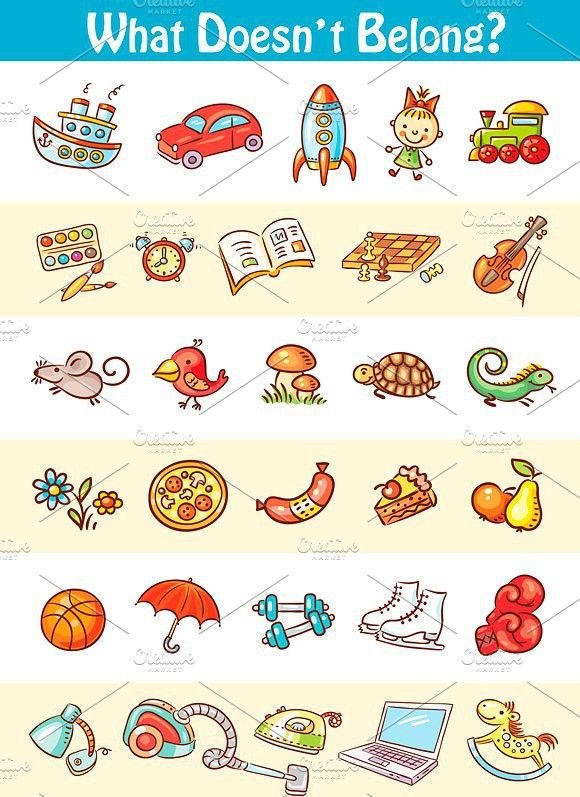
The goal of a ‘what doesn’t belong game’ is to identify the item that is different or doesn’t fit within a given set based on a specific pattern or category.
Have you ever stared at a group of objects and felt that one just didn’t quite fit? That’s the core of the ‘what doesn’t belong game’, a simple yet engaging activity. It challenges your observation skills and logical thinking in a fun way.
These types of puzzles can take many forms, from images to words or even concepts. Spotting the odd one out sharpens cognitive abilities. It also provides an entertaining way to pass the time.

What Doesn’t Belong Game: A World of Fun and Learning
Have you ever played a game where you look at a group of things and try to figure out which one is different? That’s the heart of the “What Doesn’t Belong” game! It’s not just fun; it’s a fantastic way to sharpen your brain, boost your thinking skills, and get your imagination going. This game goes by many names, like “Odd One Out” or “Find the Difference,” but the core idea remains the same: spotting the item that stands apart. Let’s dive into this engaging activity and explore all its fascinating aspects.
The Basics: How to Play
Playing “What Doesn’t Belong” is super simple. You get presented with a set of items, and your mission is to identify the one that doesn’t fit in with the rest. The “belonging” is usually based on some kind of connection or pattern. The items could be anything – pictures, words, numbers, shapes, or even sounds! To get started, let’s think about some easy examples.
Easy Example
Imagine you see these four pictures:
- An apple
- A banana
- A car
- A grape
Which one doesn’t belong? That’s right, the car! All the others are fruits.
See how straightforward it is? It’s a puzzle that doesn’t require special knowledge or tools, just a bit of careful observation. The key is to find the common thread that ties most of the items together and then pick out the misfit.
Why is this Game so Good for You?
You might be thinking, “It’s just a game,” but “What Doesn’t Belong” offers so much more than just entertainment. It has several great benefits for people of all ages, especially for kids who are developing their thinking abilities. Let’s see some advantages.
Improves Critical Thinking
This game forces you to analyze and compare. You have to look at the things and think about their similarities and differences. This type of mental exercise improves your critical thinking skills. You’re not just looking, you’re actively thinking about what you’re seeing, which is great for learning!
Boosts Vocabulary
When you play with words, you can learn many new ones. Figuring out what doesn’t belong can introduce you to words and their relationships. This can expand your understanding of vocabulary and make you a stronger reader and writer.
Sharpens Observation Skills
To find the odd one out, you need to pay close attention to every little detail. This game can help you to notice more in the world around you. You will become a more careful and perceptive observer, and this skill will be valuable for learning and for many other things in your life.
Promotes Problem-Solving
Deciding which item does not belong is essentially solving a small problem. It trains you to think logically and explore different possible explanations before arriving at the right conclusion. It encourages a more analytical way of looking at things.
Encourages Creativity
There can sometimes be more than one right answer, depending on how you look at the items. This game encourages you to think outside the box and come up with creative solutions. It also promotes verbalizing your reasoning, further stimulating your creative process.
Variations of the Game
The “What Doesn’t Belong” game isn’t stuck in one box; it can change and adapt to keep things interesting. Here are some variations that can make the game even more fun.
Picture Based
These involve sets of images, where children must spot the image that doesn’t fit the theme. The images could be pictures of animals, fruits, everyday objects or anything else. Picture-based games are very engaging for visual learners.
Word Based
In this variation, you are given a list of words and must identify the one that doesn’t belong based on categories like synonyms, antonyms, rhyming words, or word families. This type of game strengthens vocabulary and language understanding. For example:
- Happy
- Joyful
- Sad
- Cheerful
Here, the word “sad” does not fit in because the other words are synonyms that mean the same as happy.
Number Based
This version uses number sequences or sets. Players have to determine the odd one out based on rules like even numbers, odd numbers, prime numbers, multiples, or basic arithmetic operations. This improves numeric awareness and calculation skills.
Shape Based
This kind of game presents a series of geometric shapes. Kids have to find the one that differs in terms of size, color, number of sides, or orientation. It helps in developing spatial awareness and knowledge of geometry.
Sound Based
This less commonly used version uses different sounds that could be from musical instruments, nature, or human actions. The player must identify the sound that does not match the others in the same category. This engages auditory perception and critical listening skills.
How to Make the Game More Challenging
As you become better at playing “What Doesn’t Belong,” you might want to make it more challenging. Here are some ideas:
Increase the Number of Items
Instead of four items, try using five, six, or even more. More items mean more things to consider, and this will make you think harder.
Mix Categories
Don’t stick to just one category. Combine things from different areas. For example, mix shapes, colors, and animals in one group. This will challenge your brain to look for less obvious connections.
Add Tricky Items
Sometimes, make the differences more subtle. Use items that are similar but not exactly the same. For instance, use two types of birds but have only one of them that can fly.
Time Limits
Put a time limit on finding the odd one out to make it more exciting. This will test your ability to think quickly and improve your focus.
Using the Game in Education
“What Doesn’t Belong” is a fantastic educational tool. Teachers and parents can use it to teach different subjects and ideas.
Language Development
Use word-based games to help children develop a better understanding of vocabulary, grammar, and sentence structure. You can also use the game to teach synonyms, antonyms, prefixes, and suffixes.
Math Skills
Number-based games help improve a child’s understanding of numbers, sequencing, and basic math operations like addition, subtraction, multiplication, and division. This type of game can also be used to explain more complex concepts like fractions and percentages.
Science
This game is useful to teach scientific concepts. Use pictures of different animals or plants and ask children to identify the one that doesn’t belong in a particular group, according to their characteristics.
Social Studies
Use geographical maps or pictures of different cultures to make a game that will challenge the player to identify the area or culture that does not fit the chosen category.
Art Appreciation
By using artistic images, such as paintings, sculptures, or architecture, children can learn to identify different styles, time periods, and elements of art. This helps to develop their critical perception and appreciation for art.
Making Your Own What Doesn’t Belong Game
Making your own game is easy and very fun. Here is how to do it:
Gather Your Materials
- Paper or a whiteboard
- Pens or markers
- Optional: Pictures, magazines, or other visual aids
Decide on a Category
Choose a topic that interests you or fits your learning goals. It could be anything, like animals, colors, foods, or shapes.
Create Your Sets
Choose at least 4 different items. Three should have something in common, and one should be different. Make sure that the connection is clear, but the odd one out is also distinct.
Test Your Game
Show your game to someone else and ask them to figure out which item is different. This will show you if your game works well or if the odd one out is too obvious or too hard to find.
Example of Different ‘What Doesn’t Belong’ Game Sets
Let’s look at more examples to get a clearer idea.
Example Set 1: Shapes
Here are four shapes:
- Square
- Circle
- Triangle
- Rectangle
Which shape doesn’t belong? The circle, because all the other shapes are quadrilaterals (they have 4 sides).
Example Set 2: Colors
Here are four colors:
- Red
- Blue
- Green
- Table
Which one is the odd one out? The table, because all the others are names of colors.
Example Set 3: Animals
Here are four animals:
- Cat
- Dog
- Fish
- Bird
Which one is different? The fish, because all other animals live on the land.
Example Set 4: Numbers
Here are four numbers:
- 2
- 4
- 5
- 6
Which number doesn’t belong? The number 5, because it is the only odd number.
Example Set 5: Food
Here are four items of food:
- Apple
- Orange
- Carrot
- Pear
The Carrot is the odd one out. The rest are all fruits, while a carrot is a vegetable.
These examples should give you a better understanding of the game and its adaptability to different themes and subjects.
In short, the “What Doesn’t Belong” game is more than just a simple pastime; it’s a tool for developing important skills in a fun and engaging way. It helps with critical thinking, vocabulary, observation, problem-solving, and creativity. By using it in various forms and incorporating it into learning environments, we can make the game an effective part of education and entertainment. Whether you’re playing at home, in the classroom, or just having fun with friends, this game is sure to bring a lot of learning and laughs to the experience.
Who Doesn't Belong? (Game)
Final Thoughts
In short, the ‘what doesn’t belong game’ proves remarkably effective for boosting cognitive skills. This simple activity sharpens observation and promotes critical thinking in children and adults alike. Playing it often can also improve pattern recognition.
It is a great way to learn to differentiate, categorise, and focus on details. This game’s inherent flexibility and ease make it a truly accessible learning tool. Try incorporating “what doesnt belong game” into your learning routine.

