
The central conflict in the Hunger Games is the oppressive Capitol’s control over the districts, forcing children to fight to the death as punishment and entertainment.
The Hunger Games series grips you with its bleak premise, but what drives the narrative forward? Readers often ponder, what is the conflict in the hunger games, the core struggle that fuels the story. It’s not just about survival in a deadly arena; it’s something far deeper.
The true heart of the conflict lies in the power dynamic between the Capitol and the subjugated districts. This unbalanced relationship creates a cruel system where young lives are sacrificed for political games and power. It is this injustice that shapes the whole narrative arc.

What is the Conflict in The Hunger Games?
The Hunger Games isn’t just a story about kids fighting in a scary arena. It’s a story packed with different kinds of conflicts, making it exciting and thought-provoking. These conflicts push the characters, shape their world, and keep us on the edge of our seats. Let’s break down the main clashes happening in Panem.
The Core Conflict: The Rebellion Against the Capitol
At its heart, The Hunger Games is about a big fight between two main groups: the Capitol and the Districts. This is the most important conflict driving the whole story. Think of it like this: the Capitol, located in a place called the Capitol City, is like the fancy, rich kid in school, while the twelve districts are like the kids who have to struggle to get by. The Capitol is super powerful, controls everything, and they’re not very nice to the districts. They force them to send their children as ‘tributes’ every year to fight to the death in the Hunger Games, a cruel reminder of their rebellion of the past against the capitol.
Oppression and Inequality
The Capitol controls everything: the food supply, the jobs, even the fun stuff. They live in luxury, enjoying fancy food and over-the-top fashion, while people in the districts are often starving and working hard every day to just survive. This huge difference in how people live is a major conflict. The districts are treated like they are less important, and the Capitol uses fear and violence to keep everyone in line.
The Hunger Games as a Tool of Control
The annual Hunger Games aren’t just a game. They are a tool the Capitol uses to remind the districts that they are in charge. By making the districts give up their children to fight in this brutal contest, the Capitol demonstrates its absolute power. This instills fear and discourages any thought of rebellion. The games keep the districts divided and less likely to unite against their oppressors.
Internal Conflicts: Katniss’s Struggles
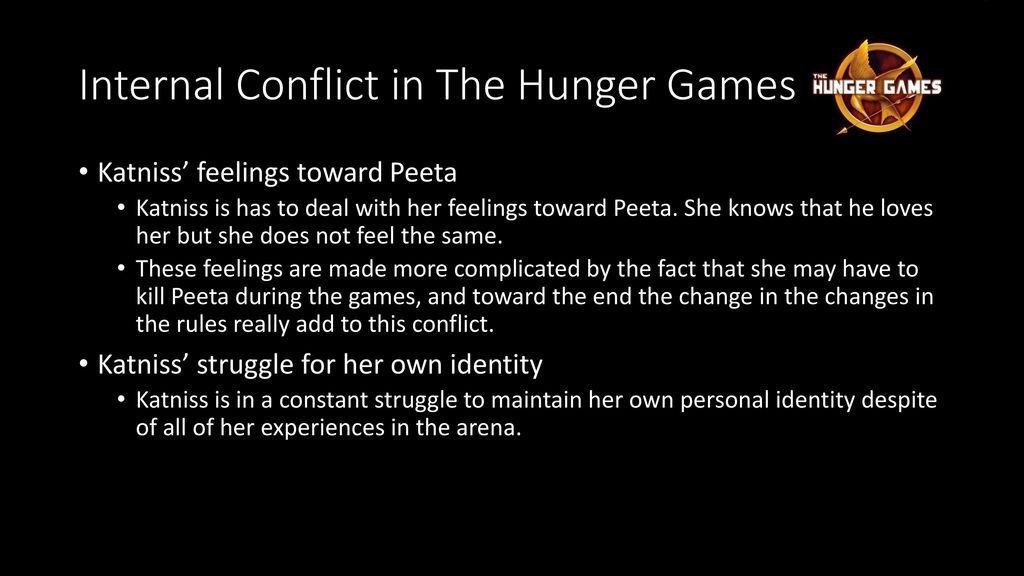
While the big fight against the Capitol is the most obvious conflict, The Hunger Games also explores the internal battles the characters face, especially Katniss Everdeen. These are fights happening within Katniss, making her journey even more compelling.
Survival vs. Morality
Katniss has to make tough choices to stay alive in the arena. Do you do whatever it takes to win, even if it means hurting others? She struggles with her desire to protect those she cares about while also fighting to survive the Hunger Games. This is a battle of right and wrong that causes her a lot of distress. She grapples with the question: how do you keep your humanity in an inhumane place?
Protecting Her Family
Katniss is fiercely protective of her younger sister, Prim. Almost every choice Katniss makes, including volunteering for the Games, stems from her desire to keep Prim safe. This internal battle, the constant worry for her family’s wellbeing, is a major force driving her actions.
Love and Friendship
Navigating her feelings for Peeta Mellark adds another layer to Katniss’s inner turmoil. Is he a friend, an ally, or something more? Can she truly trust anyone when survival is at stake? Her growing relationship with Peeta creates a conflict with her need to stay focused and independent in the face of constant danger. Her friendship with Gale Hawthorne also adds to this inner conflict, further complicating her feelings and loyalties.
District vs. District: Competition and Mistrust
Even though the districts are all oppressed by the Capitol, they are not always united. The Hunger Games force them to be pitted against one another.
Forced Rivalry in the Arena
The games pit children from different districts against each other, creating intense competition. Instead of uniting against their oppressor, they’re forced to view other tributes as enemies. This is a clever tactic by the Capitol to keep the districts from forming alliances against them. It is a ‘divide and conquer’ strategy.
Broken Alliances and Betrayals
Tributes sometimes form alliances in the arena, but these often crumble. Betrayals are common as people become more desperate to win. This constant possibility of treachery heightens the tension and adds a layer of distrust to the games.
Societal Conflicts: The Capitol’s Decadence
The conflict isn’t just limited to the arena or the districts; there is a big conflict of values between the Capitol and the rest of Panem.
The Capitol’s Obsession with Excess
The people in the Capitol are obsessed with luxury and appearances. They enjoy elaborate fashion, extravagant parties, and don’t care about the hardships faced by the districts. This excessive lifestyle stands in stark contrast to the poverty and hunger suffered in the other parts of Panem. This creates an even greater rift and fuels resentment. The capitol’s overindulgence is a slap in the face to the districts.
The Capitol’s Detachment from Reality
Capitol citizens live in a bubble and are often unaware of the suffering they cause. They see the Hunger Games as entertainment instead of a horrific event. Their lack of empathy and detachment from the reality of life in the districts is a core aspect of the societal conflict.
The Conflict of Ideals: The Spark of Rebellion
As the story progresses, a new conflict emerges: the beginning of a true rebellion against the Capitol’s reign.
Hope and Resistance
Katniss, without even trying, becomes a symbol of hope for the districts. People start to see her as someone who might be able to fight back against the Capitol. Her acts of defiance, even small ones, ignite the spark of resistance. This is a significant shift from the passive oppression to active fight against Capitol’s control.
The Seeds of Change
The Hunger Games, which the Capitol intended to keep the districts under control, inadvertently become the catalyst for change. The shared suffering and the growing awareness of the injustices breed a desire for freedom and equality. This desire for a new beginning creates a significant political conflict.
Detailed Analysis of Key Conflicts
Let’s take a closer look at some specific examples of these conflicts within the series. We can use a table to show the different categories of conflicts, their causes, and consequences.
| Conflict Category | Cause | Consequence |
|---|---|---|
| Capitol vs. Districts | The Capitol’s oppression and control of the districts; historical rebellion. | Poverty, fear, forced participation in the Hunger Games, and the ultimate desire for rebellion. |
| Katniss’s Internal Conflict | Her need to survive, protect her family, and maintain her moral compass amidst the brutality of the Games. | Internal struggle, difficult choices, heightened stress, and the development of her character. |
| District vs. District | Forced competition and the ‘divide and conquer’ tactic used by the Capitol. | Distrust, broken alliances, and more violence during the Hunger Games. |
| Societal Conflict | Extreme inequality between the Capitol’s lavish lifestyle and the districts’ poverty. | Resentment, social unrest, and a growing desire for revolution in the districts. |
| The Spark of Rebellion | The districts’ increased hope and resistance. | Active fight against the capitol and beginning of the true revolution. |
How These Conflicts Affect the Characters
These conflicts directly impact the characters, especially Katniss. She is shaped by the struggles within herself, the fight against the Capitol, and the complicated relationships she forms. Let’s break down her transformation through the series:
- Survival Mode: In the beginning, Katniss is primarily focused on surviving and providing for her family. The constant threat of hunger and the harsh environment of District 12 make her very resourceful and independent.
- The Games Change Her: The Hunger Games forces her to make brutal choices, and these choices affect her deeply. She becomes more hardened but also more aware of the injustices around her.
- Becoming a Symbol: She doesn’t want to be a hero, but she becomes a symbol of resistance, which is something she has to learn to handle. She starts to understand that her actions can influence a large audience and that the power of her symbol can be dangerous.
- Navigating Relationships: Katniss has to learn how to balance her feelings for Peeta and Gale, and navigate all the complexities that those two relationships bring.
- Embracing Change: As the series unfolds, Katniss shifts from being purely focused on survival to becoming someone who actively fights for a better world. She embraces her role in the rebellion and tries to be a voice for change.
The Importance of Conflict in Storytelling
Conflict is important in any story because it creates tension and interest. Without conflict, the story would be boring! In The Hunger Games, these conflicts do more than just create excitement:
- Driving the plot: The conflicts, especially the one between the Capitol and districts, are what keeps the plot moving. They create a need to see what will happen next.
- Developing characters: Conflicts force characters to make choices, and these choices show who they truly are. Through their internal struggles, like Katniss’s, characters evolve and grow.
- Highlighting themes: The conflicts bring out themes, such as the dangers of oppression, the importance of freedom, and the complexities of human nature.
- Engaging Readers: The tension and suspense that come from conflict keep the reader invested in the story. We want to know what’s going to happen next.
Ultimately, The Hunger Games wouldn’t be the popular and meaningful story it is without the different kinds of clashes at its center. The struggle of the districts, the internal battles within Katniss, and the societal clashes within Panem all contribute to a gripping story that makes us think about power, justice, and what it means to be human.
The complex web of conflicts in The Hunger Games make the story much more than just an action-packed series. It explores the importance of justice, freedom, and the impact a single individual can have. By looking at all the different conflicts, we see what makes this series so relevant and thought-provoking. It teaches us important lessons about society, our own personal battles, and the need for hope and courage in the face of hardship.
The Perfect Cruelty of the Hunger Games
Final Thoughts
The core conflict in the Hunger Games is the Capitol’s oppressive power versus the districts’ fight for survival. The annual Games themselves are a manifestation of this power imbalance, forcing children to kill each other.
The rebellion fueled by Katniss Everdeen highlights the systemic injustice and the struggle to overthrow a cruel regime. Ultimately, what is the conflict in the hunger games centers on human spirit against absolute authority and must for freedom.

