
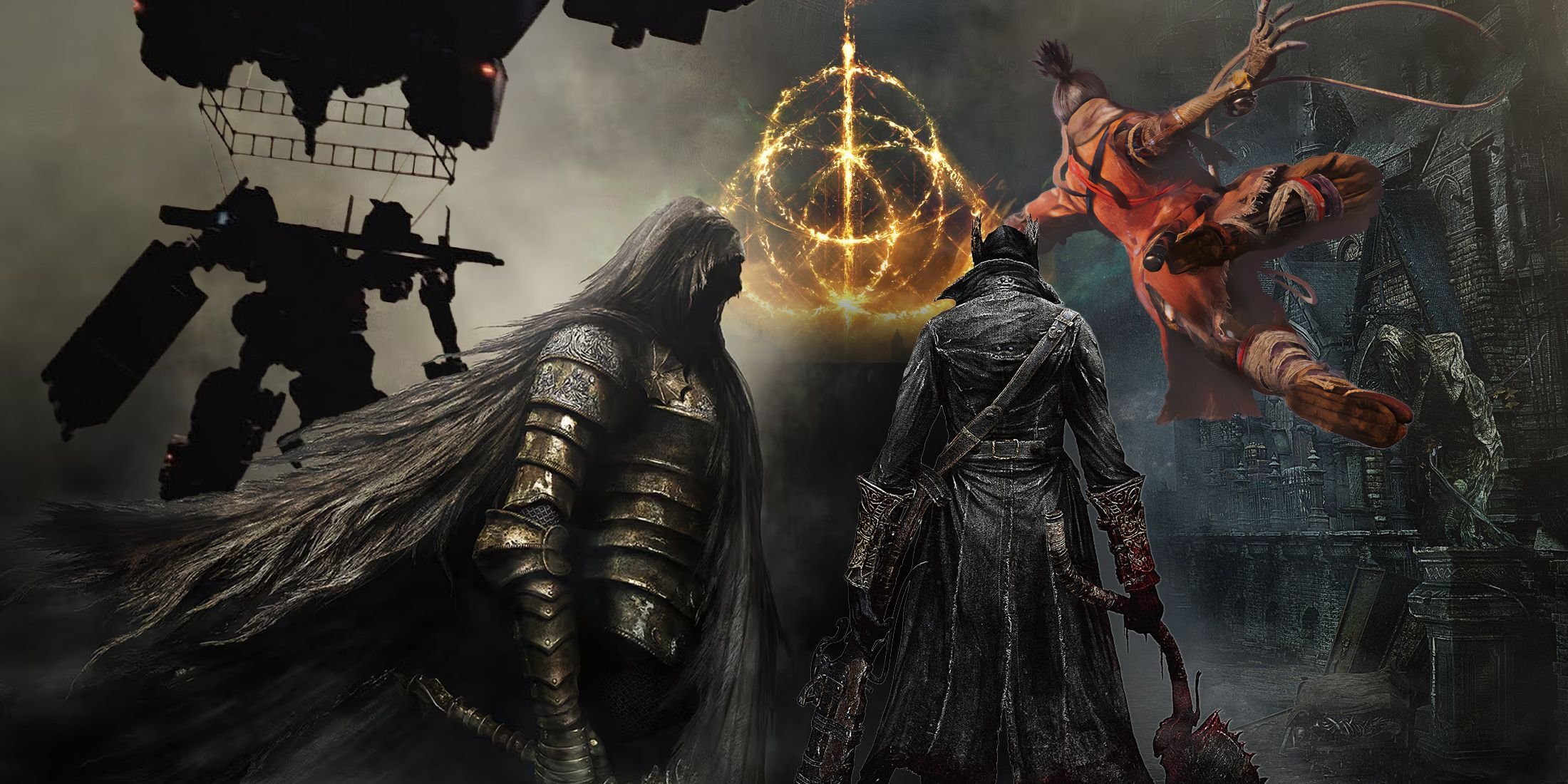
The hardest FromSoftware game is widely considered to be Sekiro: Shadows Die Twice, due to its demanding parry-focused combat.
FromSoftware games hold a reputation for challenging gameplay, often leaving players feeling both frustrated and accomplished. The question of what is the hardest FromSoftware game sparks endless debates among fans. Each title presents a unique set of trials, demanding different skills.
Some might argue for the unforgiving environments of Dark Souls, while others point to the fast-paced aggression of Bloodborne. However, the consensus often leans towards one specific title. It truly pushes players to their absolute limit.

What is the Hardest FromSoftware Game?
Figuring out which FromSoftware game is the most difficult is like trying to pick the spiciest pepper – it really depends on who’s eating it! What makes one person sweat might barely make another person blink. But don’t worry, we are here to explore this spicy question and get to the heart of why these games are famous for being so challenging.
The Difficulty Spectrum: Why is it so Hard?
Before diving into individual games, let’s think about what makes a FromSoftware game, often called a “Souls-like” game, so famously tough. It’s not just about enemies being big and scary, it’s more complex than that. Several things work together to create this level of challenge:
- Brutal Combat: These games require you to be precise and thoughtful in every fight. Just mashing buttons won’t work. You have to watch enemy moves, learn patterns, and use the right attacks and dodges. A single mistake can cost you dearly.
- Punishing Death: Dying in a FromSoftware game means you lose your progress and your gathered souls (or runes, or blood echoes, depending on the game). You have to go back to where you died to retrieve them, and if you die on the way? Gone for good. It’s a mechanic that makes every step feel important.
- Complex Level Design: The game worlds are connected and twisty. You will find shortcuts and hidden areas, but these also create many opportunities to get lost or ambushed. It’s easy to wander into an area that’s way too difficult for you.
- Limited Healing: You won’t find tons of health potions scattered around. Often, you have to carefully manage your healing items, making each fight more strategic.
- Unforgiving Boss Battles: Boss fights are the highlights of these games. These bosses have big health bars, wide ranges, and devastating attacks, often requiring players to learn unique movesets.
- Minimal Guidance: These games don’t hold your hand. They give you basic hints and then set you loose. Figuring out where to go and what to do is part of the challenge.
Contender 1: Dark Souls
The original Dark Souls often gets mentioned in discussions about difficulty. Here’s why it’s considered tough:
Dark Souls’ Challenges
Dark Souls, released in 2011, established many of the core mechanics that make these games so demanding. Its world is full of deadly traps and challenging enemies. The level design is intricate and interconnected, with areas that can lead players into extremely dangerous situations quickly. Here’s a more in-depth look:
- The Undead Burg: This starting area is designed to teach players how to play, and it’s full of tough-to-manage scenarios.
- Blighttown: This area is a nightmare of narrow walkways, poison swamps, and challenging enemies, often cited as one of the hardest sections in the game. Its maze-like design and toxic environment make traversal brutal.
- Bosses: Ornstein and Smough are notorious for their fast attacks and unpredictable patterns, often considered a huge hurdle for most new players.
- Lack of Fast Travel: In the first half of the game, you must physically travel through the world.
- Limited Estus Flask: The healing system with Estus Flask can feel insufficient, especially for new players.
Dark Souls’ difficulty comes from a mix of combat, level layout, and punishing consequences for dying. It demands patience, careful planning, and willingness to learn from mistakes. The game doesn’t forgive reckless behavior, and every battle can feel like a major threat. Some veteran players, however, may find later entries more challenging due to their greater complexity and speed.
Contender 2: Dark Souls II
Dark Souls II sometimes gets a mixed reception, but it absolutely has its own brand of difficulty. Here’s why it might be considered one of the toughest:
Dark Souls II’s Particular Pain Points
Dark Souls II took a different approach to difficulty than its predecessor. It’s often criticized for feeling less organic and more intentionally unfair, focusing more on hordes of enemies and ambushes than well-designed encounters. Here’s a deeper look:
- Enemy Placement: This game is known for putting enemies in tricky places. You can easily get surrounded by groups, which makes it much harder to win in a fight.
- Agility Stat: The agility stat dictates how fast your player moves and how easily you dodge attacks. This means a player may be slower and less capable than they think.
- Adaptability Stat: This stat is also linked to invincibility frames when dodging. Not knowing this can make the game much more difficult as it directly affects your ability to survive.
- Soul Memory: Soul memory pairs players in multiplayer, not just level. This means that players who spend more time grinding may be paired with more advanced players, and feel weaker.
- Bosses: Many bosses are designed to overwhelm players with multiple combatants at once, which can be challenging and requires much more planning.
- Durability: The game is often criticized for how fast weapon durability diminishes, requiring players to switch weapons during combat or risk losing the weapon itself.
Some players argue that the design choices in Dark Souls II make it artificially harder rather than genuinely challenging. The focus on ambushes, groups of enemies, and the importance of specific stats can be frustrating for many. While some people enjoy this type of difficulty, others find it less rewarding than the other games in the series. Despite criticisms, these design choices undeniably result in an extremely challenging experience, often leading players to claim that Dark Souls II is among the hardest of the series.
Contender 3: Dark Souls III
Dark Souls III builds upon the foundation of the previous games, introducing faster combat and more demanding boss fights. It’s often praised for its refined gameplay, but this also makes it exceptionally challenging. Here’s why Dark Souls III is in the difficulty conversation:
Dark Souls III’s Heightened Challenges
Dark Souls III takes what worked well in the previous games and turns the difficulty up a notch, focusing on more rapid, aggressive gameplay. It requires faster reflexes and even greater adaptability, making it feel harder for some players. Here’s a breakdown:
- Faster Combat: The combat is quicker and more aggressive than in Dark Souls 1, requiring faster reactions and better timing for dodges and attacks.
- Aggressive Enemies: Enemies have more varied move sets and are more likely to relentlessly pursue players, demanding more awareness during battles.
- Challenging Bosses: Bosses like the Nameless King and Sister Friede have multiple phases and complex attack patterns, often cited as some of the most difficult fights in the entire franchise.
- Limited Estus Flask: Estus Flask is still a resource to manage, making health a constant concern.
- Level Design: While not as labyrinthine as Dark Souls 1, the environments are full of deadly traps and hidden dangers.
The difficulty in Dark Souls III comes from its higher speed and complex enemy designs. Its bosses are often cited as the most difficult in the Dark Souls trilogy. They require players to learn their movesets and adapt quickly. The fast pace of combat means that players have to react almost instantly to survive, and making mistakes is punished harshly.
Contender 4: Bloodborne
Bloodborne is different from Dark Souls in a lot of ways, trading shields for a more aggressive style. Some argue this change makes the game even harder. Here’s the rundown on Bloodborne’s difficulty:
Bloodborne’s Unique Challenges
Bloodborne has a much different feel compared to the Dark Souls games, focusing on faster, more aggressive combat. Instead of shields, players use firearms for parrying and dodging, which is another level of complexity. Here are the main reasons it’s a challenge:
- Aggressive Combat: The focus on dodging and parrying makes the game faster. This forces players to be more aggressive and take more risks.
- Regain System: This mechanic allows players to recover some health by attacking immediately after taking damage, creating a constant give-and-take in fights that rewards aggression but demands skill.
- Limited Healing: Blood vials, the healing item, are limited, requiring players to manage resources carefully.
- Nightmare Creatures: Enemies are often fast and unpredictable, requiring players to adapt to varying styles of attack.
- Bosses: Bosses like Orphan of Kos and Lady Maria are incredibly fast and difficult to deal with, with punishing attack patterns.
- Insight Mechanic: High insight makes enemies more powerful and unpredictable. This means that too much information about the world makes your game harder.
Bloodborne’s challenge comes from its fast-paced combat, grotesque enemies, and the demand for players to be constantly on the offensive. While aggressive play is rewarded, it is not a simple change to master, and it requires players to have a high skill level to properly maneuver the world. Some players find the change from a slower, more defensive game in the Dark Souls series to an aggressive, fast-paced title to be quite difficult. Many players cite Bloodborne as the most difficult FromSoftware title because of the unique combat and its focus on offense.
Contender 5: Sekiro: Shadows Die Twice
Sekiro stands out from the other games because it gets rid of things like leveling up and using a variety of weapons. This makes it a very different kind of challenge. Here’s why Sekiro is one of the harder FromSoftware games:
Sekiro’s Unique Obstacles
Sekiro takes the combat system in a different direction compared to the previous games. With a greater focus on precise parrying, posture breaking, and mobility, it requires new skills and different strategies to win fights. Here’s what makes Sekiro so hard:
- Parry Focused Combat: Deflecting attacks is key. Players need to time their blocks perfectly, forcing them to be active instead of passive in combat.
- Posture System: Instead of just reducing health, enemies and bosses have a posture bar that you must break to deal critical hits, adding another layer to the combat.
- Limited Customization: There are fewer ways to change your character’s build in Sekiro compared to the Souls games, and this makes it harder to make a broken character to bypass combat.
- Mikiri Counter: You have to correctly time a counterattack to defeat certain enemies.
- Bosses: Bosses like Isshin, the Sword Saint, and the Demon of Hatred are extremely demanding, requiring perfect parries and reactions.
- Stealth System: Though not as refined as other stealth games, the stealth element still requires patience and an understanding of the areas.
Sekiro’s difficulty stems from its combat system, which is unlike any other FromSoftware game. It focuses on parrying, posture breaks, and well-timed counters. It demands that players unlearn strategies from the Dark Souls games and adapt to its faster, more precise mechanics. The game doesn’t forgive mistakes, requiring players to be incredibly precise and reactive to win. Many feel that Sekiro stands out as the most challenging game from FromSoftware for its focus on parrying and perfect timing.
Contender 6: Elden Ring
Elden Ring is different because it’s an open-world game. But does that make it easier or harder? It’s a bit more complex, let’s take a look:
Elden Ring’s Open-World Challenges
Elden Ring is unique in the FromSoftware lineup due to its open-world design. While the open world offers new levels of exploration, it also leads to new difficulties. Here’s why it’s a contender for the hardest FromSoftware game:
- Vast Open World: The large map can be overwhelming and confusing at times. Players can wander into areas that are too difficult for their character levels, forcing them to leave.
- Hidden Bosses: Many bosses are hidden in remote locations and can be found with no real warning.
- Boss Variety: The game has a large number of bosses, and these bosses are very varied in combat design.
- Challenging Dungeons: Legacy dungeons are as challenging as anything in previous titles, requiring careful planning and awareness.
- Enemy Placement: The open world sometimes has groups of very hard enemies located near each other, making exploration dangerous.
- Level Scaling: The open world scales with player level, which can make certain areas feel impossible at times.
Elden Ring’s difficulty is different from previous FromSoftware titles. While the ability to explore an open world is freeing, the game hides enemies and bosses in strange places that may be hard to prepare for. Many players believe this makes Elden Ring one of the hardest. For some, the sheer freedom can be overwhelming, and the level scaling can make many areas very difficult. However, other players believe that the open world actually makes Elden Ring the easiest game in the franchise, because you can leave a challenging area and come back much later when you are stronger.
The Subjective Nature of Difficulty
The truth is, there isn’t a single right answer to the question of which FromSoftware game is the most difficult. Different players have different strengths, weaknesses, and preferences. What one player finds manageable, another might find incredibly hard. Here are some things to keep in mind:
- First Time Experience: Your first FromSoftware game will often feel the hardest. This is due to the learning curve associated with its mechanics and unique gameplay. Once you get used to one game, another title may feel more comfortable.
- Playstyle: Some games reward a faster, more aggressive approach, while others reward careful, strategic play. If a game fits your play style better, you might find it easier.
- Individual Skills: Some players are better at learning attack patterns, others excel at timing dodges. Your individual skill set plays a huge part in which game you find harder.
Ultimately, the “hardest” FromSoftware game is often the one that challenges you the most as an individual. It’s the one that pushes you out of your comfort zone, forces you to adapt, and makes you feel a strong sense of accomplishment when you finally beat it.
Each game has its own flavor of difficulty, designed to test your skills in different ways. Instead of worrying about which one is the “hardest,” it’s often more productive to think about which one will provide you with the most rewarding and challenging experience.
Ultimately, the difficulty of a FromSoftware game is a deeply personal and subjective experience. Each game offers its own unique flavor of challenge, demanding different skills and strategies from the player. What may be a mountain for one can be a molehill for another. This very diversity in difficulty is what makes these games so interesting and engaging for millions of players worldwide.
Ranking EVERY Souls Game From Easiest To Hardest #shorts
Final Thoughts
Ultimately, the hardest FromSoftware game is subjective, varying by player skill and playstyle. Many cite Sekiro: Shadows Die Twice due to its intense parry focused combat. Others consider the slow, deliberate pace of Dark Souls punishing.
Some find Bloodborne’s aggressive style challenging, while some struggle with the massive world and freedom of Elden Ring. There is no definitive answer on what is the hardest FromSoftware game, it purely boils down to personal preferences.

