
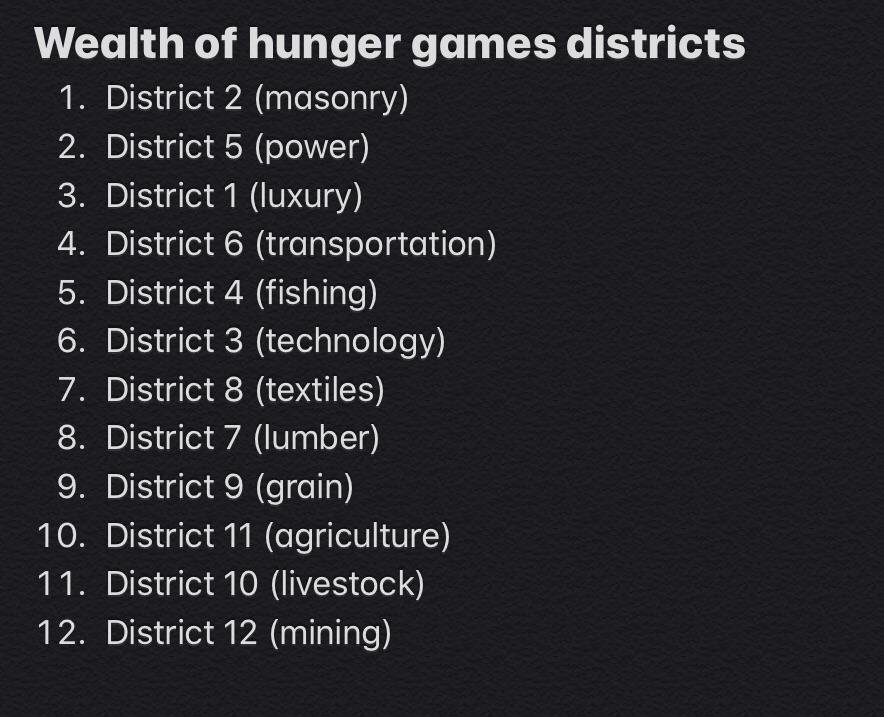
District 1 is widely considered the richest district in the Hunger Games, specializing in luxury goods.
Ever wondered about the opulence behind the Games? We often see the stark contrast between the Capitol and the districts, but even within the districts, wealth varies considerably. So, what is the richest district in the Hunger Games?
The affluence of certain areas is quite apparent, based on the resources they provide to the Capitol. These areas enjoy a significantly higher standard of living compared to most. It is interesting to delve into these differences.

What is the Richest District in the Hunger Games?
The world of Panem in Suzanne Collins’ The Hunger Games is a stark contrast of wealth and poverty. While the Capitol flaunts its extravagant riches, the districts struggle with varying levels of hardship. When we think about which district has it the best, considering both resources and living conditions, a clear frontrunner emerges. It’s not a place known for its glitz and glamour like the Capitol, but it has something much more valuable: control of essential resources. So, let’s dive into figuring out what is the richest district in the Hunger Games.
District 1: Luxury and Privilege – A False Front
Many might immediately jump to District 1 when thinking about wealth. After all, they are known for producing luxury items, and their tributes, the Careers, are often well-fed and trained from a young age. They specialize in crafting goods like jewelry, perfumes, and fine clothing for the Capitol elite. The children in District 1 live with a level of comfort unheard of in other districts. However, their prosperity is surface-level. It is completely tied to their ability to serve the Capitol. Without the Capitol’s demand for luxury goods, District 1 would likely face economic hardship as well. Their “wealth” is more of a luxurious leash than true power.
- Career Tributes: Trained from a young age to compete in the Hunger Games, showing their strong connection to Capitol games.
- Luxury Goods: Their specialty isn’t basic necessities, making them completely reliant on Capitol’s demand.
- Living Standards: Relatively comfortable homes, and access to better food than most, but they are still under the thumb of the Capitol.
District 1’s lifestyle is more of a carefully curated image than authentic wealth or power. The Capitol allows District 1’s comfortable life as a way to encourage compliance.
District 2: The Power of Industry and Military Might
District 2 is another district that appears to have advantages. Their primary industry is masonry and defense; they supply the Peacekeepers (Capitol’s police force) with training facilities and weapons. This gives them a significant standing within Panem’s power structure. Their physical labor and military support gives them a different type of clout than District 1’s luxury. While not flaunting extravagant wealth like District 1, District 2 has a more stable and robust economy.
- Military Connection: They produce weaponry and train the Peacekeepers, making them essential to Capitol’s enforcement.
- Industrial Strength: The district’s economy is grounded in essential industries rather than superfluous luxuries.
- Resource Control: They don’t hold control over the main resources like coal, but their manufacturing role is vital.
While District 2 is far from wealthy like the Capitol, they have a kind of power that stems from their influence in Capitol’s system. District 2 is important, and they know it.
District 3: The Quiet Power of Technology
District 3’s people specialize in engineering, technology, and manufacturing. They produce electronics, computers, and other machines. They work with technology and play important role in the daily function of Panem. This might give a reader the idea that they have the wealthiest district. However, this is not the case because most of their production benefits the Capitol, leaving them without significant power or wealth.
- Technological Expertise: They possess vital knowledge of technology.
- Controlled Knowledge: Their innovation and production is controlled by the Capitol, limiting their gains.
- Resource Dependency: Just like the other districts, their reliance on Capitol’s direction hinders their true potential for wealth.
District 3’s value lies in their intellect and skills, but their wealth and power are restricted by the Capitol’s control. They have valuable skills but little control over their own economic status.
District 4: Fishing and a Coastal Advantage
District 4, the fishing district, is where you’ll find some hardy people. They provide Panem with fish and seafood, a valuable food source. It’s not the most glamorous job, but it keeps them fed. Their connection to the sea means they have a more consistent food supply than other districts, and the people are often more physically fit. This gives them a distinct advantage during the Hunger Games. However, their wealth is limited to their ability to provide for other districts, not necessarily their economic control.
- Consistent Food Supply: They have access to a protein-rich food source, which is valuable in the world of Panem.
- Physical Prowess: Their daily lives involve physical labor, making them strong.
- Limited Economic Control: They rely on fishing, which means their wealth can only go so far.
While District 4 is able to sustain itself and provide essential food resources, their district doesn’t possess the kind of power we are looking for when analyzing the richest districts in Hunger Games.
District 5: Power Generation – An Overlooked Necessity
District 5 is where energy is generated. They are in charge of providing electricity to the entire Panem, a major responsibility. This is a very important role, because without power, Capitol cannot function. This makes District 5 vital. However, District 5 does not translate their importance into economic wealth or higher standard of living.
- Vital Infrastructure: They control the power grid for all of Panem.
- Essential Service: They are essential for Panem’s daily functions, just like water and food.
- Lack of Economic Advantage: Despite their importance, they don’t have economic influence or wealth.
Even though District 5 controls vital aspect of Panem’s energy supply, they do not rank as the wealthiest because their resources are controlled by the Capitol.
District 6: Transportation – Keeping Panem Connected
District 6 is the transportation hub of Panem. They are responsible for trains and vehicles that move people and goods around. This district keeps the lifeblood of the districts flowing, connecting them with the Capitol. However, their essential role does not translate to a high standard of living or power within the political structures. Their expertise is necessary but not profitable for themselves.
- Transportation Network: They move goods and people throughout Panem.
- Essential, Yet Overlooked: Their role is vital, but they do not get much recognition.
- Economic Limitations: Their contribution doesn’t translate to financial power or wealth.
District 6 serves the vital role of transportation, but does not attain economic wealth because of it.
District 7: Timber and Paper – A Resource-Rich Region
District 7 deals with lumber and paper. They provide the raw materials needed for construction and documents across Panem. Their work involves difficult physical labor, often in dangerous logging conditions. While they supply important materials, their hard work does not equate to economic power within Panem.
- Resource Provider: They supply building materials and paper to Panem.
- Physical Labor: Their work is physically demanding and often dangerous.
- Economic Disadvantage: They don’t control their resources’ end use, which means they have low economic value.
Even with access to lumber and paper, District 7 doesn’t rank as the wealthiest district in the Hunger Games.
District 8: Textiles and Factories – A Labor Force
District 8 focuses on textile production, creating fabrics and clothing. The district consists of large factories and a large worker population. Their factories produce a large number of textile goods, but their workers live and operate in a very difficult environment. This shows that the District 8’s resources are controlled and consumed by the Capitol. This means they don’t rank high on the wealthiest district list.
- Mass Production: They produce most of the clothing for all of Panem.
- Difficult Work Environment: Their large factories create a harsh living condition for the workers.
- Lack of Economic Power: Like other districts, their production is controlled by Capitol.
District 8 may produce essential textile goods but their resources are consumed, and their workers do not experience better living standards.
District 9: Grain and Agriculture – Essential But Dependent
District 9 is the grain producer of Panem. Their people are responsible for cultivating the crops which feed the entire nation. While their role is crucial, they don’t control the end distribution or processing of their crops. They must work very hard and are at the mercy of weather and Capitol’s rules, making them more vulnerable than wealthy.
- Food Production: They grow grain to feed Panem’s citizens.
- Labor-Intensive Work: Their work is physically hard and dependent on natural conditions.
- Lack of Control: They don’t control how their crops are used, limiting their economic influence.
District 9 is crucial to Panem’s survival, but they do not hold enough power to be considered wealthy.
District 10: Livestock and Farming – A Challenging Existence
District 10 is dedicated to raising livestock. Their people raise animals for meat and other products. Their lives are rooted in physical labor, managing animal farms and handling difficult conditions. Though their contributions are essential, they face a lot of hardships and do not possess considerable wealth or influence.
- Animal Husbandry: They provide meat and animal products.
- Hard Work: Their jobs are physically demanding.
- Economic Hardship: Their labor doesn’t give them more economic power.
District 10 does not rank among the wealthiest, because their work is essential but doesn’t provide them wealth or power.
District 11: Agriculture – A Diverse Region
District 11 is the biggest agricultural district, producing fruits and vegetables. The people work hard in the fields to provide food for Panem. Their hard work sustains Panem, but the Capitol extracts most of the profit. This leaves District 11 in a position of dependency and poverty, not wealth. Their people may have some food, but they do not get to enjoy the abundance.
- Diverse Agriculture: They grow a variety of fruits and vegetables.
- Labor and Poverty: They work tirelessly in fields but face economic hardships.
- Lack of Control: They don’t have control over what happens to their crops.
District 11’s agriculture is vital, but it does not lead to wealth for the district’s residents.
District 12: Coal Mining and a Scarred Landscape
District 12 is primarily a coal-mining region, home to Katniss Everdeen. The life of a coal miner is very difficult and dangerous. While coal powers much of Panem, the miners of District 12 do not get to enjoy their resources. They live in poverty, with the dangerous work and a dark, scarred landscape. While their product powers Panem, they do not experience any advantage of it, which makes them one of the poorest districts.
- Coal Production: They mine coal for Panem.
- Dangerous Conditions: Their work is extremely difficult and dangerous.
- Economic Depression: They face high levels of poverty and hardship.
District 12, though essential for coal, is far from being a wealthy district.
The Real Winner: The Control of Resources
After carefully examining all the districts, we realize that being “rich” in Panem is not only about how much money or luxury you have. The true mark of wealth lies in control and influence. While districts like 1, 2, and 3 have the most access to resources and power, they still lack the overall influence that makes a district “rich”. We can see that District 2 has considerable influence because of their military connection, and District 5 has power with the energy supply, but still both of them are controlled by the Capitol. After analyzing all the factors, it becomes clear that no one district is “rich”, the Capitol holds all the power.
If we were forced to pick one district that has any kind of wealth it would be District 2. Their control over the training of the Peacekeepers, and their role in manufacturing weaponry, give them the most influence within the system. Their prosperity is not based on luxury goods, but on a vital function of the Capitol, making them have more control. While still subject to the Capitol’s control, they have a stable and important position.
In the world of Panem, the concept of “rich” is complicated. It’s less about material possessions and more about who holds the power. The districts all function under the control of the Capitol, showing that the Capitol is the richest and most influential part of Panem.
The 13 Districts of Panem Explained | The Hunger Games Explained
Final Thoughts
District 1, specializing in luxury goods, holds the title of the wealthiest district in Panem. Its inhabitants enjoy lavish lifestyles, starkly contrasting with other districts’ struggles. The abundance of resources and focus on opulence makes District 1 the richest.
Thus, District 1 stands out as the answer to the question of ‘what is the richest district in the hunger games’. Their wealth fuels their power within the Capitol’s system.

