
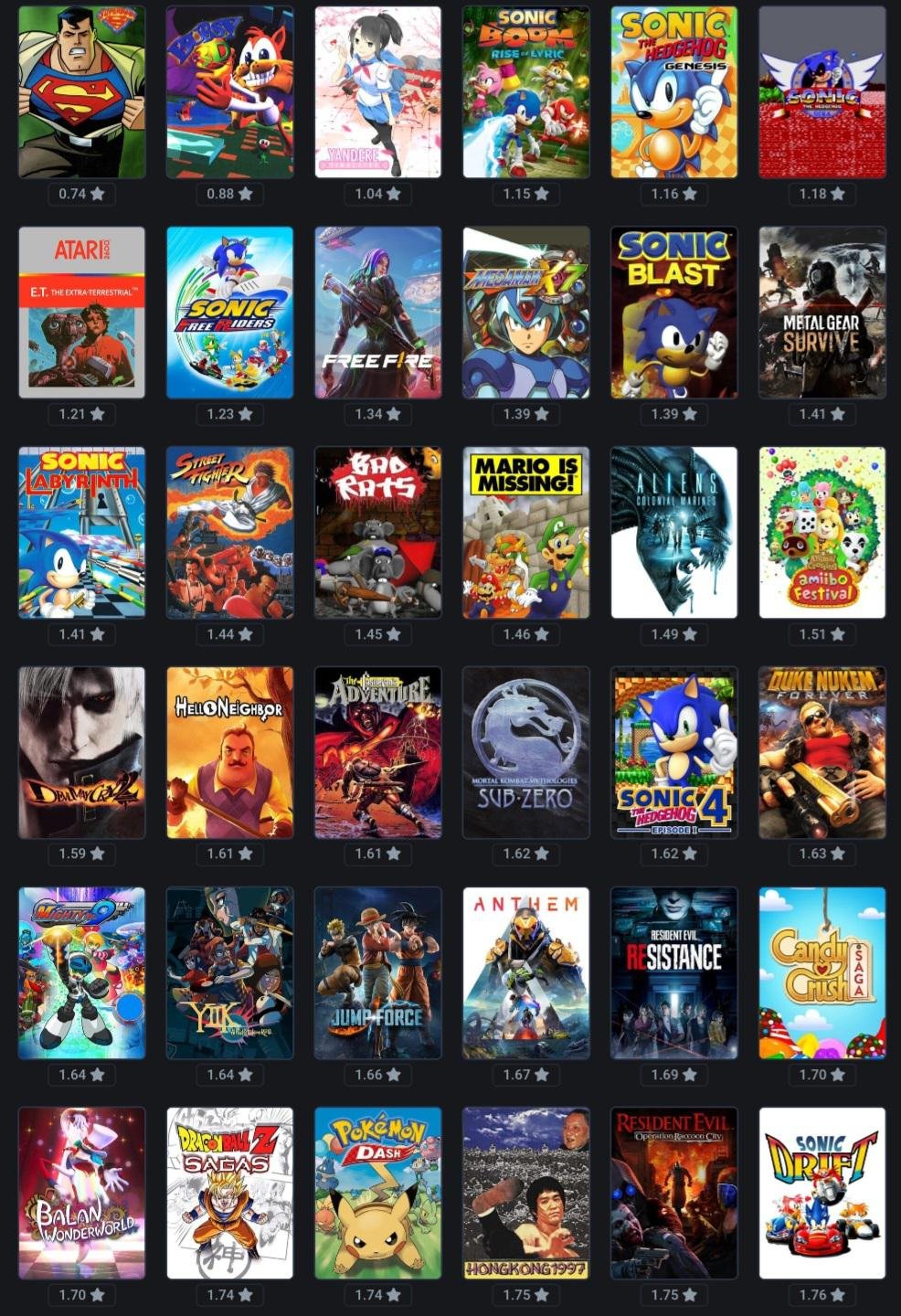
The worst game is subjective; a game considered terrible by one person might be enjoyable to another, due to varying tastes and expectations.
We’ve all been there, that moment of utter frustration or boredom with a video game. The question, “what is the worst game” often sparks heated debate among gamers. Some point to broken mechanics, while others bemoan clunky controls.
Many consider poor storytelling or repetitive gameplay as major culprits. Ultimately, deciding what is the worst game becomes a very personal assessment. The experience itself plays a major role.

What is the Worst Game? A Deep Dive into Gaming Disasters
Okay, let’s talk about something fun, or maybe not so fun: the absolute worst video games ever made. We all love playing amazing games, the ones that make us laugh, cry, or jump with excitement. But what about those games that make us want to throw our controllers at the wall? What makes a game truly, undeniably bad? It’s not always just one thing; often, it’s a combination of many different problems. So, let’s explore the tricky world of terrible games and figure out what makes them so… well, awful.
The Many Faces of Bad Games: Identifying the Culprits
There isn’t just one single reason why a game ends up being terrible. Bad games often suffer from a variety of issues all piling up together. It’s like a recipe for disaster where you keep adding more and more bad ingredients. Let’s look at some of the main offenders:
Broken Gameplay: When the Game Doesn’t Work
Imagine trying to play a game where your character walks through walls, the enemies get stuck in the scenery, or the controls barely respond. That’s broken gameplay. This can come in different forms:
- Glitches and Bugs: These are mistakes in the game’s code. They can cause anything from minor visual problems to game-breaking issues where you can’t even finish a level. Sometimes, you might get stuck in a wall or watch your character suddenly fly up in the air!
- Terrible Controls: Have you ever played a game where the character moves like they’re on ice skates or where pressing a button does something completely unexpected? That’s bad controls. When a game is hard to control, it’s hard to enjoy.
- Unfair Difficulty: A good game should be challenging, but not impossible. If a game throws waves of super-powered enemies at you from the start or makes you repeat the same frustrating part over and over again, that can be a big problem. It feels like the game is fighting you, not giving you a fun challenge.
Poor Storytelling: When the Story Makes No Sense
A great story can make a game unforgettable. But a bad story? That can totally ruin it. Think about it: if the characters are flat and boring, or if the plot is confusing or makes no sense at all, it’s tough to get invested in the game. Some common issues with bad storytelling are:
- Boring or Unrelatable Characters: When characters lack personality or you can’t connect with them, it’s difficult to care about what happens in the game. They become just random figures going through motions.
- Confusing Plot: If the story jumps around, doesn’t explain itself, or has a plot that doesn’t make sense, it can leave players scratching their heads. This can be especially frustrating when you’re trying to understand why you’re even doing what you are doing.
- Poor Dialogue: Bad writing is easy to spot, especially in a game. When the characters speak in corny, unnatural ways, it can make a game unintentionally funny… but not in a good way.
Awful Graphics and Sound: When the Game Looks and Sounds Bad
Visuals and audio are important parts of any game. If they’re bad, it can really ruin the whole experience. Games that are supposed to look amazing but end up looking terrible can make them hard to play. Consider the following:
- Outdated Graphics: Games that look like they came from ten years ago can feel very disappointing, especially if they’re supposed to be newer releases. Low-resolution textures and blocky models can make the game hard to look at.
- Bad Sound Design: Repetitive music, awful sound effects, or characters that sound like robots are major problems. Sounds should help bring the game to life, not be an annoying distraction. Sometimes bad music can make a normal game really irritating.
- Lack of polish: When a game feels like it was rushed out before it was finished, it shows in things like character animations, environment designs, and menu screens. This creates an experience that feels sloppy.
Lack of Originality: When the Game Feels Like a Copy
Sometimes a game isn’t necessarily broken but just feels like a copy of another, better game. This is often because developers are trying to take a shortcut by copying popular games instead of coming up with their own ideas. Here’s how this affects the gaming experience:
- Uninspired Level Design: Games that rehash the same level designs as another game, without adding anything new, often feel boring and repetitive. You feel like you’ve played the game before, even if you haven’t.
- Unoriginal Gameplay Mechanics: When a game doesn’t do anything unique, it can feel like a waste of time. It’s like eating the same meal over and over again when there’s a whole world of flavors out there.
- Plagiarized Assets: In the most extreme cases, some games steal art, sound, or even code directly from other games! This is definitely not okay.
Examples of Games Commonly Considered “The Worst”
Now, let’s get into some specific examples of games that are often brought up in discussions about the worst games. These examples will help demonstrate the different ways a game can fail. Keep in mind, this is just a selection, and what one person considers the worst, another might find amusingly bad. These examples show how games can mess up in different ways. Note that some of these games are so bad that they have almost become popular because of their bad qualities.
E.T. the Extra-Terrestrial (Atari 2600)
Often considered one of the worst games ever made, E.T. on the Atari 2600 is infamous for its broken gameplay, confusing objectives, and overall lack of fun. The story has it that Atari rushed the game to meet a deadline for the Christmas holidays, and it suffered because of this. The game was so bad that they had to bury a lot of the cartridges to stop them from being sold.
- Terrible Controls: Moving E.T. was clumsy and awkward.
- Confusing Gameplay: Players often didn’t know where to go or what to do.
- Bad Graphics: The game looked very basic, even for its time.
Superman 64 (Nintendo 64)
Superman 64 is another notorious example of a bad game. The poor controls and incredibly confusing level design (especially the infamous ring flying sections) made the game incredibly frustrating for players. The graphics were very poor for an N64 game, and the gameplay was repetitive and boring. It was basically a Superman simulator in which you never actually felt like Superman.
- Terrible Controls: Flying was extremely clunky and difficult.
- Poor level design: The ring flying sections were frustrating.
- Bad graphics: The game looked blurry and poorly detailed.
Big Rigs: Over the Road Racing (PC)
This racing game is legendary for its bizarre glitches and complete lack of any actual challenge. You can drive through buildings, ignore gravity, and literally win every single race. Its buggy and unfinished nature made it one of the most interesting “bad” games out there, and it has gained a strange following because of how terrible it is.
- Broken Physics: The game’s physics engine was completely flawed.
- Lack of AI: The other racers did not move.
- Poor game design: You could literally drive through anything.
Ride to Hell: Retribution (PC, PlayStation 3, Xbox 360)
This game was a mess from start to finish. It had clunky controls, a nonsensical story, and poor graphics and sound. Ride to Hell was full of glitches, and the whole thing just felt very poorly put together. It is an example of how a game can fail in every single possible way. The development history is reportedly chaotic, which led to the poor final product.
- Poor Story: The plot was nonsensical and hard to follow.
- Awful Gameplay: The game had clunky controls and repetitive fights.
- Bad Graphics and Sound: The game looked and sounded outdated.
Subjectivity vs. Objectivity: Can a Game Be Objectively Bad?
This brings up a really interesting question: Is a game’s “badness” something we can objectively measure, or is it all just a matter of taste? Sometimes the way you feel about a game comes down to your own personal taste or experiences. However, there are also some things that can make a game objectively bad.
The Subjective Side of Bad Games
The way we feel about a game is often very personal. Here are some things that can influence our opinions:
- Personal Preferences: Some people love games that are really hard, while others prefer more relaxed experiences. Some people like action games, others prefer RPGs. What you are looking for in a game will affect how you see it.
- Nostalgia: Sometimes, we love older games because of good memories from when we played them as children. This can make us see flaws in these games that others might not be able to look past.
- Individual Experiences: If you have a bad experience while playing a game (for example, if it constantly crashes or if your character gets stuck) then you may not enjoy it, no matter how good the game is objectively.
The Objective Side of Bad Games
On the other hand, there are some things that can make a game objectively bad, regardless of personal preference:
- Technical Problems: If a game is full of glitches, crashes all the time, or has terrible controls, these issues make it hard to play and enjoy no matter who you are.
- Poor Game Design: If a game is badly designed, with little to no fun gameplay or a confusing story, it will be bad. There is not much of a way to spin this.
- Lack of Polish: If a game looks or feels unfinished, then it’s hard for it to be considered anything but poorly produced.
While personal tastes will always play a role, there are still some universal problems that can make a game objectively bad. A game may be bad for several reasons, or it may just have one or two glaring flaws. It’s often a mix of both, and the worst games tend to hit all the notes at once.
Why Do Bad Games Exist? The Factors Behind Gaming Failures
Okay, so we’ve identified what makes a game bad, but why do these terrible games exist in the first place? It’s not like game developers set out to make a bad game. Let’s consider the reasons:
Rushed Development Cycles: The Pressure to Ship
The gaming industry can be very demanding. Sometimes, developers are given very tight deadlines by the companies they work for. This forces them to cut corners, and things like play-testing, and final touches are ignored. This results in a game full of bugs and with poorly thought-out gameplay. The final products are bad, because they haven’t had time to fully finish their projects.
Budget Constraints: When Money is Tight
Developing a game costs a lot of money. If developers don’t have enough money, they have to sacrifice things like great graphics, voice acting, and quality testing. This can result in a game that feels cheaply made and not much fun. It may be hard to work on a passion project when your money is limited.
Poor Management and Planning: Leadership Matters
Sometimes, a game is bad because the team behind it didn’t plan the project well. Poor management can lead to a game that is disjointed, has contradictory design and feels like several people were working on different parts without any real cohesion. If there is nobody in charge who actually knows what the game should be, then the chances are it’s going to be a bad game.
Trying to Cash-in on Trends: The Copycat Effect
Some companies try to make games that are similar to popular games in an attempt to make a quick buck. Instead of trying to innovate or bring something new, they copy other ideas and make a cheaper, worse version. These games don’t usually have any heart or soul.
Technical Limitations: Sometimes Tech is the Enemy
Sometimes, developers want to make something that the technology at the time can’t handle. When that happens, they are forced to reduce their ambitions or try to push the technology in ways that just don’t work properly. This can lead to games that are technically broken and frustrating.
The existence of bad games is a complicated thing. Several factors can go into making a game bad, from production issues to management problems. It’s not usually just one thing, but a mixture of different negative issues all at once.
The Legacy of Bad Games: Why We Remember the Worst
It might seem like we shouldn’t spend time talking about bad games. However, these games have a kind of strange legacy of their own. Bad games, often unintentionally, can be funny, or at least interesting. They become a strange kind of learning experience, and they teach us a lot about what it means for a game to be good. Here are some reasons why these games stick in our memories.
Learning From Mistakes: A Lesson in Game Design
Studying bad games can teach developers about what not to do. These games often serve as examples of design failures, showing developers why certain features or mechanics simply don’t work. Bad games can be incredibly useful learning tools. They are a great example of what not to do.
Unintended Humor: So Bad They’re Good
Sometimes, a game is so bad that it becomes funny. The glitches, weird dialogue, and nonsensical gameplay can make them a riot to watch and even play. This “so bad it’s good” phenomenon has created a whole culture around these kinds of games, with people enjoying them ironically.
The Nostalgia Factor: Bad Games in Our Memories
Even bad games can hold a place in our hearts if we played them as children. We may remember them fondly for their awkwardness or for the simple fact that we enjoyed them at the time, despite their flaws. Nostalgia can make us look past the flaws of some games.
Creating a Conversation: Community Engagement
Bad games often spark discussions. They can unite people as they talk about how awful a game is. This shared experience can create a unique sense of community, and give people a reason to share their own experiences. Bad games can be fun to talk about and give us a way to share something with others.
Bad games might not be enjoyable to play, but they definitely have a presence in gaming history. They teach, entertain, and often give us a good laugh. They show us that even in failure, there is a learning opportunity.
It’s interesting to look at the different ways that games can fail. Sometimes it’s due to technical errors. Sometimes it’s because of bad creative decisions. And sometimes, it’s just because something went horribly wrong during development. Whatever the reason, these games can offer us a lesson and a laugh, reminding us to appreciate all the things that make a great game great.
What is the Worst Game?
Final Thoughts
Ultimately, defining the absolute worst game remains subjective, varying greatly among individuals. Different people prioritize different gameplay aspects. One person’s frustrating experience can be another’s nostalgic joy.
Therefore, a universally “worst” title is impossible to identify. Preferences are personal and impact how someone judges a game experience. What is the worst game depends on the player and their specific expectations.

