
Playing the Tomb Raider games in release order is the best way to experience the evolution of Lara Croft’s adventures.
So you’re ready to delve into the world of Tomb Raider? It’s a great choice, but knowing what order to play tomb raider games can feel a bit daunting with so many titles. Should you go by the stories’ timeline or just jump in anywhere?
Many players debate the best approach to experience Lara Croft’s amazing history. I recommend starting with the original games, progressing through each release. This will give you a clear understanding of the series’ progress.

What Order to Play Tomb Raider Games
Okay, adventurer! You’re ready to dive into the world of Tomb Raider, but with so many games, it can feel like you’re facing a puzzle even before you start playing. Don’t worry, it’s not as complicated as it seems. We’re here to guide you through the best way to experience Lara Croft’s incredible journey. There’s no single right way, but we’ll look at a few options: playing by release date, following the story timeline, or trying a mix that lets you see the evolution of the games. Let’s get started!
Playing by Release Date: The Classic Path
This is like experiencing the Tomb Raider games as the world did when they first came out. It’s a fantastic way to appreciate how the graphics, gameplay, and story have developed over time. Starting with the very first game, you’ll see how Lara became the icon she is today. This approach is a bit like watching a movie series from the beginning – you see how everything builds upon what came before.
The Core Classic Era (1996 – 2003)
Tomb Raider (1996): This is where it all began! You’ll see the very first blocky, but still incredibly cool, Lara Croft as she explores ancient ruins. This game establishes the core tomb raiding and puzzle-solving gameplay. It might look a little old compared to the newer ones, but it’s essential for understanding where the series came from. Get ready to explore Peru, Greece, and Egypt in your hunt for the Scion!
Tomb Raider II (1997): The second game took everything from the first one and made it bigger! You get new moves and a much larger scale of locations, from Venice to the Himalayas. The story sees Lara search for the Dagger of Xian. Expect some bigger challenges and more engaging environments. You get a ton of classic tomb raider action in this one.
Tomb Raider III: Adventures of Lara Croft (1998): Get ready for a globe-trotting adventure with this one! You’ll be heading to India, London, and even Antarctica. It introduced more advanced puzzles and was even more challenging for players who were up for it. It also expanded the arsenal of weapons available.
Tomb Raider: The Last Revelation (1999): This game takes Lara back to Egypt. It’s a bit more focused than previous entries, featuring an intricate storyline revolving around the God Seth. The gameplay is refined, and it feels very similar to the classic games. This one is often a fan favorite. You spend the whole game exploring tombs in Egypt, a change from the globe-trotting of the previous two titles.
Tomb Raider Chronicles (2000): This game is a bit of a collection of stories. We see flashbacks to Lara’s adventures when she was younger. We even see the very last time Lara goes on an adventure, one she may never come back from. It feels different in terms of story presentation but still plays very much like classic Tomb Raider. It features new mechanics such as the ability to tightrope walk.
Tomb Raider: The Angel of Darkness (2003): This title is very different than the rest of the classics. It attempts a new darker tone and more of a story focused game. It is considered by many to be a big departure from the core gameplay of the classic series. This game is set in Paris and Prague. You may need to be patient while playing this game as it is much different than its predecessors.
#### The Legend Era (2006 – 2008)
Tomb Raider: Legend (2006): This game brought Tomb Raider back in a big way! It’s a reboot that kept the core of what makes Lara, Lara but with new updated graphics and refined gameplay. It also established some story elements that would continue in the following games. Lara investigates her mother’s disappearance, which gives the story some emotional weight.
Tomb Raider: Anniversary (2007): A remake of the very first Tomb Raider, this game allows you to play through the original story with the updated look and feel of Legend. It’s a great experience for fans of the originals as well as a good place to see what the classic series is like if you haven’t played it. This is a must-play for everyone who wants to see the roots of Lara Croft’s story.
Tomb Raider: Underworld (2008): This game continues the story from Legend and brings it to a conclusion. Lara explores exotic locations in search of her mother and seeks to uncover ancient mysteries. The gameplay is very refined, and this entry wraps up a great trilogy.
#### The Survivor Timeline (2013 – Present)
This is where the series got a big reboot again with a focus on telling more of Lara’s origin story. These games are more action-oriented, with some exploration and puzzle solving included. It shifts the game away from the classic tomb raiding experience.
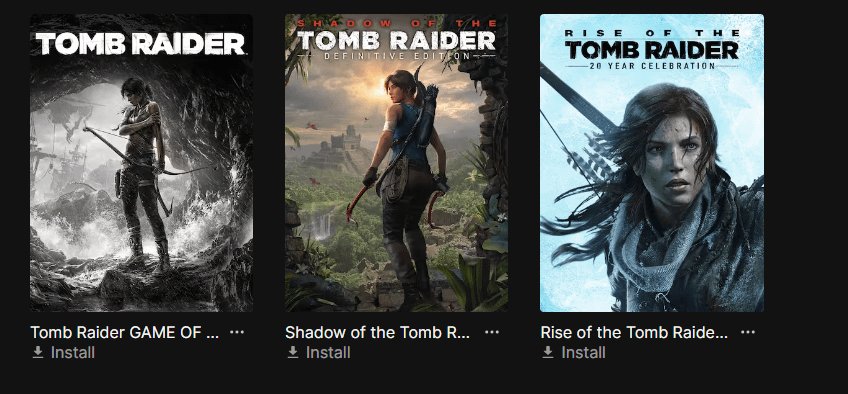
Tomb Raider (2013): This game is the start of a brand-new journey for Lara. It shows how she becomes the hardened explorer she’s known for. It shows Lara’s struggles and how she gets pushed to her absolute limits. It mixes action and adventure in a new way. The story focuses on Lara and her fellow explorers stranded on an island, fighting to survive.
Rise of the Tomb Raider (2015): This game takes place after the 2013 Tomb Raider and Lara has begun her journey as an archaeologist, searching for the lost city of Kitezh. It is a visual masterpiece and features some great gameplay. It shows Lara embracing her destiny, diving deeper into ancient secrets.
Shadow of the Tomb Raider (2018): This game sees Lara continue her adventure through South America. The themes in this game are a lot darker than previous entries, and it wraps up Lara’s origin story in this rebooted series. This entry focuses more on stealth and survival.
Playing by Timeline: Lara’s Story Unfolds
If you’re a stickler for story, you might want to play the games in the order of the events that happen in Lara’s life. This helps you really understand the character’s evolution and the overall narrative of the series. This means you’ll jump around a bit compared to playing by release date.
Lara’s Early Adventures
Tomb Raider (2013): This is where the new timeline begins. We meet a younger Lara, fresh out of university, who is still trying to discover herself.
Rise of the Tomb Raider (2015): Following the events on Yamatai Island, Lara is now more confident and beginning her path to becoming a true tomb raider.
Shadow of the Tomb Raider (2018): Lara becomes the experienced raider we all know and love. This game ties up a great trilogy for her.
The Classic Era Flashbacks
Tomb Raider Chronicles (2000) (Flashbacks): Some of the stories in this game show Lara’s earlier adventures as a teen, providing a look into her youth and the events that shaped her. These happen very early in Lara’s life.
Tomb Raider: The Last Revelation (1999): This game introduces a very young Lara with her mentor, and gives some background into her desire to raid tombs.
The Core Classic Adventures
Tomb Raider (1996): This game takes place when Lara has started her travels, now as an adult. She is ready to take on any challenge and the adventure begins here.
Tomb Raider II (1997): Lara’s adventures continue, she continues to build up her reputation as one of the best adventurers.
Tomb Raider III: Adventures of Lara Croft (1998): Following the events in the previous titles, Lara travels the world in search of hidden treasures.
Tomb Raider: The Last Revelation (1999) (Main Story): While containing flashbacks to Lara’s youth, this game’s main story comes after Tomb Raider III.
Tomb Raider Chronicles (2000) (Main Story): This game takes place during a memorial for Lara, looking back at some of her older adventures.
Tomb Raider: The Angel of Darkness (2003): This game is meant to be the last in the timeline and it features a more experienced but jaded Lara.
The Legend Trilogy
Tomb Raider: Legend (2006): This trilogy sits separately from the others, with Lara delving into the mystery behind her mother’s disappearance, and she goes on a journey of self-discovery.
Tomb Raider: Anniversary (2007): This is a remake of Tomb Raider (1996) but with the updated mechanics of the Legend trilogy. It fits into this timeline between the first and second game in the Legend trilogy.
Tomb Raider: Underworld (2008): Concluding this trilogy, Lara’s search for her mother comes to an end and she has a much more clear view of her life.
A Mixed Approach: The Best of Both Worlds
If you’re feeling adventurous, you can mix the release order with the timeline order. This can give you a sense of the game’s evolution while still allowing you to follow the core stories. Here’s a suggestion:
1. Start with Tomb Raider (1996): It gives you the basis for the gameplay.
2. Then jump to the Survivor Trilogy: Begin the rebooted origin story with Tomb Raider (2013), Rise of the Tomb Raider (2015), and Shadow of the Tomb Raider (2018). This will show you a new kind of Lara and the way the series has changed.
3. Go back to the Classic Era: Play the classic games in release order. After seeing the new Lara, going back to the classics is a lot more fun.
4. Finish with the Legend Trilogy: Conclude with Tomb Raider: Legend (2006), Tomb Raider: Anniversary (2007), and Tomb Raider: Underworld (2008). This will give you one of the most refined Tomb Raider experiences.
This mixed method allows you to see Lara’s character arc, the technological and design progress of the series, and gives you a diverse experience.
Which Order is Right for You?
There is no perfect way to play these games. It really comes down to what you’re looking for in your gaming experience.
For the purists: Go with the release date order. This gives you the intended experience.
For the story fanatics: Play them by timeline. This gives you the best story experience.
For those who want a balanced experience: Try the mixed approach.
No matter what you choose, get ready for adventure, puzzles, and some seriously cool ancient secrets! You’re in for a great time exploring the world of Lara Croft.
Ultimately, the best order to play the Tomb Raider games is the one that makes you happiest and the one you will enjoy the most. Each game has its own merits, and whether you follow a chronological, release, or a mixed approach, the important thing is to get out there, explore, solve some mysteries and have fun! Don’t feel pressured to complete every single game if you find yourself not enjoying one, but don’t let any game define the franchise for you either. There is sure to be one you love in this series. Happy gaming!
How To Play Tomb Raider Games in The Right Order!
Final Thoughts
To experience Lara Croft’s journey best, start with the classic titles, then move into the Legend trilogy. Afterwards, delve into the rebooted Survivor trilogy. This allows you to witness her character’s evolution and the gameplay changes over time.
Playing in release order provides an intriguing perspective of the franchise’s development. However, playing by storyline can be equally rewarding. Ultimately, the choice is yours.
So, when considering ‘what order to play tomb raider games’, remember you must decide based on your personal preference: release or chronological. Either way, you are in for an amazing adventure.

