
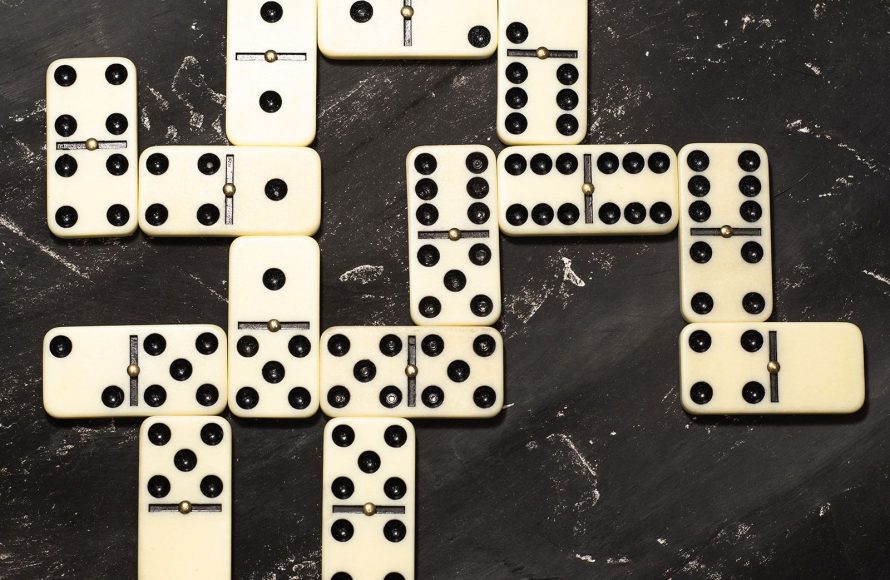
While the exact inventor of dominoes remains unknown, the game’s origins trace back to China in the 12th century.
The clicking sound of tiles, the satisfying lines they form – have you ever wondered who invented the game of dominoes? It’s a question many ask when setting up for a game. Unlike some inventions, pinpointing one individual is impossible in this case.
Instead, dominoes evolved over time, with early forms appearing in China long ago. The game we know today has roots there, dating back to the 12th century and spreading across the globe.

Who Invented the Game of Dominoes?
The story of dominoes is a fascinating journey through time and across cultures. While we can’t pinpoint one single person as the inventor, we can explore the different paths that led to the game we know and love today. It’s less about one “aha!” moment and more about how ideas spread and changed over centuries.
Ancient Roots and Early Forms
Let’s start way back, before the dominoes we recognize existed. The idea of using tiles or blocks for games and divination (predicting the future) has been around for a very long time. Think about ancient China, where people used bone or ivory tiles in games. These weren’t exactly dominoes, but they laid the groundwork for what was to come. These early tile games weren’t just for fun; they often held deep cultural significance, representing important concepts or used in ceremonies.
China’s Contribution to Tile Games
The earliest forms of domino-like tiles seem to come from China. We know that by the 12th century, a game using tiles was played. These Chinese tiles had spots on them, similar to the pips on our dice. But unlike dominoes, these Chinese tiles could be grouped into sets that didn’t necessarily match numbers. Instead, these sets were built around symbolic meaning, representing aspects of life and the universe. The game was called “Pu Pai.” It had 32 tiles, divided into different groupings. These tiles would be used for a variety of games, from matching to building strategies. The most well-known is the “Chinese dominoes,” also known as Pai Gow, which is still played today. It is important to note, though, these are more complicated than the dominoes we play today.
- Chinese tiles were used for divination purposes.
- “Pu Pai” is considered an ancestor of dominoes.
- The early tiles were often made from bone or ivory.
- Symbolic meaning was often attached to these tiles, with specific groupings representing different concepts.
While the exact connection between Chinese tiles and modern dominoes is still a bit unclear, it’s very likely that traders and travelers carried the concept westwards.
The European Emergence
Now, let’s jump to Europe. Dominoes as we think of them – rectangular tiles with spots at each end, usually made of wood or plastic – started to become more common in the 18th century. The popular theory is that Italian missionaries or merchants returning from China introduced the tile games. These games evolved with new patterns and rules. Though there is no official documentation of it.
Italy and the Transformation of Tile Games
The Italian game of dominoes became significantly more popular in the 18th century. While the tiles were still used in the same way – matching numbers – the game had become considerably simpler than its earlier Chinese counterpart. It is believed that the European version of dominoes was born in Italy, most likely in Naples, with some speculation that they arrived from China by way of Venetian merchants in the early 1700s. These early domino sets were often made from bone or ivory, just like their Chinese counterparts. They were mostly hand made, with the pips and numbers hand painted or engraved on the tiles. The game spread like wildfire through Italy, becoming a common pastime in the social gatherings. Italian dominoes often had a higher maximum value than we see in most sets today, with double-12 or double-15 sets being common. This allowed for longer and more complicated gameplay.
The Spread Throughout Europe
From Italy, the game of dominoes quickly spread across Europe. Spain, France, and England all embraced the game with their own variations in rules and regional styles. Every place gave the game a slight twist to reflect their culture. For example, in some regions, people use double-12 sets, which allows for more players and more challenging strategies. In others, simpler sets and rules made the game easier for families and kids to enjoy. The way sets were stored also varied widely. Some sets came in simple wooden boxes, others in elaborate, decorative cases. This is when people began to experiment with different materials to make the tiles. Wood became very popular, as well as plastic and other materials. Dominoes were not only used in private homes but also in pubs and public places, becoming a truly beloved pastime.
| Region | Popular Domino Set | Common Game Variations | Dominio Material |
|---|---|---|---|
| Italy | Double-12 or Double-15 | Many different rules and strategies | Bone, Ivory, Wood |
| Spain | Double-6 or Double-9 | Often with scoring rules similar to cards | Wood or Plastic |
| France | Double-6 or Double-9 | Simple matching games | Wood or Plastic |
| England | Double-6 | Simple matching games for kids and family | Wood or Plastic |
Dominoes in the Americas
The game of dominoes came to the Americas with European settlers. It became especially popular in Latin America, the Caribbean, and the United States. Today, different variations of the game are played in all these regions. Each community has its specific rules, and its unique traditions. In these regions, dominoes are not only seen as a game but as a social activity, often played at parties or family gatherings. The click-clack sound of the tiles becomes part of the sound of daily life in those places.
Dominoes in Latin American and Caribbean Culture
In many Latin American and Caribbean countries, dominoes are more than just a game, it is a huge part of the culture. It’s not just about winning; it’s about spending time with family and friends. Domino tables can be found everywhere, from bustling city centers to small rural towns. The games often have very complicated rules, and are played with passion and a little bit of trash talking! In the Caribbean, for example, dominoes are often played outdoors, under the shade of a tree, with spectators giving their comments and cheering from the sidelines. There are even organized domino tournaments in many places, attracting competitive players and crowds. Dominoes is a huge part of the social fabric of these countries, a place to socialize and connect with others. The loud sound of the tiles being slammed on the table is not just part of the game but also part of the fun and enjoyment of the local culture.
Dominoes in the United States
Dominoes also have a huge fan base in the United States, with many people playing it in their homes and at community events. In the US, several different versions of the game are played, some more casual, and some more competitive, often using slightly different rules. Here, dominoes are often seen as a game that brings people from different generations together. Grandparents teach their grandchildren the rules, passing on traditions through the ages. You might see dominoes at picnics, family reunions, and even in some bars and clubs. While it may not be as central to the culture as it is in some Latin countries, dominoes still holds a special place in the United States as a simple and enjoyable pastime.
Today, dominoes is known around the world, a game that travels across cultures and generations. From its humble roots as bone and ivory tiles in ancient China to its modern forms made with plastic and wood, the game has gone through a lot. It’s a great example of how games can spread across cultures and evolve through time and still provide enjoyment for everyone.
The game continues to adapt to the modern times. Online versions of dominoes can be found in several websites, mobile apps, allowing you to play with other people from all over the world. Whether you’re using physical tiles or clicking them on a screen, the joy of strategy and matching numbers is still there, proving that simple games like dominoes have a timeless charm.
So, while we can’t credit one single person with inventing dominoes, we can appreciate the long and fascinating journey of this game. It is a combination of different ideas and traditions that have made dominoes the game we know and love today. This timeless game shows us how cultures can come together, combining traditions and making something new and enjoyable.
The History of Dominoes
Final Thoughts
The exact origin of dominoes remains debated. Some historians credit the game to China, while others suggest European roots. The earliest known domino sets appeared in China, around the 12th century.
Determining definitively who invented the game of dominoes proves difficult due to the lack of precise historical records. Both Chinese and European accounts contribute to the game’s complex history. The key question then, of who invented the game of dominoes, lacks a simple answer.

