
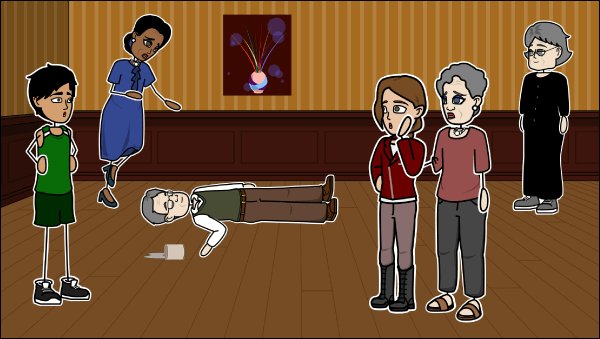
No one killed Sam Westing. He faked his own death to play the Westing game.
The Westing Game: a story filled with twists, turns, and a whole lot of eccentric characters. The central mystery always grips readers: who killed Sam Westing in the Westing game? This question is at the heart of the narrative, driving the actions of all the heirs.
The novel cleverly leads us down different paths, making us suspect everyone, which makes the conclusion even more satisfying. We think we are solving a murder mystery. However, the game itself is a clever ruse.

Who Killed Sam Westing in The Westing Game?
Okay, let’s dive deep into the mystery of who killed Sam Westing in the famous book, The Westing Game. It’s a question that keeps readers guessing right up until the very end, and even then, there are some twists! The truth is, it’s not as simple as a classic “whodunit.” Sam Westing’s death is a big puzzle, just like the game he creates for his sixteen heirs. The entire book revolves around solving this mystery, so get ready, we’re about to explore all the clues and red herrings together.
The Setup: A Game, Not a Murder?
Before we even think about who might have done it, we need to understand Sam Westing’s plan. You see, Sam Westing, a very wealthy and somewhat eccentric man, doesn’t actually get murdered. It’s much more clever than that. He stages his own death! He fakes his demise, and this becomes the starting point of his elaborate game. His aim wasn’t to find his killer, but to find the person among his heirs who was the most worthy, not just in terms of money, but in terms of character. He wanted someone smart, someone kind, someone who could see the bigger picture. He picks sixteen people, all connected to him in some way, and gives them the chance to win his huge fortune. But to win, they must find the answer to his puzzle. Sam Westing isn’t the victim of crime, but the game’s grand designer, who pulls the strings from beyond the grave (or so it seems).
Why Fake His Death?
So, why go to all this trouble? Why not just hand out the money? Well, Sam Westing was a complicated guy, and he had his reasons. He wanted to bring together a group of people, many of whom had lost touch or never truly connected. He was tired of seeing people living out of touch. He was especially looking for someone who reminded him of his lost love, Violet Westing. He had a purpose behind his game. He wanted his heirs to work together, to learn from each other, and ultimately, to grow as people. The game is more about learning and growth than just the inheritance. By making them think he was murdered, Westing hoped to make them really engage with his game, and by doing so, perhaps discover something about themselves and each other. The will is basically a big game instruction manual, telling them to find out who “killed” him, when in fact, the answer is far more complicated.
The Suspects: More Than Meets the Eye
Even though Sam Westing staged his own death, the will and the game naturally make all of the heirs think that a murder was committed. This puts each of them under a microscope, making us, the readers, and them, the players, question every action. Let’s take a look at some of the main suspects, even though they are all innocent of murder:
- Grace Wexler: She’s always trying to show her social status and cares about money. She wants to win, but she is often distracted by her own self-interests. Could her desire for wealth made her do something to Sam Westing?
- Jake Wexler: Grace’s husband. He is a doctor and often seems a bit aloof from the family drama. Is he hiding something that could be related to the fake murder?
- Angela Wexler: Grace’s perfect daughter, engaged to a handsome doctor. She appears innocent, but she hides a lot of anxiety and doubt. Could this stress be a sign of something deeper?
- Turtle Wexler: Angela’s younger sister, and the only one who initially has a friendly relationship with the real Sam Westing, or his fake persona. She’s smart and often has her own plan, but does her quick thinking hide anything?
- Flora Baumbach: A sweet and gentle dressmaker. She is kind-hearted but also easily influenced by others. Is she too meek, or is she hiding a sharper side?
- Mr. Hoo: The owner of Shin Hoo’s restaurant. He is grumpy and seemingly always angry. Does this temper point to something more sinister?
- Madame Hoo: Mr. Hoo’s young, non-English speaking wife. She’s quiet and often overlooked, but could there be secrets hidden behind her silence?
- Theo Theodorakis: A smart and eager teen with a love of chess. He and his brother Chris are very thoughtful. What clues might he be overlooking?
- Chris Theodorakis: Theo’s brother who has a physical condition. He’s a sharp observer despite his physical struggles. Does he know more than he lets on?
- Doug Hoo: A track star and student athlete. He is often preoccupied with his training. Could he also be focused on something else?
- Sydelle Pulaski: A secretary who seeks attention by using crutches. Is she really hurt, or is it another way to attract attention? She’s more perceptive than she appears. Could she notice something the others missed?
- Sandy McSouthers: The doorman, who was also friends with Sam Westing and helps the players in the Westing Game. What is his true role in all this?
- Judge J.J. Ford: A highly educated judge with her own history with Sam Westing. She is thoughtful and analytical, and very methodical. Why is her connection important?
- Otis Amber: A delivery boy, seemingly simple, but he has secrets of his own. He is always seen delivering things and has a connection with another character.
- Barney Northrup: A seemingly smooth-talking real estate agent who brings all the characters together for the Westing Game. What is his deal?
Red Herrings and False Leads
Throughout the book, we are given many false leads. The book does an excellent job of making everyone suspicious. Each character has a secret, and each secret could be interpreted as a clue. For example:
- The fireworks: The fireworks on the 4th of July make it look like Sam Westing was killed at this time, but that is also when Barney Northrup shows up.
- The clues from the will: The will is full of riddles and misdirection, leading the heirs to chase false leads. These clues cause a lot of confusion and accusations, adding to the story.
- The connections to Sam Westing: Everyone is connected to Sam Westing, but not in ways they understand at first. This makes everyone suspect each other.
- The “murder weapon”: The book shows a lot of different objects that could be a “murder weapon,” keeping people guessing. This focus on various items also helps to throw the players off course and keep them guessing.
The Truth About Sam Westing’s “Death”
Okay, let’s face it, Sam Westing was never actually murdered. He was, in fact, a master of disguise, living under multiple identities! Remember the doorman, Sandy McSouthers? That was Sam Westing, in disguise. Barney Northrup, the real estate agent? Yes, that was him too! He played multiple roles to make the game as interesting and confusing as possible.
Sam Westing’s Multiple Identities
Sam Westing wasn’t just one person. He had created different personas for his game. This is a vital element in the story because it creates much of the mystery and confusion. Here’s a breakdown:
- Sam Westing: The millionaire, the man everyone believes is dead. The core of the mystery.
- Sandy McSouthers: The seemingly harmless doorman. A crucial character in the game.
- Barney Northrup: The smooth-talking real estate agent who brings everyone to Sunset Towers.
- Julian R. Eastman: A lawyer, and the persona Sam Westing uses at the end.
He used these different roles to guide the game, observe the players, and create more confusion and suspense. This is actually a very clever way to control the game and make sure it plays out exactly as he planned. Each identity had specific purpose in the overall game structure.
The Real “Killer”: A Metaphor for Finding Yourself
So, if no one really killed Sam Westing, who is the killer? The “killer” isn’t a person. It’s actually the lack of understanding, prejudice, and miscommunication between people. Sam Westing wanted these heirs to stop looking at each other and look inward, as they were the keys to their own questions. The entire game was about finding connections, overcoming biases, and realizing each other’s value. The book makes it very clear that real wealth is in human connections, not just money. The “killer” is the destructive force within themselves, and how they come to realize their own worth and strengths.
The Game’s True Purpose
The game is set up for the heirs to look at each other and blame each other, but the actual purpose of the game was not to accuse but to learn. Here are some of the themes the game highlights:
- Self-Discovery: Many of the characters change and learn about themselves. For example, Angela realizes she doesn’t need to be perfect and Turtle learns that it’s okay to be smart.
- Family and Relationships: The game helps bring families together and helps them to fix some problems in their lives. The book shows that families are more important than any money.
- The value of individuality: Each heir has special talents and skills, and they need to learn that they are all valuable and are not to be overlooked. The book shows us that we should value our differences.
- Overcoming prejudice: Many of the characters learn that they have made assumptions about others and they need to overcome these harmful thoughts.
The Final Outcome
In the end, it’s Turtle who figures out Sam Westing’s game. She doesn’t find a murderer; she finds the truth about Sam Westing and his multiple identities. She learns about the value of human connection and personal growth. She’s not just winning the game, but she learns a lot along the way. This isn’t a story about finding a criminal; it’s a story about finding yourself.
And so, the mystery of who killed Sam Westing in The Westing Game is solved. No one killed him. He used a fake death to bring people together, make them grow, and ultimately, make them value the important things in life. The answer isn’t about guilt or blame, but about the journey and what we learn along the way.
Get A Clue (Westing Game) 1997 Trailer
Final Thoughts
Ultimately, Sam Westing did not die by another’s hand; he orchestrated his own elaborate game. He faked his death, assuming different identities within the game. Who killed Sam Westing in Westing Game becomes a trick question, as he planned his own demise.
The true mystery lies in the game’s purpose, not a murder. Westing used the game to benefit his heirs, providing them with growth opportunities. He essentially gave them a final chance at success. The must read point is Westing’s actual intention was to test everyone.

