
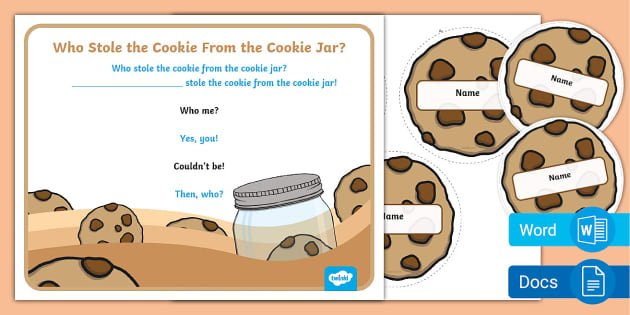
The game “who stole the cookie from the cookie jar” involves players accusing each other in a playful manner, with the ‘culprit’ often revealed through the rhythm of the chant.
Ever find yourself humming a catchy tune while trying to remember its origin? I bet you’ve experienced that with the “who stole the cookie from the cookie jar game”. It’s a classic, simple game we all likely played as kids, or maybe even still do with younger family members.
The game’s repetitive structure and question-answer format make it instantly engaging. Players call out names in a back and forth manner, until the suspected cookie thief confesses. It’s a perfect example of how the simplest things can bring joy and laughter.

Who Stole the Cookie from the Cookie Jar Game: A Deep Dive
The “Who Stole the Cookie from the Cookie Jar?” game is a classic children’s rhyme and activity that has brought joy and laughter to generations. It’s more than just a silly song; it’s a fantastic way to engage kids, develop their memory, and build their social skills. This simple game, often played in preschools, kindergartens, and homes, provides a fun and interactive way to learn about taking turns, following directions, and maybe, just maybe, getting away with “stealing” a pretend cookie! Let’s dive deeper into this beloved game and explore all its delicious details!
The Basics of the Game
At its core, “Who Stole the Cookie from the Cookie Jar?” is a call-and-response game. It involves a group of children, typically sitting in a circle, and one child who is chosen to be the “accuser.” The game revolves around the question of who took the pretend cookie, creating a simple mystery that children love to unravel. Here’s how a basic round unfolds:
- The Accusation: The accuser starts by saying, “Who stole the cookie from the cookie jar?”
- The Response: The group replies, “_____ stole the cookie from the cookie jar!” (The blank is filled in with the name of a child in the circle)
- The Question: The accuser then asks, “Who, me?”
- The Denial: The named child responds, “Yes, you!” or “Not me!”
- If Not Me: The group asks, “Then who?”
- The Answer: The named child then names another child saying “__ stole the cookie from the cookie jar!”
- The Game Continues: The game continues with the new named person, until it returns to first one who started the game, and they get to shout “I got the cookie”, then everyone start again by rotating the person who starts the game.
The rhythm and repetition make it easy for young children to participate, even those who are still learning to speak. The anticipation of being named and then having to defend oneself adds an element of excitement and suspense.
Variations on the Classic Game
While the basic structure remains consistent, there are several fun variations that can keep the game fresh and engaging. These variations can add a little bit of extra fun, or cater to different age groups and settings.
Adding Actions and Gestures
One way to spice up the game is by adding simple actions or gestures. For instance:
- The “Shame On You” Gesture: When a child is accused, everyone points their finger at that child (playfully) while saying, “Shame on you!”
- The “Sneak Away” Motion: The person “accused” pretends to sneak away or hide.
- Clapping Hands: Every time someone says the “Who stole the cookie from the cookie jar” line, everyone claps once.
These actions not only add a visual element but also encourage children to be more expressive and physical.
Changing the “Cookie”
Instead of a cookie, you can change the object that is “stolen.” Try:
- A Toy: “Who stole the teddy bear?” or “Who stole the ball?”
- A Fruit: “Who stole the apple from the fruit bowl?”
- An Imaginary Item: “Who stole the sunshine?” or “Who stole the giggles?”
Changing the stolen object can be a fun way to theme the game around a particular lesson or concept. For example, you could use fruits when discussing healthy eating habits or toys when focusing on sharing.
Adding Silly Voices
Encourage children to use silly voices when playing the game. For example:
- High-Pitched Voice: Speak the lines with a very high voice.
- Low, Grumbling Voice: Speak the lines with a deep, low voice.
- Robot Voice: Speak the lines with a monotone, mechanical tone.
- Animal Voice: Speak the lines like your favorite animal.
Playing with different voices can be very entertaining for kids and can get them even more involved in the game. It adds a layer of humor and helps them to practice different vocal styles.
Speeding Up or Slowing Down
Alter the pace of the game. Try:
- Fast Version: Say the lines very quickly, which makes it fun and chaotic.
- Slow Version: Say the lines very slowly and dramatically, which adds anticipation and comedy.
Changing the pace is another great way to vary the game’s difficulty. Speeding it up can be challenging and hilarious, while slowing it down can build suspense. You can also alternate speeds throughout one game, this can help keep kids on their toes.
The Benefits of Playing “Who Stole the Cookie from the Cookie Jar?”
This seemingly simple game is packed with developmental benefits for young children. It’s not just about having fun (although that’s a big part of it!); the game also fosters essential life skills in a playful setting.
Memory Development
The repetitive nature of the game helps children practice their memory skills. They need to remember the order of the questions and responses, as well as the names of the other children in the circle. This repeated practice strengthens their recall abilities.
Language and Communication Skills
The game promotes verbal communication. Children learn to articulate the phrases clearly and confidently. The call-and-response pattern enhances their understanding of language structure and helps with sentence formation. Also, it can help with pronunciation for the ones who have some difficulties.
Social Interaction
Playing in a group setting encourages social interaction and teaches the basics of group dynamics. Children learn how to take turns, listen to others, and participate in a collaborative activity. They also learn how to react appropriately when they are “accused” and how to respond to others in a playful way. This game helps build their self confidence.
Attention and Focus
To participate effectively, children need to pay attention to who is being named and keep track of the flow of the game. This helps them improve their focus and concentration. It’s a simple, yet effective way to work on their attention spans.
Emotional Regulation
For some children, being “accused” can be a little tricky. The game can help them learn to manage their feelings in a safe and playful way. It also provides a space to practice how to accept being named and how to calmly respond.
Adapting the Game for Different Age Groups
The basic version of “Who Stole the Cookie from the Cookie Jar?” is great for preschoolers and early elementary school children, but the game can be easily adapted to suit different age groups.
For Toddlers (Ages 2-3)
Toddlers might have a shorter attention span, so it’s okay to keep the game brief and focus on the basic call and response. You can use actions and gestures more prominently, making it a physical game. Instead of names, use simple sounds, like “Who stole the cookie? Baa-baa stole the cookie!” You can also adapt with plush toys, using the name of the toys, so kids can easily understand.
For Older Children (Ages 6+)
Older kids might enjoy more complex versions of the game. You can add challenges like:
- The “No Repeat” Rule: You can’t name the same person twice in a row.
- The “Reason Why” Rule: When you accuse someone, you have to give a (silly) reason. For example, “Who stole the cookie? Sarah stole the cookie, because she was giggling!”
- Storytelling: After each round, ask the person who was accused to explain in details how the cookie was stolen, giving them to show their storytelling ability.
With a little creativity, you can adapt the game for different age groups, keeping it entertaining for everyone involved.
Using the Game in Educational Settings
The “Who Stole the Cookie from the Cookie Jar?” game isn’t just fun; it’s also a powerful teaching tool that can be used across a range of educational settings.
In Preschools and Kindergartens
In early learning environments, this game can help children develop their language skills, social skills, and memory. It can be used as a transition activity between lessons, a brain break during class, or as a fun way to end the day. Teachers often modify the game to align with their current teaching themes, using objects and vocabularies related to learning topics.
In Music and Movement Classes
The rhythm of the game makes it great for music and movement classes. It introduces the concept of call-and-response in a musical way and encourages children to move, clap, and participate physically. Teachers can use musical instruments or simple dance moves alongside the game to make it more interactive.
In Language Arts Activities
Teachers can use the game to enhance language arts activities. For example, after playing the game, children can write or draw about what happened or change the words. It’s a great way to connect play with language learning. You can also use it to improve children’s vocabulary by using different items, as we already discussed.
In Therapy Settings
Therapists can utilize this game to work on communication skills, social interactions, and emotional expression for the children who need. The game provides a low-pressure environment for children to practice and improve these skills, with the help of a therapist. The simplicity of the game helps children to concentrate and participate fully.
Tips for Making the Game Even More Fun
Here are some simple tips to make your “Who Stole the Cookie from the Cookie Jar?” sessions even more enjoyable:
- Encourage Participation: Make sure everyone gets a chance to be the accuser.
- Be Flexible: If a child is shy, don’t force them to participate. Encourage participation but don’t push.
- Keep it Positive: Emphasize that it’s just a game and that nobody is actually in trouble. Keep it lighthearted and encourage laughter.
- Create a Cookie Prop: Use a real cookie (or a pretend one) as a prop to make the game more tangible and exciting for the children.
- Use a Fun Setting: Play the game in a circle outdoors, indoors, or use a special carpet to help make the game feel more special.
- Sing the Song: Some variations of the game are sung like a song. Try that.
By keeping the atmosphere playful and encouraging, you can make the game a positive and memorable experience for all involved.
Why This Game Remains a Classic
“Who Stole the Cookie from the Cookie Jar?” remains a classic for good reason. It’s simple, yet provides opportunities for learning and fun. It doesn’t require expensive equipment or a lot of preparation, making it easily accessible to anyone who wants to play. More importantly, it promotes laughter, interaction, and joy among kids. In a world full of complicated games, sometimes it’s nice to go back to basics and enjoy the simple pleasures of a game that has brought joy to children for decades. The repetitive nature of the game and the silly premise engage young minds, making it a beloved pastime for generations. The game also serves as a great tool for educators, caregivers, and families to connect and build relationships through playful interaction. Its adaptability and benefits ensure that it will continue to be a favorite for years to come.
The “Who Stole the Cookie from the Cookie Jar?” game is more than just a simple rhyme; it’s a wonderful tool for child development, promoting social interaction, language skills, and memory. The game provides valuable lessons through play, helping them develop essential skills while having lots of fun. Whether you’re playing it at home, in a classroom, or at a party, it’s a game that promises laughter and learning for everyone. It’s a great way to create happy memories and strengthen bonds with the children in your life. So, next time you’re looking for a fun activity, gather the kids, form a circle, and get ready to play!
Who Took The Cookie? | Nursery Rhyme | Super Simple Songs
Final Thoughts
The game, “who stole the cookie from the cookie jar game,” provides simple fun. Kids practice memory and quick thinking. It is also a great way to encourage interaction and build a sense of community.
Playing “who stole the cookie from the cookie jar game” teaches basic turn-taking skills. The game also helps improve listening ability. This fast-paced game will keep them engaged.

