
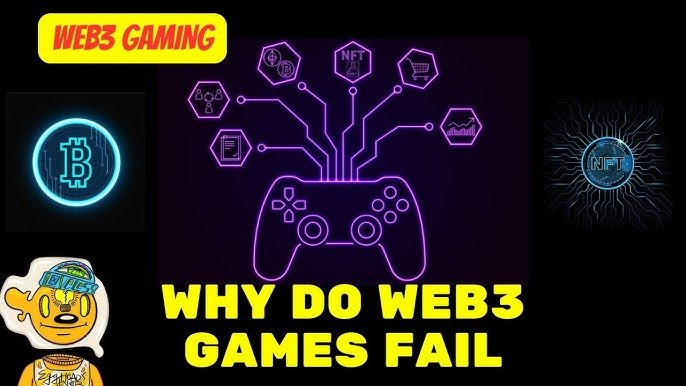
NFT games fail primarily due to unsustainable tokenomics, poor gameplay design, and a lack of long-term player engagement strategies.
The initial hype surrounding play-to-earn mechanics often overshadows fundamental game design principles, leading to a rapid decline in player interest. Many projects focus solely on token value, neglecting enjoyable experiences that keep players invested. Consequently, when the financial incentives diminish, the games collapse, explaining why do nft games fail so frequently. Without solid, engaging gameplay, and a sustainable economy, these games struggle to create lasting communities.

Why Do NFT Games Fail?
NFT games, with their promise of combining fun gameplay with the potential to earn real money, have certainly captured a lot of attention. But, like any new idea, not every NFT game hits the mark. Many have stumbled, leaving players disappointed and wondering what went wrong. Let’s dig into some of the key reasons why these games often don’t live up to the hype. Understanding these pitfalls can help us see which games might succeed and which might be headed for trouble.
Poor Game Design and Unengaging Gameplay
At the heart of any successful game, whether it uses NFTs or not, is good gameplay. If a game isn’t fun, players simply won’t stick around. Many NFT games, in their rush to capitalize on the “play-to-earn” aspect, often overlook this basic truth. It’s like building a beautiful house with shaky foundations; it might look good at first, but it won’t last.
Lack of Core Fun Mechanics
Think about your favorite video games. What makes them fun? It’s usually a combination of interesting challenges, a sense of progression, and satisfying interactions. Many NFT games, in their attempt to include NFTs, fail to make the game enjoyable. Some games rely too heavily on earning and too little on actually playing. When the primary motivation becomes earning money instead of enjoying the activity, something is lost. Players may feel like they’re doing chores rather than playing a game, and that leads to boredom and frustration.
- Repetitive Tasks: Games that require the player to do the same task over and over again without variations become dull quickly.
- Poor Controls and User Interface: If the game is difficult to navigate or the controls are clunky, players are less likely to have fun and continue playing.
- Lack of Story or Narrative: A good story can draw players in and make them care about the game world and its characters. Without a good story, games can feel hollow and unfulfilling.
The “Pay-to-Win” Trap
A significant issue is the “pay-to-win” structure that some NFT games adopt. In these models, players who buy expensive NFTs gain a significant advantage over others. This creates a situation where success hinges on how much money you spend rather than your actual skills as a player. It can be off-putting to gamers who enjoy fair competition and might turn away new players who cannot afford expensive NFT items.
| Problem | Impact |
|---|---|
| Pay-to-win mechanics | Discourages players who can’t afford expensive NFTs, creating an unbalanced and unfair experience. |
| Uninteresting gameplay | Players get bored quickly and leave the game. |
| Lack of a clear game direction | Players don’t know what to do or how to progress and lose interest. |
Unsustainable Economic Models
NFT games often try to blend gaming with economics by using in-game currencies and NFTs. However, many struggle to balance these aspects effectively. An economy that is not carefully designed can lead to a game’s downfall. When the economic model is flawed, the value of in-game assets drops, and players lose confidence in the game.
Inflation and Tokenomics Problems
One common problem is high inflation. If a game issues too many in-game tokens or NFTs without proper controls, their value drops. This means what a player earns becomes less and less valuable over time, ultimately reducing the incentive to play. Imagine saving up tokens for a special item, only to find that they’re worth much less than you expected. This makes players feel cheated and destroys the trust they have in the game’s economy.
- Excessive token supply: Flooding the market with too many tokens reduces their value and discourages players.
- Unclear token use cases: If players can’t find a good way to use tokens, they lose their appeal and value.
- Lack of mechanisms to regulate supply: Without ways to control how many tokens are released and burned, the value is difficult to maintain.
Ponzi-like Structures
Some NFT games unfortunately rely on attracting new players to buy NFTs to pay earlier players. This is like a pyramid scheme or ponzi scheme, where early adopters profit from the investments of new people. Such games aren’t sustainable and are doomed to collapse when they fail to attract enough new players. When this happens, the value of in-game assets usually drops rapidly, and a lot of players lose a lot of money.
- Dependence on new players: If the game only makes money when new people buy NFTs, it’s likely to fall apart eventually.
- Lack of real utility for tokens or NFTs: When in-game assets don’t have much use besides being resold, the game loses its value.
- Unrealistic earning promises: Games making big promises for big rewards without having a real sustainable system often fail.
Lack of Community Engagement and Transparency
A game’s community is its lifeblood. When the game creators don’t listen to their players or when they are not clear about their plans for the game, problems can occur. Players want to know what’s happening with the game and they want to feel like their opinions matter. When this trust is lost, players leave for games that value them more.
Poor Communication and Lack of Support
When players face issues, they need fast and helpful support. A lack of good communication from the game developers can lead to distrust and frustration. When developers don’t communicate with players openly about game updates, changes, or problems, players can feel ignored. This can quickly turn a loyal player base into a group of disappointed gamers. Good communication is very important for keeping a community happy and engaged.
Ignoring Player Feedback
Developers should always be looking at what their players are saying and use that feedback to make the game better. When developers ignore valuable feedback, it’s like they are ignoring their own community, which they depend on for the game to grow. Players will quickly become unhappy if they feel like the developers aren’t listening and responding to their needs. Games that listen to their players are more likely to improve and become popular.
Lack of Transparency
Players also need to trust that the developers are doing things the right way. When developers are secretive about how the game works or about their future plans, players will lose their trust. Transparency builds faith in the game and its creators, and that can be valuable. When players understand how the game functions, and where it is headed, they are more likely to stick with the game.
Technical Issues and Security Concerns
Technical problems can quickly kill the buzz for a game, regardless of how great the concept may be. Slow performance, bugs, and security problems can severely hinder player experience and make them want to leave. NFT games are particularly sensitive to these issues because they involve real money and asset ownership. Any technical difficulty or security breach can immediately affect the players’ trust.
Bugs and Glitches
Bugs and glitches are common in game development, but they can be especially detrimental to NFT games. They can affect gameplay, mess up in-game economies, or even cause players to lose their valuable NFTs. Games that aren’t tested enough or are rushed to release often suffer from these types of issues. Bugs can disrupt game experience and make players angry.
Security Vulnerabilities
Since NFT games deal with real money, security is essential. Vulnerabilities in smart contracts or the game platform itself can put players at risk of hacks and theft of their NFTs. Even the thought of such security threats can scare players away. A security breach can damage the reputation of the game and make players very hesitant to trust the platform in the future.
Poor Performance and Scalability Issues
Slow loading times, lagging, and server problems ruin the gaming experience. Many NFT games struggle with scalability as their player base grows. These performance issues make it hard for players to have fun, and they can get frustrated. A good game needs to be capable of handling the number of players who want to play without slowing down or breaking.
Over-Reliance on Hype and Speculation
Sometimes games gain popularity just because they are new and different, not because they are actually good. This attention driven by hype may attract players at first, but if the game isn’t good, these players won’t stick around long term. The hype can be misleading, creating unrealistic expectations which eventually lead to disappointment.
Lack of Sustainable Player Base
Games that are popular just because they are “trending” or because of potential money-making opportunities might not be able to maintain their player base when the hype dies down. A strong game should build its player base with an enjoyable experience that keeps players coming back to play again and again. If players are only playing to try and make a quick profit, they’re not likely to stay when those profits disappear.
Unrealistic Expectations
Hype can create inflated expectations about what the game can offer. When the game doesn’t live up to these expectations, players are often left very disappointed. It’s important for developers to market their games honestly and not make promises they cannot keep. Over-hyping a game is a quick way to damage its chances of long term success.
Short-Term Thinking
Games that are focused on making quick profits often lack long-term planning. These games may become very popular fast, but they also have a tendency to fail quickly when the initial hype cools off. Creating a game with long-term goals and a good structure is important for its ongoing popularity. Games that look into the future and make plans for continued growth are more likely to survive and thrive.
In summary, the failure of many NFT games stems from a variety of interconnected issues. Poor gameplay, flawed economic models, lack of player engagement, technical problems, and over-reliance on hype all contribute to the downfall of these games. To succeed in the long run, NFT games need to focus on providing a fun and engaging experience that is sustainable, secure, and fairly managed. They need to understand that a good game is the foundation for any successful game, whether it uses NFTs or not.
So What Happened to All Those NFTs?
Final Thoughts
Ultimately, many NFT games fail due to unsustainable tokenomics. Over-reliance on new players for value creation becomes a problem. A lack of engaging gameplay loop also contributes to rapid player drop-off.
Poor development and a focus on quick profits instead of a long-term vision hurt these projects too. Why do nft games fail? Several factors like these lead to their downfall.

