
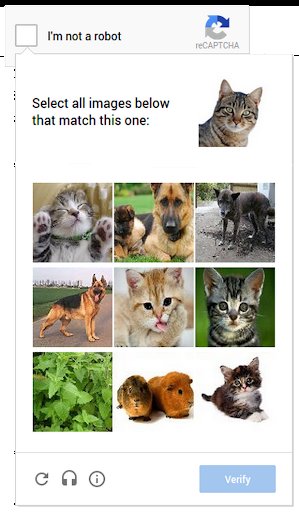
The purpose of an ‘are you a robot test game’ is to verify if a user is a human and not an automated bot.
Ever encountered those quirky image selections or distorted text boxes online? That’s an ‘are you a robot test game’ at work. They’re designed to differentiate between you, a real person, and a computer program trying to impersonate one. These tests, often called CAPTCHAs, present challenges that humans find easy to solve but bots struggle with.
These games are a crucial part of web security. They protect websites from spam and malicious attacks carried out by automated software. So, next time you’re asked to identify traffic lights or click on all the buses, remember it’s to ensure a safe internet experience for all of us.

Are You a Robot Test Game: Diving Deep into the World of CAPTCHAs
Have you ever been asked to click on pictures of traffic lights or type in a jumble of letters and numbers? If yes, then you’ve encountered an “are you a robot test game,” also known as a CAPTCHA. These little challenges are everywhere on the internet. They’re designed to tell the difference between a real person and a computer program, also known as a bot. But why do we need these tests? How do they work? Let’s explore this interesting world of CAPTCHAs together.
Why Do We Need “Are You a Robot” Tests?
The internet is a wonderful place, but unfortunately, it also attracts some bad actors. These bad actors often use bots—computer programs designed to perform repetitive tasks quickly. Bots can be used for harmful activities like:
- Spamming: Sending out large amounts of unwanted messages or emails.
- Scraping Data: Stealing information from websites.
- Account Takeover: Trying to break into people’s online accounts.
- Making fake accounts: Creating lots of fake profiles for bad purposes.
- Ticket Scalping: Buying large numbers of tickets to popular events and then reselling them at much higher prices.
These activities can make using the internet less safe and enjoyable for everyone. CAPTCHAs act like a gatekeeper. They’re a challenge designed to be easy for humans to complete but very hard for bots. By making bots work harder, CAPTCHAs discourage these harmful activities and keep the internet a bit safer.
How Do “Are You a Robot” Tests Work?
CAPTCHAs have come a long way since the first days of the internet. The tests have become smarter over time. Here are some common types of CAPTCHAs and how they work:
Text-Based CAPTCHAs
These are the classic CAPTCHAs that many of us remember. They present distorted or wavy text which a computer program finds difficult to read. For a human, reading this is usually simple:
- The challenge: You see letters and numbers jumbled or distorted.
- Your task: Type what you see into a box.
- Why it works: Computers aren’t as good at recognizing this kind of visual data as humans are. They find it very difficult to process messy text.
Image-Based CAPTCHAs
Image CAPTCHAs are a little more complex but are very common these days. They ask you to pick out pictures from a group of photos based on a specific theme:
- The challenge: You’re presented with a grid of images.
- Your task: Select all the images that fit a certain description like traffic lights, buses, or storefronts.
- Why it works: Image recognition is tough for bots. They haven’t learned yet to identify specific objects in many different angles and lighting, while humans can do it quickly and easily.
Audio-Based CAPTCHAs
Audio CAPTCHAs are for people who have difficulty seeing or using image or text based challenges. They present a sequence of sounds, usually a spoken word or number sequence.
- The challenge: You listen to a distorted or mumbled sequence of sounds, and sometimes there might be other noises mixed in, like static.
- Your task: Type what you heard into a box.
- Why it works: Just like with distorted text, computer programs find it hard to understand messy sounds and filter out the distracting noises, while humans can focus on what is being said and do it easily.
Behavioral CAPTCHAs
These CAPTCHAs track how you move your mouse, how you type, or even how long you take to fill in forms. They are less annoying than other CAPTCHAs as you don’t have to complete a task manually, and they work behind the scenes.
- The challenge: You don’t see a test. Instead, the CAPTCHA observes your online actions.
- Your task: Act normally. Bots tend to move or click in very specific and different patterns that are easy to recognize.
- Why it works: Human behavior is often inconsistent and varied; bots tend to be very predictable. These patterns are what allows the CAPTCHA to differentiate between the user types.
Checkbox CAPTCHAs (reCAPTCHA v2)
These are perhaps the simplest form of CAPTCHA. The user simply clicks on a checkbox saying “I’m not a robot.” The CAPTCHA analyzes your browser activity to determine if you are likely a human or a bot. This might involve looking at how your mouse cursor moves or how you interact with the page.
- The challenge: A simple checkbox.
- Your task: Click the checkbox.
- Why it works: By looking at how you interact with the site, the algorithm makes a guess about whether you’re human or a bot. If it’s not too sure, it may display another challenge.
Invisible CAPTCHAs (reCAPTCHA v3)
This version of CAPTCHA works entirely in the background. You won’t even know it’s happening, most of the time. It monitors how you interact with the website and assigns you a score based on the likelihood that you are a bot. The website owner can then decide how to handle different scores. For example, they might allow people with high scores to access the site freely, but require users with low scores to complete a different CAPTCHA.
- The challenge: None! It works in the background.
- Your task: Use the site as normal.
- Why it works: It runs sophisticated behavioral analysis to check if you behave like a human user.
Why are CAPTCHAs so important?
CAPTCHAs might seem like a hassle when you’re just trying to log in or buy something online. However, they play a crucial role in maintaining online safety. Let’s take a look at the important purposes they serve.
Preventing Fake Account Creation
Bots can create thousands of fake accounts in seconds. This can be used for many reasons, including leaving fake reviews or spreading misinformation. CAPTCHAs can make it harder for them to create accounts.
Protecting Websites from Spam
Spam can clog up your comments sections, contact forms, and forums. By using CAPTCHAs, websites can stop automated messages and keep online spaces clean and genuine.
Blocking Data Harvesting
Some malicious bots are programmed to steal data from websites, such as personal information or pricing data. By using CAPTCHAs, websites can avoid this and protect their sensitive information.
Combating Ticket Scalping
Ticket scalping is a common problem these days. Bots are programmed to buy as many tickets as possible to an event, which they then sell at a much higher price. CAPTCHAs make this harder for bots, ensuring genuine fans have a better chance of getting tickets at face value.
Enhancing Cybersecurity
CAPTCHAs act like a first line of defense. They make websites more secure by stopping bots from doing harmful activities. This helps keep your online experience safer.
The Evolution of the “Are You a Robot” Test
CAPTCHAs have gotten much smarter and more user-friendly as the technology has advanced. The very first CAPTCHAs were mostly just distorted text, they were often very difficult for humans to read as well as bots. As bots have improved and learned to get around these tests, the tests have also needed to improve to keep up.
Early Text CAPTCHAs
Early text CAPTCHAs were quite basic. They presented randomly generated text which was warped, distorted and had added lines or shapes, to make them difficult for bots to read using OCR (Optical Character Recognition). This was okay at the start but as computers became more powerful, bots began to get around these types of tests.
Moving to Image Recognition
With image-based CAPTCHAs, websites began to use a large variety of visual challenges for users. These involved identifying objects in photos and were harder for bots to solve. This gave the tests an edge over the bots who hadn’t learned to identify objects reliably.
The Arrival of AI and Machine Learning
With the development of Artificial Intelligence and Machine Learning, CAPTCHAs needed to get even smarter. These new technologies allowed the tests to adapt and evolve in response to changes in the technology available to bots. This led to the development of more complex tests like invisible CAPTCHAs, which monitor the users behavior.
Can Bots Really Pass CAPTCHAs?
This is a good question. The answer is yes, sometimes. As CAPTCHAs get more complex, bots are also constantly changing. Here’s how they do it:
AI and Machine Learning
Bots are using the same Artificial Intelligence and Machine Learning that are used to develop CAPTCHAs. This means that they are able to learn and adapt over time. If a bot can learn to identify objects in images like a human, they can solve image-based challenges very well.
Human Help
Sometimes, bots use humans to complete CAPTCHAs. This is done by sending the CAPTCHA to a human worker who will solve the challenge for the bot. This is a more time consuming and expensive method for bot owners, but still happens.
Advanced Algorithms
Some bots use complicated algorithms to guess what is being asked for in the CAPTCHA and solve them. This can be surprisingly effective and is why CAPTCHAs are always needing to change to stay one step ahead.
The Future of “Are You a Robot” Tests
What will CAPTCHAs look like in the future? We can expect to see these continuing changes:
Biometric Identification
Biometric identification like fingerprint or face recognition may be used in future tests. It will be very difficult for a bot to spoof these kinds of tests.
Even Smarter Behavioral Analysis
Behavioral analysis will get even more advanced, making it better at spotting the difference between real people and bots. This could be subtle patterns in how people navigate a webpage, or their typing habits.
More User-Friendly Tests
Testing should ideally be invisible to the user. In the future, there will be less disruption for the average user with tests happening in the background and only challenging users if they trigger bot like activity.
Adaptive CAPTCHAs
These new CAPTCHAs would be able to change based on the user’s behavior. If a user seems suspicious, they might be given more difficult challenges. If they seem like a normal user, they might bypass the test altogether.
So next time you see an “are you a robot test game” remember that these little tests aren’t just annoying hurdles, they’re important safeguards that make the internet a safer place for everyone. They are a constant battle of wits between humans and bots, and it’s a battle that is very important to keep our online world secure and user friendly.
CAPTCHAs may seem a bit annoying sometimes, but they play a significant role in our online safety. By continuing to improve and adapt to new technology, they will keep our online experience more enjoyable for all. We hope that by reading this guide you now have a better understanding of the role these tests play, and why they are so important.
When You Fail The “Are You A Robot” Test #shorts #relatable
Final Thoughts
Ultimately, the ‘are you a robot test game’ proves to be a fascinating method. It challenges players with unique puzzles. These challenges determine if one is human.
This type of game offers a playful way to verify users. Such tests are crucial for online security. The gameplay makes it engaging rather than tedious.

