
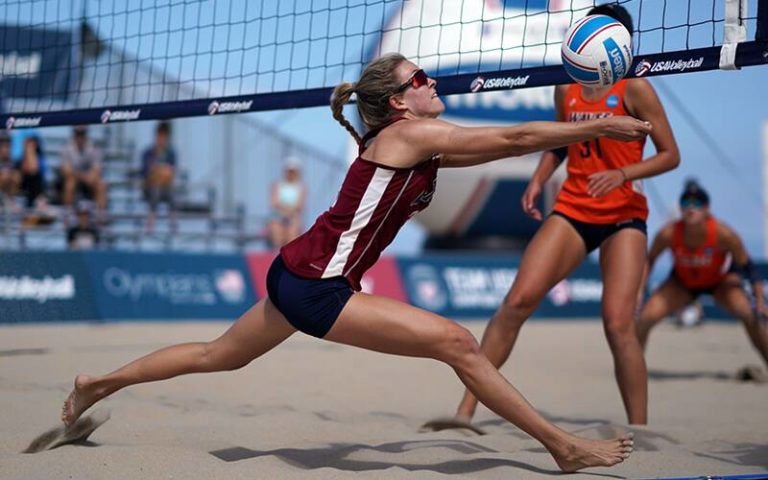
A volleyball game typically lasts between 60 and 90 minutes, but the exact duration can vary depending on the number of sets played and how competitive the match is.
Ever wondered how long a volleyball game lasts? Well, it’s a common question among both new fans and seasoned players alike. The time can fluctuate, which often adds to the excitement.
Knowing the general timeframe is helpful, especially when you are planning to watch or participate in a match. Factors influence how long a volleyball game last, such as the pace of play and the breaks between sets.

How Long Does a Volleyball Game Last?
Okay, let’s dive into the exciting world of volleyball and figure out just how long you can expect to be on the edge of your seat watching or playing a game. It’s not as simple as a fixed number of minutes, because there are several factors that can influence the duration of a match. Unlike some sports with a set clock, volleyball operates on a point-based system, which means the length can vary quite a bit. This makes it all the more interesting!
Understanding the Basics of Volleyball Scoring
Before we talk about time, we need to understand how volleyball games are won. This directly affects how long a game lasts. In most competitive volleyball, teams play a series of sets, and the first team to reach a certain number of sets wins the match.
Sets and Winning a Match
A set is like a round within the game.
In most matches, teams play best of five sets. This means the first team to win three sets wins the entire match.
However, sometimes, especially in lower level matches, teams might play best of three, meaning the first team to win two sets takes the victory.
For each set, teams play until one team scores 25 points, with a required two-point lead to win that particular set. For example, if the score is 24-24, the set isn’t over yet. You keep playing until one team gets ahead by two points, like 26-24, 27-25, and so on.
The final set, when needed, is often played to 15 points, again with the two-point advantage rule.
Rally Scoring: The Key to Set Length
Volleyball uses “rally scoring,” which means a point is awarded on every rally (when the ball is in play), whether the serving team wins it or not. This change, implemented in the late 1990s, sped up the game compared to older scoring systems where only the serving team could score. Rally scoring means the game keeps moving, and sets are less likely to drag on. This ensures that a volleyball match has a generally predictable time duration.
Factors That Influence How Long a Volleyball Game Lasts
Now that we’ve covered the scoring, let’s talk about what can actually make a volleyball game last longer or shorter.
Skill Level of Players
The skill level of the teams playing has a huge impact on game length. Here’s why:
Highly Skilled Teams: These teams are generally efficient and make fewer errors. They can often string together good rallies and score points faster, sometimes resulting in shorter sets and matches. They are also more capable of winning by the required two-point advantage quickly.
Less Experienced Teams: Teams still developing their skills might experience longer rallies due to missed passes, hitting errors, and more frequent volleys back and forth. They might also end up in more deuce situations (where the score is tied at 24) which increase the time.
Number of Sets Played
As we know already, the number of sets being played makes a big difference. A best-of-three match is obviously quicker than a best-of-five. If both teams are highly skilled, winning three sets can be done very quickly. However, even two sets with lots of deuce situations can take considerable time to play.
Timeouts and Substitutions
Timeouts: Each team gets a limited number of timeouts per set (usually two). Timeouts offer brief breaks in the action, allowing coaches to talk with their players and for athletes to rest. These breaks can slow down the game clock.
Substitutions: Substitutions, especially if frequent, also add little bits of time to the game. There are also rules about substitution timing that need to be followed, which can slow down the game too.
How Close the Sets Are
Close matches with teams trading points frequently can greatly extend the length of the game, particularly if numerous deuce situations occur in any given set. These “back-and-forth” battles are exciting to watch but lengthen the overall game time.
Injuries
If a player gets injured during the match, medical staff has to come on the court. This will pause the game clock and increase the game’s total time.
The amount of time paused depends on the severity of the injury and treatment needed.
Officials and Referee Decisions
While a smooth match with minimal disputes doesn’t add significant time, discussions about calls or challenges can sometimes cause brief delays.
Average Lengths of Volleyball Games
Okay, now for the numbers you’ve been waiting for. While a precise estimate isn’t possible, we can provide average ranges based on experience:
Typical Game Duration
High School/Youth Matches (Best of 3): These matches usually last between 45 minutes to 1 hour and 30 minutes. Shorter games can be around 45 minutes to 1 hour and longer games can extend to 1 hour 30 mins depending on how close the sets are.
High School/Youth Matches (Best of 5): These can go from 1 hour 15 minutes up to 2 hours or even longer, especially if games go to 5 sets.
College/Professional Matches (Best of 5): College matches can be anywhere from 1 hour 30 minutes to over 2 hours. Professional matches often fall into a similar time bracket, but the highest level can be a little bit faster because of the high skill and consistency of the teams.
Understanding The Variations
Keep in mind that these are just averages. A highly competitive match at any level can take longer than average, while a one-sided game might be shorter.
Volleyball Game Length: A Detailed Look at Different Scenarios
To illustrate how the factors can influence game length, let’s consider a few scenarios:
Scenario 1: Quick Match
Imagine two well-matched high school teams.
They play a best-of-three match.
The sets are relatively close, with a couple of 26-24 scores, but both teams play cleanly.
They have minimal timeouts and substitutions.
There are no injuries or lengthy referee discussions.
This match could be over in about 55-65 minutes.
Scenario 2: A Long, Drawn-Out Match
Now let’s consider a different situation:
Two high school teams, but this time, they are more evenly matched, resulting in lots of close scores and deuce points.
They play a best-of-five match.
The teams frequently trade points, and there are numerous long rallies.
They take a few timeouts, and there are several substitutions throughout the match.
There is a minor injury to a player that needs attention, leading to a short delay in the match.
This match could go over 2 hours long.
Scenario 3: A Dominant Performance
And lastly:
A college team plays a team that is noticeably less skilled.
They play a best of five sets, but the stronger team wins the first three easily (25-15, 25-16, 25-18).
There are minimal timeouts, few substitutions, and no delays or controversies.
This game might finish in only 1 hour and 15 minutes.
| Scenario | Match Type | Sets | Duration (Approx.) |
|---|---|---|---|
| Quick Match | High School | Best of 3 | 55-65 minutes |
| Long, Drawn Out Match | High School | Best of 5 | Over 2 hours |
| Dominant Performance | College | Best of 5 | 1 hour 15 minutes |
How to Best Manage Your Time Watching Volleyball
Since the length of the game can vary, here are some tips for managing your time when watching a volleyball match:
- Check the Schedule: Most tournaments and leagues publish a detailed schedule which will at least give you an idea of what time the match is likely to start. Keep in mind this time is just the start time, and the duration is flexible.
- Plan for Variability: Always add extra time to your schedule, just in case the game goes longer than expected.
- Check Updates: Pay attention to updates during tournaments that can affect schedule, like schedule changes due to matches going into long overtime.
- Be Patient: Understand that a really good match may have some unpredictable length. Just settle in and enjoy the action!
Volleyball: More than Just the Length of the Game
While we’ve discussed the length of volleyball games, it’s important to remember that the time spent on the court is just one part of the overall experience. Volleyball is a sport that teaches teamwork, strategy, and physical fitness. The back-and-forth nature of the game and the quick points make it exciting and easy to follow. So, next time you watch or play a volleyball game, try to enjoy the moments, the action, and the camaraderie, and don’t stress too much about the time on the clock.
Volleyball games do not have a set game clock. The game is won by reaching a point limit for each set. The variations to the duration of games add to the sport’s intrigue.
The time durations mentioned here are just approximate and there are several factors that may make a volleyball game last longer or shorter. Enjoying the game and having patience is the key, as its unpredictability adds to the enjoyment of watching or playing.
Longest Point Ever!?!?!?!? | Big Ten Volleyball
Final Thoughts
Volleyball match duration varies. A typical game lasts between 60 to 90 minutes. However, specific factors influence this, such as the number of sets played and time-outs.
For example, if teams go to a full five sets, the game definitely runs longer. Delays from injury or lengthy reviews also add to the total time. Therefore, it is hard to pinpoint the precise game duration.
Ultimately, how long a volleyball game lasts is a range. Expect a standard match to take about an hour and a half, but be prepared for it to run longer.

