
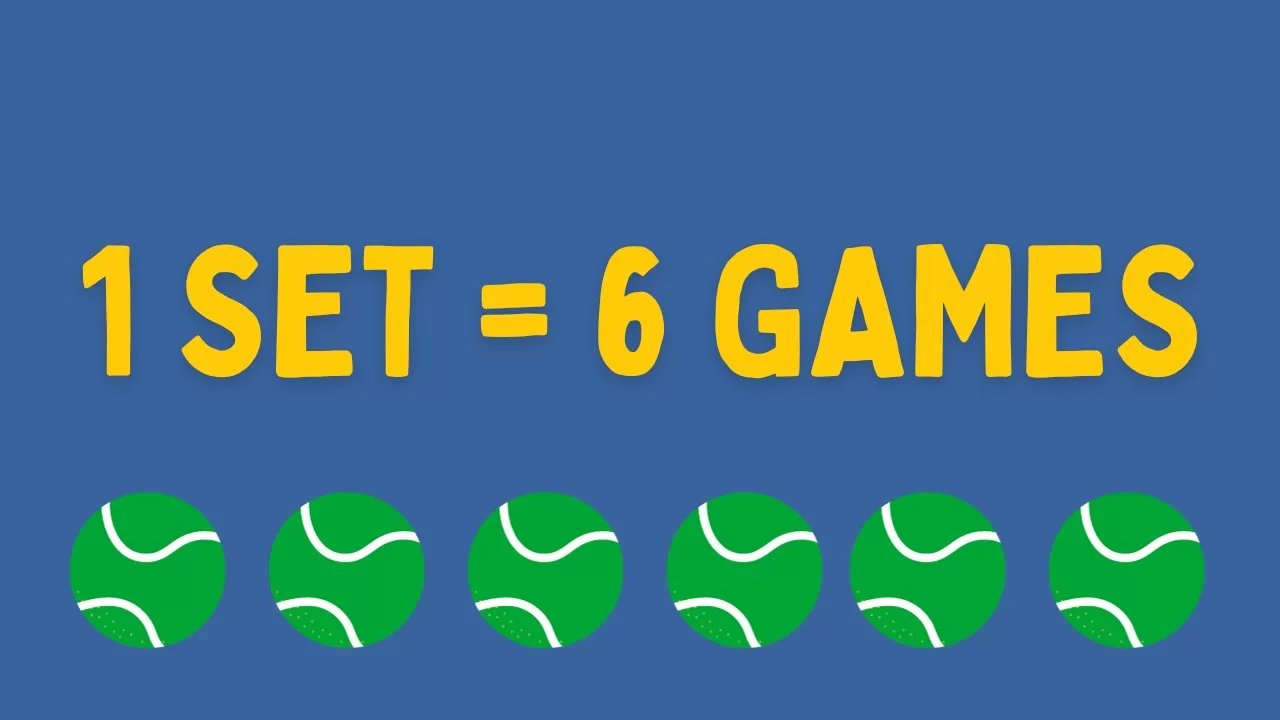
A tennis set is typically won by the first player to win six games, with a margin of at least two games.
Ever watched a tense tennis match and wondered exactly how many games in a set for tennis are needed to claim victory? It’s a question that often pops up for both new fans and seasoned spectators. Understanding this basic rule is crucial to fully appreciating the flow and strategy of a match.
The specific number isn’t always six and might require a bit of extra play. You will notice that sometimes, sets will continue until one player is two games ahead. This adds some excitement to every match.

How Many Games in a Set for Tennis?
Okay, let’s talk tennis! You’re watching a match, and the players are battling it out, game after game. But how does it all work? How many games do they have to win to actually win a set? It might seem a little confusing at first, but don’t worry, it’s pretty simple once you understand the basics. So, let’s dive into the world of tennis sets and figure out just how many games are needed.
The Standard Tennis Set: Six Games
The most common way to win a set in tennis is by winning at least six games. That’s the magic number! But there’s a bit more to it than just hitting six wins, so let’s go over the details.
Winning by Two
Simply winning six games isn’t always enough. You need to win by at least two games. If the score reaches 5-5, then things get really exciting. Neither player has won six games by a margin of two, so the set continues.
For example, if the score becomes 6-5, the player leading with six games is now in the position to win the set, but if they lose the next game and the score becomes 6-6, the set will enter tie-break.
What is a Tie-Break?
A tie-break is a special mini-game that’s played when the score reaches 6-6 in a set. Think of it as sudden death for a set, designed to prevent very long, drawn out sets. Instead of trying to win by two games, players compete to reach seven points with a two-point advantage. The first player who reaches seven points with at least two points more than their opponent, wins the tie-break and consequently the set.
Here is a simplified breakdown of how a tie-break works:
- Players continue point-by-point, and the score is counted numerically, i.e., one, two, three instead of 15, 30, 40.
- The player who won the previous set will serve first.
- Each player serves two points at a time, then change server.
- The player who reaches seven points with a margin of at least two points, wins the tie-break and the set.
Different Set Formats: Not Always Six Games
While the standard set is based on six games, different formats do exist for tennis matches. You’ll see these most often in junior, recreational, or training matches. These formats adjust the number of games needed to win a set or might change how a tie-break functions.
Short Sets (4 Games)
One variation is a short set, where players win the set when they reach four games, and need a margin of at least two games. If the score reaches 3-3, the set goes into the tie-break, and the same rules as standard tie-break apply, meaning the player who reaches seven points with a two point advantage will win the tie-break and set.
This format is more common in junior matches, or when time is a big factor in the game. It’s also helpful for players who want to play more matches within a given time.
Pro Set
The pro set is less common than the above formats, but it still exists, and is played by some players. It’s played up to eight games, with a margin of at least two games between the players, and if the score reaches 7-7, then the tie-break will come in effect.
Some might think this method is more preferable as the game goes up to a bigger total than the standard six games per set, but this kind of format is less seen in most tennis matches.
Why These Numbers? The History of Set Lengths
You might be curious about why the tennis game utilizes these exact numbers for the games per set, instead of using different numbers. There’s no single, universally agreed-upon reason why exactly the number six was chosen. However, it has been established that the current tennis scoring system came from a historical progression, and it might not have a specific reason why the number six was chosen. But let’s go through some possible explanations:
Historical Evolution
The scoring system of tennis has evolved over time. Tennis used to be played with different rules and formats, and those formats gradually evolved into what we see today. The number of games in a set wasn’t always six, and it was gradually refined over time to establish the current format, which is well-balanced and fits the length of most games.
Balance Between Length and Excitement
The idea behind having a certain number of games is that there should be enough games in the set that it’s not over very fast, but also that it’s not so long that it makes the game too lengthy. The number of games in a set is meant to provide both players enough chance to win, while also keeping it entertaining and engaging. Having a set go up to six games is considered the perfect balance of length and excitement by most people.
Predictability and Structure
Having a set go up to six games with a two-game advantage provides a predictable structure. This structure allows both the players and the fans to understand how the set is progressing. This predictability makes it easier to follow the match, and it also allows for a structure in the game itself, as it is not too long, but at the same time not too short.
The Importance of Games in a Set
Now that we understand how many games there are in a set, let’s talk about why it matters. Each game, while just one small part of a set, plays a very important role.
Building Momentum
In tennis, getting off to a good start in the set can be essential to the rest of the game. Winning early games can provide players with momentum, which can then help them win more games, and in turn win the set. A player who falls behind in a set may feel a sense of urgency to turn things around quickly, putting more pressure on them, which will affect their performance.
Strategic Play
Tennis players need to be strategic. If they win the first three to four games in the set, they will play more strategically and less aggressively to keep their lead in the set. If they are behind by three to four games, they might switch to aggressive play to win points quickly. Each game is a new opportunity to use strategy. This is what makes tennis more than just hitting the ball, but a game of mental power too.
Mental Toughness
Tennis is a mentally challenging game. A player has to overcome obstacles to win games, and then win the set. They have to handle losing a game, or being behind. Winning games helps them stay strong, focused, and optimistic. The way a player handles each game impacts their whole performance.
How Many Sets to Win a Match
After knowing how many games make a set, you might be wondering how many sets are needed to win the match. Usually, a player has to win a particular number of sets to win a match, depending on the kind of match and the tournament. Here are some common rules:
Best of Three Sets
This is the most common format in tennis. In this format, the player that wins two sets wins the match. Many tournaments use this format for their matches, including men’s matches at most tournaments.
Best of Five Sets
This is more of a classic, traditional format, where the player who wins three sets wins the match. Grand Slam matches are played in this format, and they are considered to be the most challenging format. That’s because the player has to be consistent over a longer period of time to win. It tests the player’s mental and physical strength.
Different Set Variations and Their Impact
The number of games in a set can significantly affect how tennis is played. Let’s see how these different set variations impact the players.
Standard Sets
The standard six-game set is ideal for professional and high-level matches, as it gives players enough time to develop a rhythm and momentum. The two-game advantage rule makes the players earn the win. This is a well-balanced structure that has worked really well for years and has kept matches engaging.
Short Sets
Short four-game sets make the matches quicker and more fast-paced. This format is helpful for juniors and beginners as it can help them grasp the rules of tennis without being overwhelmed with the length. This short format of game can make the match more entertaining because of the high-intensity of play, as the players have to perform well in every game to win the set.
Longer Sets
Playing with eight-game sets makes the matches more physically and mentally demanding. This format requires the players to remain consistent, and to be strong and focused on the game. It can be more time consuming as well, as the player needs to be focused for a longer period.
Keeping Track of Games
When you’re watching a tennis match, it’s helpful to be able to keep track of how many games are in each set, so that you can follow the match. Here are some tips on how to do that:
- Check the Scoreboard: The scoreboard usually shows the number of games each player has won in the current set and the number of sets that each player has won.
- Pay Attention to Announcements: Tennis announcers often give the score during the match, saying who has won how many games in the set, which helps you follow the game.
- Use Tennis Apps: There are many tennis apps which can help you follow the live scores of the game, and know how many games each player has won in each set.
Knowing how many games there are in a set in tennis is important to understand how the game works. It is not that difficult to understand once you learn all the little details that come with it. The next time you watch tennis, knowing all this information about the number of games in a set will surely help you to follow the match better, and enjoy it even more.
Understanding the rules about how many games are in a set really helps you follow and enjoy tennis. Whether it’s a standard set, short set, or a tie-break, knowing the rules makes watching and playing tennis a much better experience!
Tennis for dummies video | Tennis Scoring Explained
Final Thoughts
To summarize, a standard tennis set requires a player to win at least six games. Furthermore, a two-game margin is also a must to claim the set, which means winning scores like 6-4 or 7-5 are frequent. A tiebreak occurs when the score reaches 6-6 in a set.
Therefore, understanding ‘how many games in a set for tennis’ is crucial for enjoying the game. A player must win at least six games. Remember the two-game winning margin to conclude a standard set.

