
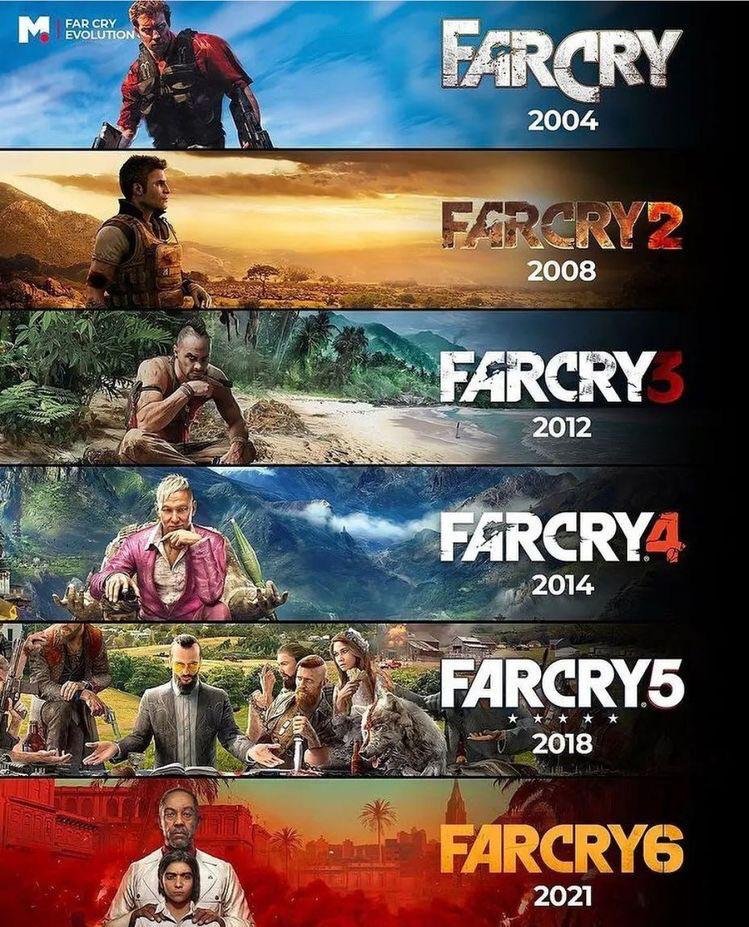
‘The Far Cry games are about players battling against charismatic, often ruthless, antagonists in expansive open-world settings, usually involving guerilla warfare and survival.’
Ever wondered what are the far cry games about? These titles consistently place you in stunning but dangerous landscapes. You often face down a powerful dictator or a cult leader.
These games emphasize player choice in how you approach missions, with varied tools and weaponry. You are the underdog, fighting for freedom with any means necessary, while also exploring the beautiful locales. The core of the experience is high-stakes conflict with intense action and engaging storytelling.

What are the Far Cry Games About?
The Far Cry series, known for its open-world gameplay and first-person shooter action, often places players in exotic and dangerous locations. But what exactly are these games really about? It’s more than just shooting bad guys, although there’s plenty of that. Let’s dive deep into the heart of Far Cry and see what makes it tick.
The Core Themes of Far Cry
At its core, Far Cry games explore a handful of recurring themes. These themes create the foundation for the storylines, the characters, and the overall experience. Let’s look at some of them:
Power and Control
Many Far Cry games center around a powerful antagonist, someone who has seized control of a region or group. These characters, often charismatic but ruthless, use their power to oppress others. Think of Pagan Min in Far Cry 4, Vaas Montenegro in Far Cry 3, or Joseph Seed in Far Cry 5. They represent the dangers of unchecked authority and the corruption that comes with it. Players step into the shoes of a protagonist who will push back against this oppressive regime. It’s a story of fighting for freedom.
The Fight for Survival
Survival is key in any Far Cry game. The game world, with its harsh terrain and hostile wildlife, becomes a character itself. Players must learn to hunt, craft, and use their surroundings to their advantage, sometimes facing dangerous animals like jaguars, bears, and even prehistoric creatures in some entries. This focus on survival isn’t just about staying alive; it also forces the player to interact with the environment and understand how it affects their journey. The constant battle for resources and safety adds an extra layer of tension to the gameplay.
Man vs. Nature
Far Cry often explores the tension between humanity and the natural world. The settings, whether the tropical islands of Far Cry 3, the Himalayan mountains of Far Cry 4, or the American wilderness of Far Cry 5, are usually presented as beautiful but untamed places. Players are forced to navigate this environment, and it’s often used as a tool by the antagonists. This shows how humans can both marvel at and try to dominate their surroundings and also what consequences follow that action. The games encourage you to be observant of the world and use its resources, while simultaneously illustrating the fragility of natural ecosystems.
The Cost of Conflict
While Far Cry games are known for action-packed shootouts, they also touch upon the human cost of violence. The games show the effects of conflict on individuals and communities. Characters are often forced to make difficult choices, blurring the lines between good and bad. These moral ambiguities add depth to the game narratives and make the player think about the consequences of their actions. It’s not just about winning, it’s also about what you’re willing to sacrifice and how you choose to fight. The games show how war affects ordinary people and what they are willing to do to survive it.
The Gameplay Loop: What You’ll Actually Do
Beyond these underlying themes, the core gameplay experience of Far Cry is what keeps people coming back for more. Here’s a breakdown of what you can typically expect:
Open-World Exploration
Far Cry games are famous for their expansive, open-world environments. Players have the freedom to roam freely, completing missions at their own pace. You might be going to a mission, but get sidetracked by hunting, exploring or other activities. There is often a lot to see and do. This freedom creates a sense of adventure and immersion.
Outpost Liberation
A core mechanic in the series involves liberating enemy outposts. These can range from small guard posts to large compounds. Players have to use their strategy to take these out, and they can do this in a number of ways, such as stealthy attacks or all-out gunfights. Liberating an outpost often turns it into a safe zone and opens up fast travel options.
Character Progression
As you play, your character gains experience and skills. You might be able to upgrade your shooting skills, improve your crafting abilities, or learn new tactical maneuvers. This system makes you feel like you are actually growing in the game and becoming a more competent fighter. These upgrades help you take on greater challenges as you progress through the story.
Crafting and Resource Management
Crafting is a key part of the game play in most Far Cry titles. You often need to hunt animals, collect plants, and scavenge for supplies to create items. This can be everything from healing items, ammunition, or new tools. This adds to the feeling of survival and makes you interact with the world in a different way than just shooting enemies.
Vehicular Mayhem
Far Cry often features a wide array of vehicles that you can commandeer, including cars, trucks, boats, ATVs, and even planes. This makes traveling around the map much faster, but also adds a layer of chaotic fun to the game, with high-speed chases and vehicle combat often being a part of the experience.
Far Cry: A Look at Some Key Titles
Let’s explore some of the most significant games in the series, and what each one brought to the table.
Far Cry 3: The Island of Insanity
Many consider Far Cry 3 to be a turning point for the series. It introduced us to Vaas Montenegro, one of the most memorable villains in gaming history, and pushed the open world aspects of the series further than ever before. It introduced the idea of a truly massive world filled with things to do. The story of Jason Brody, a young man who gets caught up in the madness of the Rook Islands, was also well-received.
- Key Features: Introduced the outpost capture system, more robust skill trees, and a deeper sense of player progression.
- Impact: Defined the core mechanics and tone for many subsequent Far Cry games.
Far Cry 4: Welcome to Kyrat
Far Cry 4 moved the action to the fictional Himalayan region of Kyrat, a beautiful but dangerous country ruled by the tyrannical Pagan Min. The game built upon the mechanics of Far Cry 3 with a bigger map, new vehicles (like the gyrocopter) and a more nuanced political story.
- Key Features: Introduced fortresses (bigger and more challenging outposts), karma system (where your actions influence the world), and co-op gameplay.
- Impact: Showed the series could go to different settings while keeping its core gameplay loop.
Far Cry 5: Hope County Under Siege
Far Cry 5 brought the series to the United States, specifically the fictional Hope County, Montana. Players are drawn into a conflict with a cult leader, Joseph Seed, and his family, who have taken control of the region with their twisted religious beliefs. This entry was praised for its interesting villains and its co-op focused gameplay.
- Key Features: Full co-op campaign support, a dynamic world that reacts to your actions, and a focus on a homegrown American villain.
- Impact: Introduced a more modern setting and expanded the possibilities for narrative.
Far Cry 6: A Revolution in Yara
Far Cry 6 takes place in the fictional Caribbean island of Yara, inspired by Cuba. Players take on the role of Dani Rojas, who are attempting to overthrow the dictator Antón Castillo. The game features a large open world with cities, jungles, and coastlines to explore. This entry brought an emphasis on guerrilla warfare and emphasized crafting and using improvised weapons.
- Key Features: Guerrilla warfare mechanics, emphasis on improvisation and using makeshift weapons, use of companions including animals
- Impact: Introduced more RPG-like features, such as different armor sets and skills
How the Games Connect: Recurring Elements
Despite taking place in different settings with different characters, Far Cry games have some connecting threads that weave through each entry.
The Protagonist’s Journey
In each game, the protagonist starts as an outsider, often caught up in events beyond their control. They transform into a skilled fighter and leader as they journey through the game. This transition is a core element of the narrative, and the player gets to experience it firsthand.
Charismatic Antagonists
The villains in Far Cry games are often unforgettable. They are not just evil characters. They are also interesting and complex, each with their own motivations. They are a big part of why the games feel so immersive and engaging. These antagonists often push players to question their own actions.
The Importance of the Environment
The environment is more than just a backdrop in Far Cry games; it is a tool, a threat, and a character in itself. Each location is different, offering a unique set of challenges and resources. The way the environment is used influences how players approach missions and how the game feels overall.
A Balance of Chaos and Fun
Far Cry games are known for letting you have fun and making chaos. It’s fun to blow things up, drive around in wacky vehicles, and try crazy things. This balance of freedom and structure makes each game in the series a unique experience that keeps you entertained.
In short, Far Cry games are not just about shooting bad guys; they are about the battles for freedom, survival, and the complicated relationship between humanity and nature. These games blend exploration, character progression, and a focus on emergent gameplay to create rich experiences that will keep you playing for hours.
Ranking Ever Far Cry Game from Worst to Best
Final Thoughts
Far Cry games consistently place players in hostile open-world environments. Players often battle dangerous regimes, militias, and powerful cults. The core gameplay revolves around exploration, crafting, and intense first-person shooter action.
They frequently feature a charismatic, yet menacing antagonist. The series heavily emphasizes player freedom and emergent gameplay moments. what are the far cry games about? They are about fighting for survival against oppressive forces in extreme settings.

