
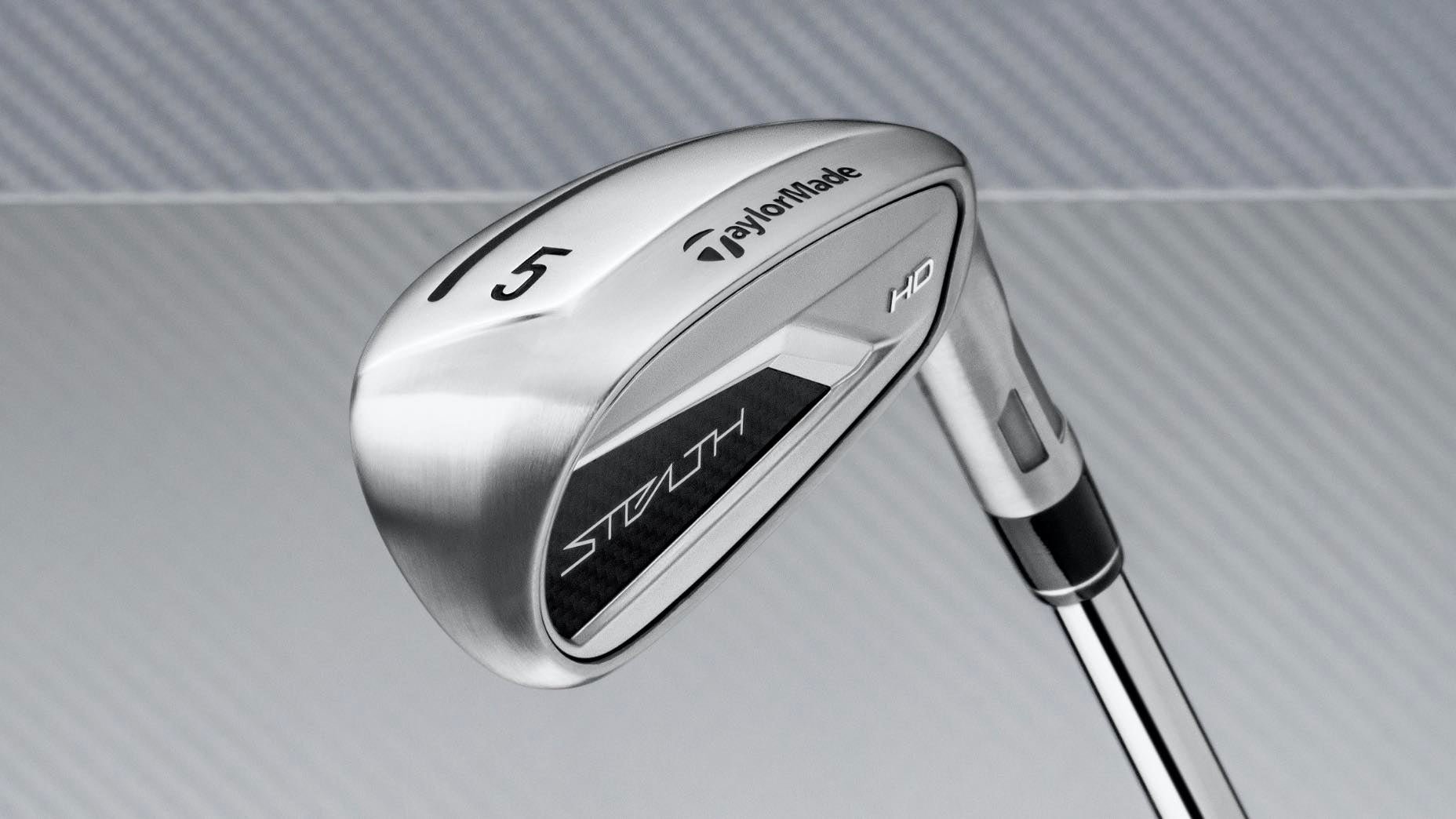
Game improvement irons are designed with features that help golfers hit the ball further and more accurately, even on off-center strikes.
Ever wondered about those clubs that promise more forgiveness? Well, that’s where understanding what is game improvement irons becomes essential. These aren’t your tour-level blades; they’re built to help average golfers enjoy the game more, with less punishment for mishits. They often have larger clubheads and perimeter weighting that makes it easier to get the ball airborne and keep it on target.

What are Game Improvement Irons?
Let’s talk about game improvement irons. If you’re not a pro golfer, or even if you’re just starting out, these clubs are designed to make golf a little easier and a lot more fun. Think of them as your golfing buddies, always there to help you hit better shots. So, what exactly makes them different from other irons? Well, that’s what we are going to dive into.
Understanding the Basics: What Makes an Iron a “Game Improvement” Iron?
Game improvement irons are designed with a specific goal in mind: to help golfers who aren’t always hitting the ball perfectly. Maybe you struggle with consistent contact, or perhaps your shots tend to veer off course. That’s where these irons step in. They incorporate various design features that increase forgiveness, launch the ball higher, and provide a greater degree of distance on those less-than-perfect shots. They are very different from the irons the pros use, and understanding these differences is key to selecting the right club for you.
Forgiveness: The Key Feature
Forgiveness is the most crucial characteristic of game improvement irons. What does forgiveness mean in golf? It basically means how well the club performs when you don’t hit the ball in the exact center of the clubface (that sweet spot). With more forgiving irons, even if you hit the ball a bit off-center, you will still get a decent result. You won’t lose as much distance, and the ball is less likely to travel wildly offline.
There are several ways that manufacturers increase the forgiveness of these irons:
- Larger Clubheads: Game improvement irons often have bigger clubheads than “players” irons or muscle back irons. This larger face offers more surface area to make contact with the golf ball.
- Larger Sweet Spot: The sweet spot isn’t just the center point, it’s an area on the clubface. Game improvement irons expand this area allowing for better results when not hitting the very center.
- Perimeter Weighting: This means the weight is distributed towards the edges of the clubhead. This helps the club resist twisting when the ball is struck off-center, leading to straighter shots.
To put it simply, game improvement irons are built to minimize the negative effects of mishits.
Launch Angle and Distance
Another important aspect of game improvement irons is their ability to help get the ball up in the air and to provide good distance. Many golfers struggle to consistently get their shots airborne. These irons are made to help with that. Here’s how they accomplish this:
- Lower Center of Gravity (CG): Game improvement irons often have a lower CG. This means that the weight is positioned closer to the sole (bottom) of the club. This makes it easier to launch the ball higher. A higher launch helps the ball stay in the air longer, which translates into more distance.
- Stronger Lofts: Many game improvement irons have stronger lofts than older irons, for example a 7 iron in an older set might be 35 degrees, in a new game improvement set, it might be 30 degrees. Stronger lofts help to increase distance. However, this often reduces the height the ball will fly, hence why it’s coupled with a low centre of gravity.
The combination of these features helps golfers hit the ball further and with a more favorable trajectory (the path the ball takes in the air).
Key Design Features of Game Improvement Irons
Now, let’s take a closer look at some of the design features you’ll often find in game improvement irons. These features work together to make the clubs more forgiving and easier to hit.
Cavity Back Design
Many game improvement irons feature a cavity back design. Imagine the back of the iron has a section taken out (the cavity). This removes weight from the center and distributes it to the perimeter. This design enhances forgiveness by increasing the club’s resistance to twisting on off-center hits, which in turn means straighter shots. Cavity back irons are usually more stable and they make it easier for beginners to improve their game.
Wide Soles
The sole is the bottom part of the iron. Game improvement irons often feature wider soles. A wider sole helps prevent the club from digging into the ground, especially on fat shots (when you hit the ground before the ball). It allows the club to glide more easily through the turf, which helps create cleaner contact with the ball. This also helps golfers who tend to take large divots or who struggle to hit down on the ball properly.
Offset
Offset is when the clubface is set back slightly behind the shaft of the club. It might sound a bit strange, but this is another feature common in game improvement irons. Offset gives you a little extra time to square the clubface at impact. This helps reduce slices and encourages straighter shots. It’s particularly useful for players who have a tendency to leave the clubface open at impact.
Materials
The materials used in the construction of game improvement irons also play a very important role. Generally, these irons are made from stainless steel due to its durability, it’s easy to work with, and it offers good performance qualities. It is a good compromise between cost and performance. However, brands will often use various other materials and treatments like high-strength steel and tungsten weighting to fine tune their clubs’ performance.
Who Should Use Game Improvement Irons?
The question then is, who should use game improvement irons? Well, they are a great fit for a wide range of golfers, particularly those who:
- Are New to Golf: If you are just learning the game, these clubs provide the help you need. The forgiveness and higher launch help make the game more enjoyable as you develop your skills.
- Have Inconsistent Contact: If you frequently mishit the ball (hitting it off-center), game improvement irons will offer far better results than other types of irons.
- Want More Distance: If you struggle with getting the ball airborne or generating distance, these irons can provide a noticeable improvement.
- Have a Higher Handicap: Players with higher handicaps who are looking to improve their overall game will find these irons extremely beneficial.
It’s important to note that even some more experienced players with mid-handicaps might prefer game improvement irons because they provide good performance with more consistency and will often be more forgiving on mishits. It’s really about what you need in your set, and how they best match your style of play.
How Game Improvement Irons Differ From Other Types of Irons
To understand the benefits of game improvement irons, it’s helpful to see how they differ from other types of irons, such as “players” irons and muscle-back irons.
Game Improvement vs. Players Irons
Players irons are generally designed for more skilled golfers with consistent ball striking ability. Here’s a summary of the key differences:
| Feature | Game Improvement Irons | Players Irons |
|---|---|---|
| Forgiveness | High (Very forgiving on mishits) | Lower (Less forgiving on mishits) |
| Clubhead Size | Larger | Smaller |
| Sweet Spot Size | Larger | Smaller |
| Offset | Usually more offset | Usually less offset |
| Trajectory | Generally higher launch | Generally lower launch |
| Feel | Focus on consistency and forgiveness | Focus on feel and control |
| Skill Level | Beginner to Intermediate | Intermediate to Advanced |
Players irons are designed for skilled golfers who value control and feel over forgiveness. They generally give the player more feedback on where the ball was struck, but the results from off centre strikes tend to be much worse than with game improvement irons.
Game Improvement vs. Muscle-Back Irons
Muscle-back irons, also known as blades, are the most traditional type of irons and are primarily used by very skilled golfers. They are very different from game improvement irons, and here’s why:
| Feature | Game Improvement Irons | Muscle-Back Irons |
|---|---|---|
| Forgiveness | High (Very forgiving on mishits) | Very Low (Not forgiving on mishits) |
| Clubhead Design | Cavity back or perimeter weighting | Solid design with a small sweet spot |
| Distance | Good distance on mishits, generally distance is easy to obtain | Distance is very difficult to achieve, especially on mishits |
| Control | Good control | Very high level of control, requires consistency |
| Skill Level | Beginner to Intermediate | Very Advanced |
Muscle-back irons are designed to provide maximum feel and control but are very unforgiving on mishits. They require a high level of skill to be used effectively. It’s for this reason that they aren’t used by amateur golfers as often.
How to Choose the Right Game Improvement Irons
Choosing the right set of game improvement irons can make a big difference in your game. Here are some factors to consider when making your selection:
- Handicap: If you have a higher handicap, prioritize more forgiving irons with large sweet spots. Look for clubs with cavity back designs and plenty of perimeter weighting.
- Launch Conditions: If you tend to hit the ball low, look for irons with a lower center of gravity. If you naturally hit the ball high, a mid-CG might be more appropriate.
- Clubface Offset: If you struggle with a slice, look for irons with more offset. This can help you square the clubface at impact and hit straighter shots.
- Club Head Shape: A larger club head will help increase forgiveness, but it may not be as appealing to look at to some golfers.
- Shaft Type and Flex: The shaft is a crucial component of the club. Consider whether you prefer steel or graphite shafts. Graphite shafts are lighter, which can help increase swing speed. Make sure the flex of the shaft matches your swing speed. If you have a very fast swing speed you may need a stiff flex shaft, whereas if your swing speed is slow you’ll want a regular flex or even a light flex.
- Set Composition: Game improvement iron sets typically include clubs from 4-iron or 5-iron down to pitching wedge (PW), gap wedge (GW), sand wedge (SW), and possibly lob wedge (LW). Make sure the set contains the clubs you need and fill the distances you are looking for.
- Personal Preference: Finally, consider what feels and looks good to you. Confidence at address can be just as important as the technical aspects of the clubs. If you don’t like how a club looks you will not use it with the same confidence as one you do like.
It is recommended to test different sets of irons before making a purchase. This is where the help of a professional club fitter can be really beneficial to find a set that works best for your game. This will involve hitting various different irons, with different shaft types to find the one that performs the best.
The Importance of Getting Fit for Game Improvement Irons
While game improvement irons are designed to be more forgiving, it’s still important to find a set that fits your particular swing and preferences. This is where a professional club fitting can be very beneficial. A club fitter will assess your swing, ball striking ability, launch conditions, and other relevant factors. They will be able to recommend a set of irons that will help you get the most out of your game. Here are some reasons why getting fitted is a smart decision:
- Optimized Performance: A professional fitting ensures you’re using irons that are tailored to your unique swing. This means you’ll get the best possible distance, accuracy, and consistency.
- Proper Shaft Selection: The correct shaft flex and material can greatly impact your ball flight and overall results. A fitter will help you select the right shafts for your swing speed and tempo.
- Improved Consistency: Properly fitted clubs make it easier to hit the sweet spot consistently, which leads to better shots and lower scores.
- Reduced Risk of Injury: Using clubs that don’t fit you properly can lead to injury, particularly with golfers with faster swing speeds. Clubs that are too heavy, or have too stiff shafts can lead to strain and damage to the body.
- Better Investment: While the fitting process might cost a little more upfront, it can actually save you money in the long run by helping you avoid buying clubs that are not right for you.
The time taken to go through a club fitting will certainly pay off on the course, and it’s usually worth the small upfront investment.
Game improvement irons are a valuable tool for any golfer looking to improve their game. They offer a combination of forgiveness, distance, and higher launch that can help you achieve more consistency, and enjoy the game of golf more. Whether you’re a beginner or a mid-handicap player, choosing the right set of game improvement irons can significantly impact your results on the course.
Game Improvement Irons Vs A Players Iron | TrottieGolf
Final Thoughts
Game improvement irons provide more forgiveness and distance for golfers. These clubs feature larger clubheads and perimeter weighting, which helps with off-center hits. They are designed to make the game easier.
These irons often have a lower center of gravity. This promotes higher launch angles and increased carry. If you are seeking help with consistency, “what is game improvement irons” is a key question to explore.

