
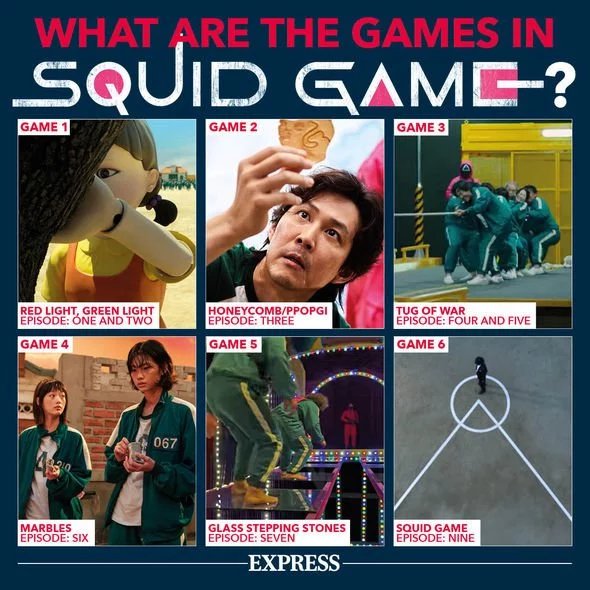
The games in Squid Game were Red Light, Green Light; honeycomb; tug-of-war; marbles; glass stepping stones; and the Squid Game itself.
Ever wondered what were the games in Squid Game? The global phenomenon had everyone talking about the deadly children’s games. These weren’t just playground fun, of course, but rather a fight for survival.
Each game was more perilous than the last, leading to intense drama and shocking eliminations. The series showcased childhood innocence twisted into a brutal competition with fatal consequences.

What Were the Games in Squid Game?
Alright, let’s dive deep into the heart of the matter – the games of Squid Game! This show took the world by storm, and a huge part of that was the terrifying yet strangely familiar games the contestants had to play. It wasn’t about fancy video games or complicated strategies; instead, it was about childhood games twisted into a deadly competition. We’ll be exploring every game in detail, looking at how they work and what makes them so incredibly suspenseful.
Red Light, Green Light: A Deadly Start
The first game, and perhaps the most iconic, is “Red Light, Green Light.” Most of us remember playing this as kids, right? You run towards a designated spot when the person who is “it” says “Green Light,” and you freeze when they say “Red Light.” In Squid Game, however, there is no tag, but failure to freeze when “it” (a giant creepy doll) says “Red Light” results in elimination— and in this case, elimination means being shot! The slow-motion deaths, combined with the innocence of the game, creates a deeply unsettling start to the entire show. It really sets the stage for the brutality to come.
Why Was This Game So Impactful?
There are several reasons why this game resonated so strongly with viewers:
- Nostalgia: It’s a game many people around the world played as children. This instant familiarity made the sudden violence all the more shocking.
- Simplicity: The rules are incredibly easy to grasp, making the stakes very clear. It’s a game anyone can play, but with deadly consequences in this context.
- Visual Spectacle: The giant doll and the vast, colourful arena made for a very visually striking scene, almost cartoonish. This contrasted sharply with the graphic violence, creating a disturbing effect.
- Sudden Violence: The abrupt and unexpected deaths emphasized the stakes and the ruthlessness of the game’s organizers. This made the game all the more terrifying.
The Sugar Honeycombs: A Test of Precision
Next up is the “Sugar Honeycombs” game, also known as Dalgona candy challenge. Each player received a thin, brittle disc of sugar candy with a shape imprinted in the middle, such as a circle, triangle, star or an umbrella. They had to carefully extract the shape from the candy, using only a thin needle. If the candy broke or cracked, they were eliminated. The game tested patience and precision, with even the smallest mistake costing a player their life. It became one of the most iconic challenges of the series due to the tension, anticipation and creativity needed to succeed.
Why Is It So Difficult?
- Fragile Material: The sugar candy was extremely thin and prone to breaking, making it challenging to extract the shapes.
- Time Pressure: The players were under a strict time limit which added to the anxiety.
- Mental Stress: The knowledge that a mistake means death adds an immense amount of pressure, causing players to fumble and lose focus.
- The Intricate Shapes: The different shapes had varied levels of difficulty. The umbrella shape, for instance, was particularly complex to extract, adding to the challenge.
Tug of War: Strength in Unity (and Strategy)
The third game was the “Tug of War” challenge, a classic test of strength, but with a deadly twist. Two teams faced off against each other, pulling on a rope with a large pit in the middle. The team that got pulled into the pit would fall to their deaths. While brute strength certainly helped, strategy, teamwork, and a bit of luck also played a part. This game highlighted the importance of cooperation and highlighted how those who work together can overpower those who try to do it on their own. The strategic placement of players and the sudden shift in the power dynamic made for some incredibly intense moments.
Strategies and Significance
- Teamwork: The game emphasizes the importance of working as a team rather than as an individual. Even the strongest player could not win on their own.
- Strategy: Different tactics were used by teams, for example a player on the front of the line to make the initial force, and then the team trying to pull back suddenly and use the other team’s momentum against them.
- The Power of the Underdog: Sometimes, teams with less physical strength succeeded using clever strategies, showcasing how cunning and planning can overcome size and power.
- Emotional Impact: This game was emotionally charged due to the high stakes and the intense struggle between two groups. This created moments of despair and celebration.
Marbles: A Heartbreaking Test of Betrayal
Next came the “Marbles” game, a particularly emotionally taxing challenge. Contestants were paired up and given ten marbles each. They then had to play a game of their choice and were told that, at the end, the player with all the marbles from both would win. There were no rules about how to win, the trick was that they had to try and get the other person’s marbles by any means necessary. This game was a cruel test of trust, friendship, and loyalty, forcing people to betray one another to survive. It was truly heartbreaking to watch as bonds between contestants crumbled under pressure.
Why Was It So Devastating?
- Trust and Betrayal: The game forced players to choose between trusting their partners or betraying them for survival, leading to devastating results.
- Emotional Bonds: Established relationships between players were shattered, leaving both characters and viewers in shock and despair.
- Moral Dilemma: The lack of a specific game rule forced participants into moral ambiguity, making it difficult to judge their decisions.
- Symbolism: The use of childhood toys added another layer of sadness, highlighting the lost innocence of these games.
The Glass Stepping Stones: A Leap of Faith
The fifth game, “Glass Stepping Stones,” presented a different kind of challenge. Participants had to cross a bridge made of glass panels. Some panels were made of tempered glass which could carry a person, and other panels were made of regular glass which would shatter if stepped on. The challenge involved guessing which panels were safe and which were not. It became a game of memory, luck, and a test of courage as contestants watched their fellow players fall to their deaths. This game highlighted the element of chance and the precariousness of survival. It was a visual spectacle, making use of the large set and height to create a sense of danger.
The Psychological Impact
- Luck and Chance: Success in this game heavily relied on luck, creating a sense of desperation and unpredictability.
- Mental Fortitude: Players were forced to make decisions under immense pressure, demonstrating the importance of mental resilience.
- Visual Spectacle: The design of the bridge created a visually stunning and terrifying environment, enhancing the tension.
- The Weight of Decisions: The pressure on players to pick the correct panel and the impact of their choice on the group made the game even more grueling.
The Squid Game: The Final Confrontation
The final game, the namesake of the series, was “Squid Game,” a traditional Korean game played in a large diagram of a squid. The attackers had to reach the top of the “squid’s head”, and the defender would try to push them off before they reached there. With only two players remaining, it turned into a brutal fight for survival. The game, which normally involves running around, was transformed into a physical fight for survival. The final game was a symbolic culmination of all the challenges the players had faced, forcing them to confront their choices, and their own capacity for violence.
Why This Final Game was So Fitting
- Symbolism: The game’s traditional origins and the use of the squid shape tied together the themes of childhood innocence, and the game’s core origins in Korea.
- Physical Confrontation: The final game was a direct physical fight between the two remaining players, showcasing their willingness to do whatever it took to win.
- Moral Ambiguity: The game highlighted the moral compromises the players had made, forcing them to take stock of their decisions to survive.
- Full Circle: It brought the show full circle by highlighting the games that were once fun, and now were deadly.
So, those are the games of Squid Game – each one simple, yet horrifying in its deadly execution. Each game played on a different set of challenges, and each game was made terrifying by the high stakes. The series masterfully uses childhood games to explore themes of desperation, morality, and the fragility of human life. It is the mixture of simple games and the devastating consequences that made the series so compelling.
How To Beat EVERY DEATH GAME In "Squid Game Season 2"
Final Thoughts
The deadly competition featured children’s games with horrific twists. Participants played Red Light, Green Light where failure meant instant death. The honey comb challenge involved intricate shapes and delicate extractions.
Tug of war tested pure strength and strategy, while marbles required emotional manipulation. Glass stepping stones needed careful selection, while Squid Game was the final, brutal face off. Ultimately, what were the games in squid game? They were simple games that revealed the dark nature of humanity.

