
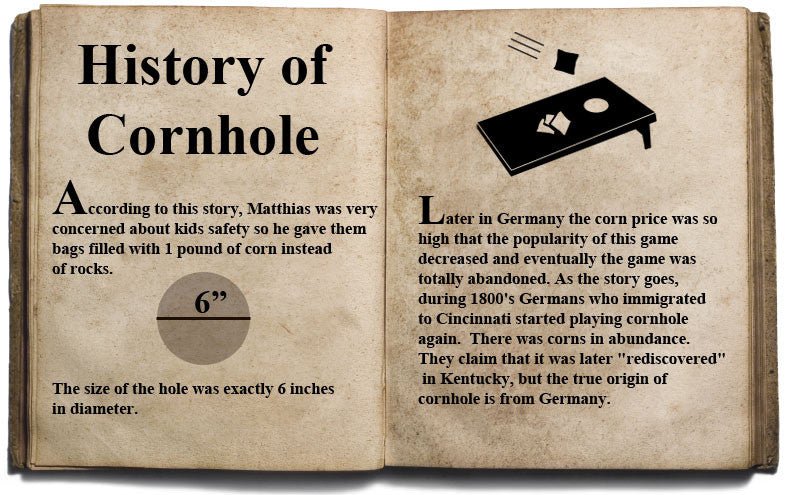
The exact origins of the corn hole game remain unclear, with no single individual definitively credited as the inventor.
Ever wondered about the origins of that fun backyard game you play at every barbecue? The one with beanbags and wooden boards? You’re not alone in asking who invented the corn hole game. It’s a question that sparks many debates and often leads down historical rabbit holes.
Many stories surround its creation, with some claiming a 14th-century German cabinet maker invented it, but little evidence exists to support this. The truth about who invented the corn hole game is, unfortunately, still a bit of a mystery for now.

Who Invented the Corn Hole Game?
The question of who exactly invented cornhole, also often called bean bag toss, is a bit like trying to find the first raindrop – it’s tricky! There isn’t one single person we can point to and say, “Aha, that’s the inventor!” Instead, cornhole’s story is a journey through time, blending different traditions and slowly evolving into the game we know and love today.
The Seeds of Cornhole: Ancient Games and Early Precursors
Before we get to the modern version, let’s look at some games that might have inspired cornhole. Think of it like tracing the family tree of fun! Games involving tossing objects into holes have been around for a very, very long time. Long before video games or even baseball, people enjoyed testing their aim.
Ancient Games with Similar Ideas
Evidence suggests that games similar to cornhole existed in ancient times. Some historians point to games played in ancient Germany, where people would toss stones or bean bags into holes. These weren’t exactly cornhole, but they showed that the simple idea of aiming and throwing had captivated people for centuries.
- Ancient German Games: Games using stones or bean bags tossed into holes.
- Other Throwing Games: Many cultures had their own versions of games that involved throwing objects into targets, providing a base level idea for other similar games.
The “Hillbilly Horseshoes” Connection
One theory suggests cornhole developed from an old game called “Hillbilly Horseshoes”. This game involved tossing rocks or similar objects towards a target, often a hole in the ground. While not identical to cornhole, the core idea of throwing towards a hole for points is definitely similar. Think of it as a rough, early cousin of the game.
The Rise of Cornhole in the Midwest: A Regional Game Takes Shape
It is believed the more recognizable form of cornhole started showing up in the midwestern part of the United States sometime around the 1800s and 1900s. Some reports point to rural areas in the state of Ohio as the birthplace of cornhole. It is suggested that German immigrants in that region could have brought their folk games from the old country, which eventually morphed into what we now recognize as the modern cornhole.
Ohio and the Corn Belt
Ohio, with its large German-American population and agricultural focus, is often cited as the region where the game began to solidify its form. Corn, a major crop in this part of the country, would have been readily available for stuffing into bags, hence the name “cornhole”.
- German Immigrants: Brought traditional games involving throwing and aiming.
- Farm Life: Corn was readily available as a filler for the bags.
Early Homemade Boards and Bags
Back then, cornhole boards weren’t the fancy, polished ones we often see now. They were often simple, homemade creations, usually constructed from scrap wood. The bags were often made from whatever cloth they could find and filled with dried corn kernels. These early versions highlight the game’s humble and resourceful beginnings. This is part of what makes the game so appealing; almost anyone can play.
The Modern Game: Standardization and Growth
As cornhole’s popularity increased, it slowly became more standardized. Different groups of people all played the game slightly differently, so in the interest of organized tournaments, set regulations and rules were needed.
The American Cornhole Organization (ACO)
The American Cornhole Organization, or ACO, has taken on the task of creating some uniformity for this fun sport. The ACO has established official rules and regulations, and holds tournaments that bring together people who love the game. They helped solidify things such as how big a cornhole board should be, the material that can be used for cornhole boards, the weight of the cornhole bags, and how far away people should stand from the board. While there was a debate as to whether it should be called “cornhole” or “bags,” The ACO decided that “cornhole” should be the standard name. The existence of organizations like the ACO means people can now compete fairly and know they are playing by consistent rules.
- Standardized Rules: The ACO established the regulations that are usually played by players and enthusiasts.
- Organized Tournaments: The ACO conducts competitions at different levels of competition.
- Growing Popularity: The standardization has given the game a broader appeal.
Cornhole Boards: From Simple to Stylish
Modern cornhole boards are a long way from those early homemade versions. Now, you can find boards made with high-quality materials, often featuring creative designs and logos. They are carefully crafted with specific dimensions to meet tournament standards. You can even buy boards that light up at night! This transition from basic wood to stylish and functional boards shows how much the game has grown in appeal.
Cornhole Bags: From Corn Kernels to Resin Pellets
The cornhole bags have also changed. While the traditional bags were filled with dried corn, many players now prefer bags filled with resin pellets or plastic beads. These materials are often more durable and less susceptible to water damage. This change reflects the game’s evolution from a casual backyard pastime to a more serious competition.
Cornhole Around the World: Spreading the Fun
Cornhole is not just a game popular in the United States now. It has started to gain some fans around the world. The fun and easygoing nature of the game makes it perfect for social gatherings and outdoor events, no matter where you are. It does not take long to learn how to play, so it is becoming more popular every year.
Cornhole’s Global Reach
While cornhole’s roots are firmly planted in the U.S. Midwest, the game has started to spread to other parts of the world. From casual games in parks to organized tournaments, cornhole is finding new fans in different corners of the globe.
- Growing International Interest: Cornhole’s simple rules and social appeal make it popular.
- Community-Based Play: In other countries, people are starting to play the same game for the same reasons as their American counterparts – it is fun!
The Appeal of a Simple Game
The beauty of cornhole is its simplicity. Anyone can learn to play and enjoy it, regardless of age or skill level. This accessibility is what makes cornhole so appealing and helps it travel beyond geographical borders. This is a game that brings people together, and that is always a good thing.
So, Who Invented Cornhole? A Final Look
So, to finally answer, there is no single person who “invented” cornhole. It’s a game that has grown gradually through time, taking bits and pieces from other games and traditions. Cornhole’s real story is more of an evolution. From old-timey games to the modern competitive sport, it is a perfect example of a game that has developed over time and found its place in people’s hearts. The journey of this game is just as interesting as playing the game. It is a game that has taken generations to become the game that is known all around the world today.
I Invented Airless Cornhole Bags
Final Thoughts
The origins of cornhole remain somewhat murky, with no single, verifiable inventor. While some trace it back to 14th-century Germany or a 19th-century game in Kentucky, pinpointing a definitive “who invented the corn hole game” is elusive.
The game’s popularity grew, and many variations appeared across the United States. This evolution makes it challenging to attribute its creation to one person. So, we must acknowledge its grassroots origins and collective development.

