
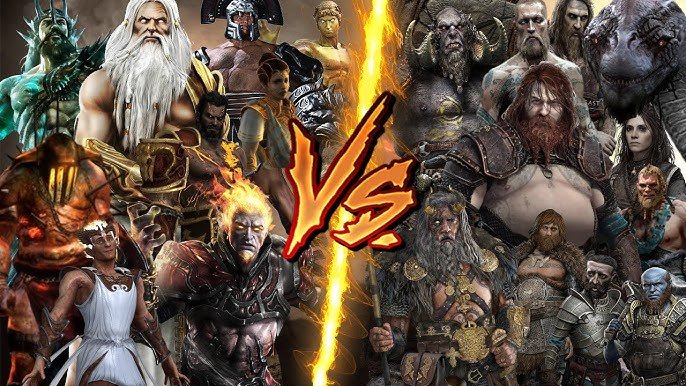
In the games, Kratos is demonstrably more powerful than his mythological counterpart.
Ever wondered about the true extent of Kratos’s might? The question of is kratos more powerful in mythology or game often sparks intense debate among fans. The game version regularly faces gods and titans, showcasing incredible feats of strength.
We see him surviving impossible situations that would be devastating for even mythological figures. The sheer scale of his battles in the games greatly surpasses the original myths, making a clear distinction.

Is Kratos More Powerful in Mythology or Game?
The question of whether Kratos, the God of War, is more powerful in his video game incarnations or his mythological inspirations is a fascinating one. It’s like comparing a superhero from a comic book to the legends they’re based on. Both versions of Kratos are incredibly strong, but they show their power in different ways. Let’s dive deep into the world of gods, monsters, and brutal battles to figure out which Kratos truly reigns supreme.
Kratos in the Games: A Force of Nature
The Kratos we know and love (or fear!) from the God of War games is a whirlwind of destruction. He’s a Spartan warrior turned god killer who takes on creatures and deities alike with incredible ferocity. The games give us a clear view of his strength, speed, and the variety of his powers through gameplay. We get to see exactly what he can do.
Physical Prowess
Game Kratos is incredibly strong. He can lift and throw massive objects, tear apart enemies with his bare hands, and withstand attacks that would kill most mortals. Think about the first time you saw him lift up a huge pillar or rip apart a minotaur. These moments are visual examples of his massive strength. Here are some examples:
- Lifting and wielding colossal structures: From moving giant gates to tossing massive pillars, his strength is off the charts.
- Overpowering mythological creatures: He’s battled and defeated minotaurs, cyclopses, and many other powerful beings.
- Surviving devastating blows: He takes hits from gods and titans and keeps fighting. This shows his amazing durability and will to survive.
Weapons and Abilities
Kratos isn’t just a brute; he’s also a master of weapons. He uses a variety of powerful tools and abilities throughout the games. These abilities make him an even more dangerous foe:
- Blades of Chaos: These chained blades are his iconic weapons, allowing him to tear through enemies with ease. They can also be used for grappling and ranged attacks.
- Leviathan Axe: Introduced in the Norse saga, this axe is powerful enough to freeze enemies and recall back to his hand.
- Guardian Shield: A sturdy shield used for blocking and parrying attacks, and even stunning enemies.
- Spartan Rage: Kratos can enter a rage mode, increasing his strength and speed while turning him into a nearly unstoppable force.
- Magic and Runes: He has access to magical abilities and runic attacks, adding a layer of depth and tactical options to his fighting style.
The game shows us Kratos defeating literal gods like Zeus, Ares, and Baldur. These victories are some of the highest feats of power displayed in any video game. This establishes the game Kratos as one of the most powerful video game characters ever.
Kratos in Mythology: A Different Perspective
Now, let’s consider Kratos’s mythological inspirations. In Greek and Norse myths, there isn’t a character called Kratos with the same exact story. However, the myths are filled with powerful gods, heroes, and monsters. The game creators drew inspiration from these figures when creating their version of Kratos. So, how does a character who takes inspirations from mythology compare to actual mythical beings?
The Source of Power
In mythology, strength is often tied to a character’s divine nature or ancestry. The gods, like Zeus, possess immense power because they are literally born from the universe itself. Demigods, like Hercules, have inherited portions of godly power through their parents. In this sense, mythological figures can possess might beyond the understanding of a mortal man.
- Divine Lineage: Many gods in Greek and Norse mythology have powers due to being born of other gods.
- Magic and Artifacts: Powerful objects like Thor’s hammer or Zeus’s lightning bolts enhance their powers.
Comparing Mythological Figures
Let’s think about some of the figures that likely influenced the creation of Kratos, and see how they stack up against the God of War’s feats in the games:
- Hercules (Heracles): Known for his superhuman strength, he famously completed twelve labors. He wrestled a lion, captured a multi-headed beast, and cleaned stables. While Hercules’ feats of strength are incredible, they often lack the speed and brutal efficiency shown by game Kratos.
- Thor: A Norse god with unmatched strength. He wields a magical hammer, Mjolnir. The mythological Thor is powerful, able to bring down mountains and monsters with a single strike. But unlike the game version of Kratos who does not use any magic in combat, and can fight gods hand to hand, Thor uses his hammer.
- Ares: The Greek God of War, known for his bloodlust and war prowess. While powerful in his own right, Ares is also more a god of war and less a one man army like Kratos.
These mythological figures, while incredibly powerful within their own stories, possess powers that often differ from Kratos’s. They rarely show feats of such sustained and relentless destruction. Additionally, they don’t often face challenges that can be considered as world-ending as Kratos faced in the game.
Game Kratos vs. Mythological Power: A Direct Comparison
When we put them side by side, the difference is obvious. Game Kratos fights gods on an equal level, he tears through entire armies and survives impossible odds. He is an action hero, created with the purpose of being a force of nature. Mythological characters are complex figures, often with flaws and weaknesses, even if they are super powerful. Here’s how the two compare head to head:
The Scale of Battles
Game Kratos’s battles are often large-scale and over-the-top. We see him taking on titans, gods, and armies that would be unthinkable in mythology. He’s consistently pushing his limits and coming out on top. Mythological battles, while epic, are usually more grounded in the rules of their own universes.
- Game Kratos destroys Olympian gods and Norse deities: He defeats the most powerful beings in mythology, something that mythological characters rarely accomplish on their own.
- Mythological heroes might have legendary battles: However, these fights are more about outsmarting the opposition or getting help from other sources than single handily defeating gods.
Feats of Strength
Game Kratos performs feats of strength that are simply unimaginable in a mythological context. The things he lifts, the things he smashes, and the enemies he overcomes are scaled for the purpose of action game spectacle. Mythological heroes usually rely on other strategies other than sheer power alone.
- Kratos rips apart gigantic mythical beings.
- Mythological heroes often rely on cleverness and luck to win fights.
- Kratos can lift and move enormous structures.
The Use of Weapons
Game Kratos has his Blades of Chaos, the Leviathan Axe, the Guardian Shield and other weapons and magical abilities. These make him a versatile and dangerous warrior. Mythological characters usually have access to specific, sometimes magical weapons like Thor’s hammer or Zeus’s thunderbolts, but they are often more focused on raw power.
- Game Kratos uses a variety of weapons and abilities
- Mythological heroes are often limited to specific weapons or powers.
The Story Impact
Game Kratos is a character created for a specific narrative. His story involves an escalating scale of challenges, where he is required to consistently go up against more powerful foes. He must evolve. Mythological characters are part of a larger tapestry of stories, where power levels are more fluid and character actions fit the narrative.
- Game Kratos has a narrative arc where he constantly becomes more powerful.
- Mythological stories have more about storytelling than displaying strength.
After comparing both versions, the game version of Kratos is far more powerful than any of his mythological counterparts. Game Kratos constantly faces and overcomes progressively more challenging scenarios and powerful adversaries, and he displays far greater feats of strength, stamina, and brutality. Mythological heroes, while certainly powerful, are more balanced in their approach to combat and do not possess the same scale of power and destructiveness that Game Kratos does. While both versions of Kratos are strong, the video game Kratos is, without a doubt, more powerful. He embodies the idea of a super-powered warrior, whereas mythological figures are usually more nuanced within their own complex and intricate stories.
Kratos Tells How Greek Gods Are More Powerful Than Norse Gods – God Of War : Ragnarok
Final Thoughts
Game Kratos showcases incredible feats of strength and battle prowess. He defeats gods and titans with powerful weapons. However, mythological accounts depict a Kratos with even more terrifying power, often fueled by divine rage.
Mythological Kratos displays a raw, almost uncontrollable power. The game version is limited by game mechanics and storytelling. Therefore, the answer to ‘is kratos more powerful in mythology or game’ leans towards mythology.

